BOJ raises interest rates to 30-year high, signals more hikes
It offers a slightly more upbeat view on the economy than at its previous meeting in October
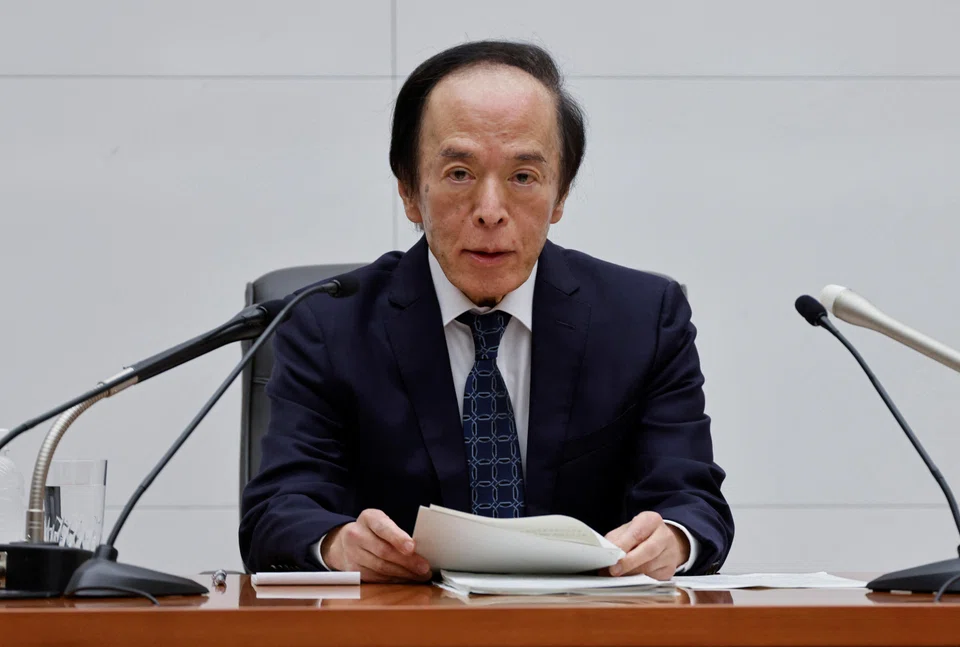
[TOKYO] The Bank of Japan (BOJ) raised interest rates on Friday (Dec 19) to levels unseen in three decades and signalled its readiness for further hikes, taking another landmark step in ending decades of huge monetary support and near-zero borrowing costs.
It also removed language that growth and inflation will stagnate due to the impact of higher US tariffs. The move underscores the central bank’s conviction that Japan was on course to hit its 2 per cent inflation target backed by wage gains, and ready for a continued normalisation of monetary policy.
“Judging from recent data and surveys, there is a high chance the mechanism in which wages and inflation rise moderately in tandem will be sustained,” the BOJ said in a statement.
“Given that real interest rates are at significantly low levels, the BOJ will continue to raise interest rates” if its economic and price forecasts materialise, it said.
In a widely expected move, the BOJ raised short-term interest rates to 0.75 per cent from 0.5 per cent in the first increase since January. The decision was made by a unanimous vote.
The move takes interest rates to levels unseen since 1995, when Japan was reeling from the burst of an asset-inflated bubble that drew the BOJ into a prolonged battle with deflation.
The central bank offered a slightly more upbeat view on the economy than at its previous meeting in October, saying it was likely to “grow at a moderate pace”. In October, it said growth was likely to stagnate due to the impact of US tariffs.
Underscoring its optimism on the price outlook, it also tweaked its language on underlying inflation to say it will continue to gradually heighten, in contrast to the view in October that it will stagnate for the time being.
But governor Kazuo Ueda remained vague on the exact timing and pace of future interest rate hikes.


“As for the pace of how we adjust our monetary support, that will depend on economic, price, financial developments at the time,” he said in a press conference. “We will update at each meeting our views on the economic, price outlook as well as risks and the likelihood of achieving our forecasts, and make an appropriate decision.”
The yen slid, the Nikkei stock average rose and the benchmark 10-year government bond yield jumped to a 26-year peak after the policy announcement.
Challenges around the next move
In the statement, the BOJ maintained its view that underlying inflation will converge around its 2 per cent target in the latter half of its three-year projection period through fiscal 2027.
But hawkish board members Hajime Takata and Naoki Tamura dissented to this view. Takata said underlying inflation has already achieved the target, while Tamura said it would do so as soon as the middle of the three-year projection period.
“It is highly likely that firms will continue to raise wages steadily next year,” the BOJ said in the statement, signalling its optimism that further rate hikes would be justified.
It also said uncertainties surrounding the US economy and the impact of higher levies have declined.
Friday’s hike to 0.75 per cent would bring rates closer to levels deemed neutral to the economy, which the BOJ estimates as in a range of 1 per cent to 2.5 per cent, and complicate the bank’s decision on how far to push up borrowing costs.
The BOJ ended a decade-long, massive stimulus last year and raised rates twice including to 0.5 per cent from 0.25 per cent in January on the view Japan was on the cusp of durably achieving its 2 per cent inflation target.
With stubbornly high food costs keeping inflation above target for nearly four years, a growing number of BOJ board members have signalled their readiness to vote for a rate hike to avoid being late in addressing the risk of too-high inflation.
Data released on Friday showed core consumer inflation hit 3 per cent in November, steady from the previous month and well exceeding the BOJ’s target.
Recent yen declines, which push up import costs and broader inflation, also helped the BOJ convince dovish Premier Sanae Takaichi’s administration of the need for another rate increase.
The economy has shown resilience to higher US tariffs. Recent central bank surveys showed business confidence hitting a four-year high and many firms on course to continue offering bumper pay next year. REUTERS
Decoding Asia newsletter: your guide to navigating Asia in a new global order. Sign up here to get Decoding Asia newsletter. Delivered to your inbox. Free.
Share with us your feedback on BT's products and services