
The Met Opera sings again
Amid the pandemic and continuing labour tensions, The Met Opera showcases two consoling concerts
 Add BT as a preferred source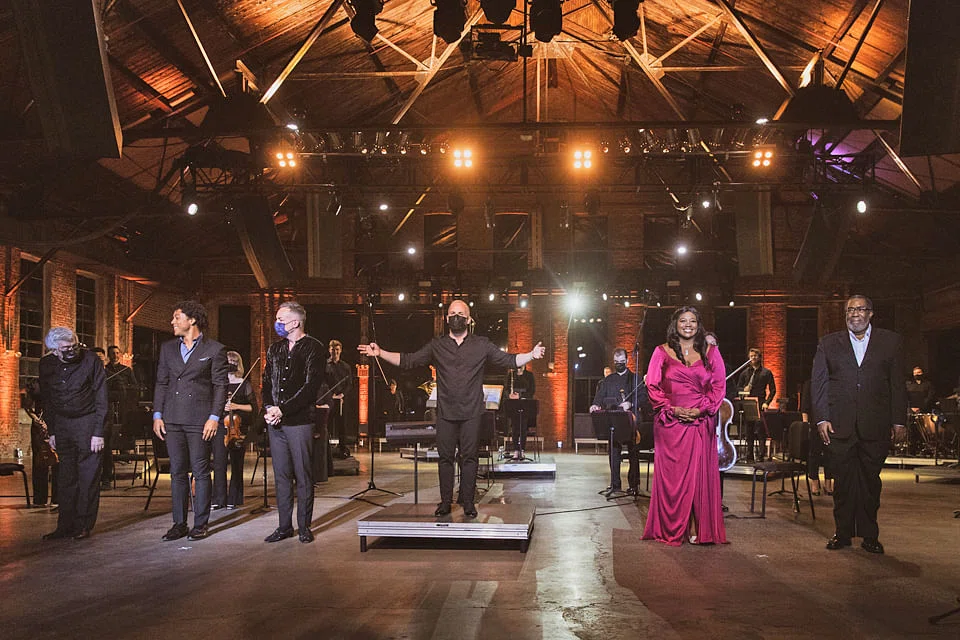
ON Sunday evening, 430 days after the coronavirus pandemic closed the Metropolitan Opera, the company returned.
Members of the Met's orchestra and chorus, conducted by its music director, Yannick Nézet-Séguin, and joined by four soloists, twice presented a 45-minute programme for an audience of 150.
The location wasn't the company's home at Lincoln Center; instead, the concerts were held at the Knockdown Center, a door factory turned rough-hewed art and performance space in Queens. But these were truly, finally Met forces, brought together amid the contentious labour disputes that still threaten the company's official reopening, planned for September.
"What a privilege it is to say good evening to you, to welcome you here," Nézet-Séguin told the audience before beginning the concert. The purpose, he added, was primarily to "resume what we do" - that is, to make music. But the performances were also intended as an expression of gratitude to essential workers; some tickets were set aside for emergency medical staff affiliated with Mount Sinai's hospital in Queens.
Hovering over the concerts were the Met's continuing labour tensions. The company's closure has cost it some US$150 million in revenue, and its many union workers were furloughed early in the pandemic. Peter Gelb, the general manager, has, like administrators at performing arts institutions everywhere, been trying to exact long-term concessions from the Met's labour force, which the unions are strongly resisting. Just days ago, the Met reached a deal with the union representing its chorus, dancers and some others. But talks with the orchestra musicians, who agreed in March to begin accepting some payments in exchange for returning to the bargaining table, are ongoing.
And on Thursday, the union representing the stage hands, who have been locked out since December, held a boisterous rally outside Lincoln Center.
Navigate Asia in
a new global order
Get the insights delivered to your inbox.
Without glossing over the strife, the Queens concerts (I attended the second) came across as a genuine gesture of good will and shared artistic commitment. Nézet-Séguin told the crowd that he and the artists had tried to devise a programme that reflected the hardships we've all endured, but also offered comfort and hope.
Addressing long-standing issues of inequity
The programme also made it clear that the Met is attempting to address long-standing issues of inequity brought to the forefront of the nation's consciousness in months of demonstrations against racial injustice last year. Three of the four superb solo singers were Black, and the offerings included an aria from Terence Blanchard's opera Fire Shut Up in My Bones, which is planned to open the Met's season in September - the first work by a Black composer ever presented by the company.
On Sunday, the young baritone Justin Austin sang Peculiar Grace, in which Charles, the main character in the opera - which is based on a memoir by Charles M Blow, an opinion columnist for The New York Times - thinks back to his troubled youth, growing up poor in Louisiana, "a Black boy from a lawless town", he sings in the words of Kasi Lemmons' libretto. "Where everyone carries a gun," Austin sang with burnished sound and vulnerability, "I carried shame in a holster 'round my waist."
The concert opened with the 12 choristers and 20 orchestra players giving a soft-spoken account of the poignant Lacrimosa from Mozart's Requiem.
Then the soprano Angel Blue brought radiant sound and aching sensitivity to the Ave Maria from Verdi's Otello. Next came several excerpts from Mozart's Die Zauberflöte, starting with the overture, which here sounded less an introduction to a comedic romp than a sublime prelude to a tale of a quest for wisdom, purpose and love. The young quester, Prince Tamino, sings an aria of smitten devotion to an image of the lovely Pamina, touching music sung ardently here by the tenor Stephen Costello.
And when the stentorian bass-baritone Eric Owens sang Sarastro's In diesen heil'gen Hallen, whose German words translate to "Within these sacred portals revenge is unknown", it seemed fitting for the Knockdown Center, which felt like a spacious yet intimate community sanctuary.
The programme continued with Blue and the choristers giving a serene account of Placido è il mar from Mozart's Idomeneo; Blue and Costello in a duet from Verdi's La Traviata; Blue and the chorus in the consoling Laudate dominum from Mozart's Vesperae Solennes de Confessore; and, to end, Owens and the chorus in the affirming final scene of Die Zauberflöte. NYTIMES
Decoding Asia newsletter: your guide to navigating Asia in a new global order. Sign up here to get Decoding Asia newsletter. Delivered to your inbox. Free.
Share with us your feedback on BT's products and services

