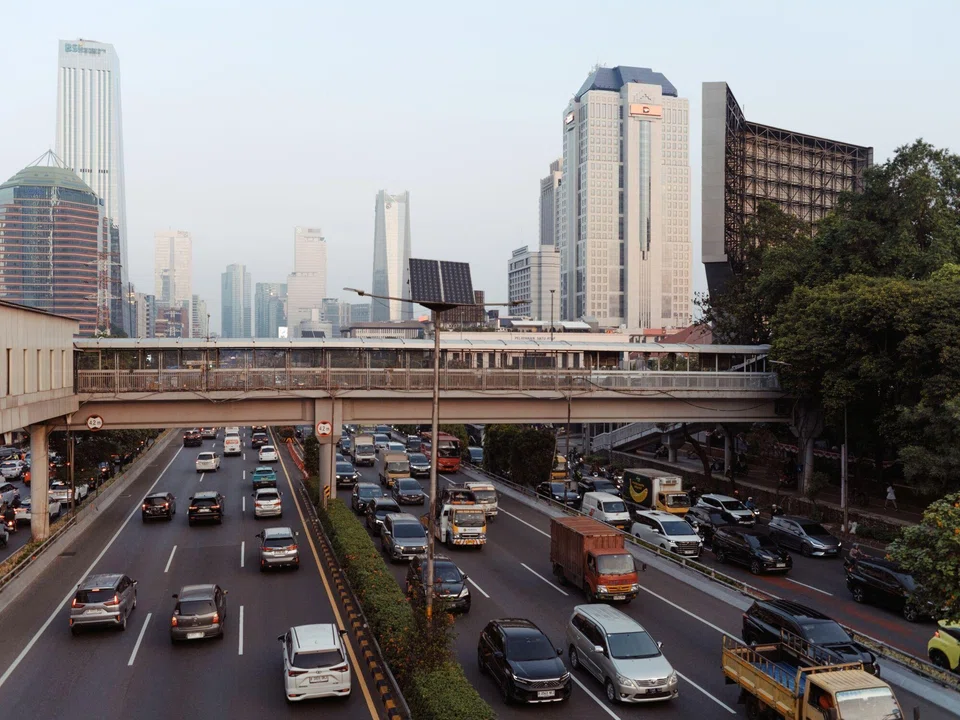
Indonesia could well be the next big growth driver for Singapore businesses
A thriving Asean neighbour will be a boon to city-state’s economy and companies

[SINGAPORE] For years, Singapore’s economy and businesses benefitted from plugging into a multilateral global trading system championed by the US.
But the US is walking away from multilateralism and embracing trade protectionism.
In recent decades, China’s rapid economic growth since the country started opening up to the outside world and pursuing economic reforms in the late 1970s has buoyed Singapore’s economy and corporates.
However, China’s economy is now transitioning to a slower phase of growth and facing the challenge of an ageing as well as shrinking population.
India’s recent economic growth has been strong, but it may not be able to propel the global economy the way China’s did.
Meanwhile, Japan’s economy has generally been sluggish, and much of Europe is also beset by slow growth.
Perhaps the local economy and businesses here will have to look largely to closer economic integration among Asean members and the growth of neighbouring economies, in particular Indonesia, for new opportunities.
Companies such as UOB are betting big on Asean’s growth. Singapore-headquartered Grab has extensive operations across Asean countries. The area can be attractive to investors as the region is peaceful in a world where wars rage in various places.
Among Asean nations, Indonesia’s economy is the largest as measured by gross domestic product, followed by Singapore’s. Indonesia, with a population of over 280 million including many young people, is the world’s fourth most populous country.
Close ties
Singapore and Indonesia share a close and deep economic partnership as well as strong people-to-people ties.
The close relationship was evident when Singapore Prime Minister Lawrence Wong and Indonesia President Prabowo Subianto met recently at the annual Leaders’ Retreat.
As it stands, many leading businesses here have Indonesian exposure. Singtel is invested in Indonesian mobile operator Telkomsel.
In the first three months, by geography, Indonesia contributed 5 per cent of operating profit for OCBC .
Earlier this year, OCBC announced that its Indonesian subsidiary PT Bank OCBC NISP Tbk (OCBC Indonesia) was acquiring the assets and liabilities of the retail banking and wealth management operations in PT Bank HSBC Indonesia.
This deal will add 336,000 customers and S$6.6 billion of assets under management to OCBC Indonesia.
CapitaLand Investment’s wholly owned lodging business unit The Ascott Limited has numerous properties spread across various parts of Indonesia.
The hotel portfolio of tycoon Ong Beng Seng’s Hotel Properties Ltd includes several upscale properties in Bali.
Opportunities
Indonesia’s economy grew by 5.1 per cent in 2025. It is diversified with strong contributions from agriculture, industry and services.
Opportunities could abound for Singapore companies to serve Indonesia’s large consumer market, which includes many young urban customers who are tech-savvy.
Singapore’s professional services firms may find rich pickings from servicing Indonesian businesses that are seeking to grow in the region and beyond.
With its established prowess in manufacturing, Indonesia could be a viable base for manufacturing operations of Singapore businesses.
Imagine the opportunities to grow Indonesia’s tourism sector given its rich offerings of cultural attractions, nature and beaches, among others.
Singapore is a major source of visitor arrivals to Indonesia, while Indonesia ranked second in international visitor arrivals to the city-state in 2025.
Singapore and Indonesia enjoy great transport connectivity. Indonesia’s proximity to Singapore makes it easy for business leaders here to oversee operations in Indonesia, and keep up with trends and developments in that market.
Despite Indonesia’s undoubted potential, might things go awry?
Early in my career, I spent much time in the country working on a project financing deal for an infrastructure project backed by a British-Japanese-Indonesian consortium. I was a regular on the early morning Singapore-Jakarta flight on Mondays and the late Jakarta-Singapore flight on Fridays.
Unfortunately, the deal I was working on was abruptly halted when the Asian financial crisis (AFC) blew up in 1997. Driven by a massive build-up of unhedged foreign corporate debt, a weak banking system and panicked regional currency contagion, Indonesia’s economy collapsed.
The collapse led to the downfall of Indonesia’s longest-serving president, Suharto.
Challenges
The Iran war has fuelled inflation and inflicted economic pain on Asean countries.
The year thus far has generally been a tough one for the Indonesian rupiah and the country’s stock market. Amid domestic fiscal pressure and global uncertainties, Indonesia has seen capital outflows.
Earlier this year, Fitch Ratings and Moody’s kept Indonesia’s credit rating, but downgraded the outlook to negative.
Nonetheless, there was positive news earlier this month with Indonesia retaining its investment-grade rating and stable outlook at S&P Global Ratings. According to S&P, a record of fiscal discipline over multiple administrations underpins the country’s credit profile
Like many countries, Indonesia faces challenges in creating jobs for young people and pressure on the fiscal purse to fund many urgent needs.
As many governments face fiscal strains and seek to tackle inequality, the temptation to interfere more in business is strong. Given that capitalism is far from perfect, there could theoretically be benefits from redirecting economic profits to helping people directly.
However, excessive government interference in business could risk undermining a country’s reputation for being investor-friendly, as investors dislike policy uncertainty and have choices among nations competing hard for investments.
On track for resilient growth
Despite facing significant near-term challenges, Indonesia’s economy should remain on track for resilient growth.
With robust post-AFC reforms and strict fiscal anchors, Indonesia is far stronger financially and much more structurally resilient today than during the AFC.
Prabowo became Indonesia’s president in 2024. He has been active on the world stage – cultivating ties with major powers and boosting the country’s standing.
As Prabowo seeks to make Indonesia great, the country needs to get the support of investors and build a vibrant economy. His task is helped by Indonesia being in a peaceful region and friends to competing major powers.
Having a big thriving economy next to Singapore will be a huge boon in a world where multilateralism is fraying. Think of more high-spending Indonesians flocking to Singapore and businesses here investing much more in Indonesia, among others.
As Prabowo reaches the mid-way point of his five-year presidential term next year, the task ahead to steady Indonesia’s ship, lift the spirits of the middle class, create jobs for the young, and make the economy more dynamic is daunting.
Still, Singapore businesses must hope that political stability reins in Indonesia and the country cuts red tape and ensures clear, consistent policies to garner investor confidence, so they can count on Indonesia as a growth engine.
At times, troubles that brew elsewhere help businesses here, such as banks, as wealth flows into Singapore due to its safe haven status. Also, foreigners buy property here because of the local currency’s strength.
Nevertheless, Singapore’s economy and businesses have far more to gain should Indonesia prosper.
May much more of Indonesia’s huge potential be realised under Prabowo’s leadership.