

Applied Materials CTO sees potential to develop robotics ecosystem in Singapore
The company’s corporate venture capital arm finds the embodied AI space promising

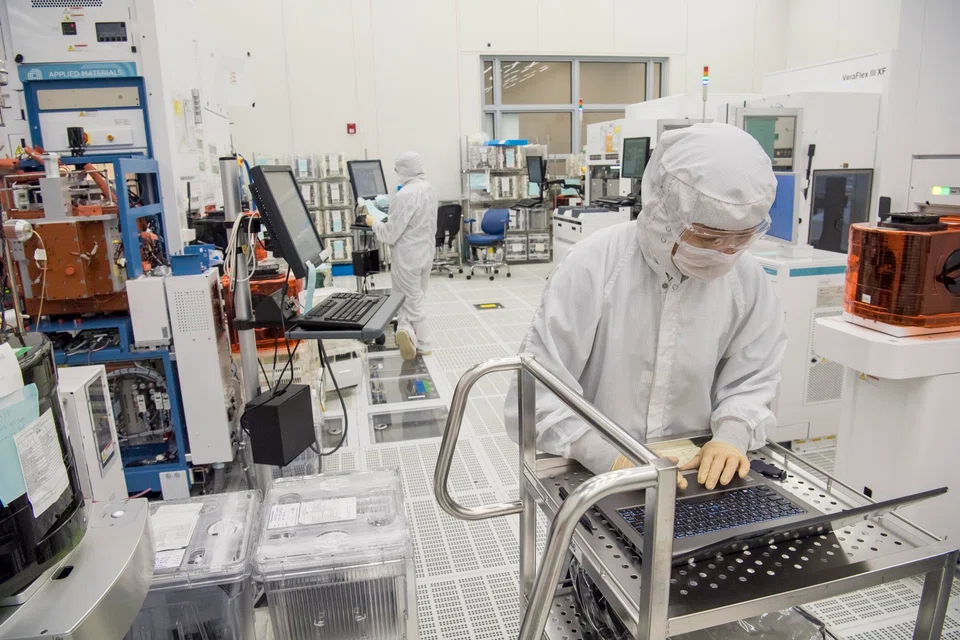
[SINGAPORE] Embodied artificial intelligence is the next big inflection point in the AI evolution, and Applied Materials intends to be front and centre in developing it, said the semiconductor equipment manufacturer’s chief technology officer.
Omkaram Nalamasu told The Business Times that since chips are already used to power robotics, the semiconductor industry already has a vested interest in this segment.
But he took the point a step further, and said companies should, in fact, start thinking about how embodied AI will eventually alter manufacturing, even in the semiconductor space.
He noted that in a “lights-out” or dark factory, industrial facilities can run, “primarily with robots and minimal human involvement”.
The Xiaomi Smart Factory in Beijing is a well-known example: It has 11 fully automated production lines, managed entirely by the company’s HyperIMP intelligent manufacturing platform.
“It’s important to see how we can enable this and how we can collaborate with these companies,” noted Nalamasu.
Apart from his role at Applied Materials, he also oversees Applied Ventures, the company’s corporate venture arm, which has about US$100 million to deploy every year and has invested about US$500 million in about 100 companies in 19 economies.
One area Applied Ventures has been focused on is backing startups in the embodied AI field. An example of this is Augmentus, a Singapore robotics startup that Applied Ventures backed in 2025, and is now a customer of.
Augmentus is using the funds to advance its development of AI-powered robotics, which help manufacturers out with complex and variable products.

More precisely, the startup’s physical AI software augments industrial robots with 3D vision and intelligence, giving them real-time understanding of part geometry and surface variation. The software generates and adapts motion paths so robots reason through the stages of the manufacturing process, rather than run on a fixed program.
Besides Applied Materials, Augmentus’ solution is used by ST Engineering and the Mantrac Group.
“Augmentus’ selling point is its unique technology and its applicability and interest for the semiconductor application,” Nalamasu noted.
In 2009, Applied Ventures backed Tera-Barrier Films, a nanotechnology company making protective films that was set up by two researchers from the Agency for Science, Technology and Research (A*Star).
Applied Ventures said that Tera-Barrier Films’ protective solutions in the organic light-emitting diode (Oled) space gave Applied Ventures the confidence to stay in Singapore’s deep-tech ecosystem.
Tera-Barrier Films’ protective films are designed to prevent oxygen and moisture from compromising the performance of Oled and other flexible electronics devices.
The investment aligned with Applied Venture’s broader goal of supporting environmentally sustainable technologies and driving the next-generation of flexible display hardware.
Applied Ventures makes what Nalamasu called “thesis-based investments” in emerging areas of the tech space. It aims to help startups develop their solutions and offerings, and works with them all the way to an exit.
“We have a global R&D footprint, we have global supply chains, we have global manufacturing, so we work with startups to make the right connections. We provide the technology where appropriate. In certain instances, we could be their customer, but we work with them hand-in-hand from early stage to exit,” he explained.
He is hoping to find more startups like Augmentus in Singapore and suggested that the city-state create an environment that can foster tech innovations.
He noted the willingness of government agencies and institutes of higher learning to work with and experiment with industry players, and the government’s growing focus on tech manufacturing innovations. A strong intellectual property framework also makes it attractive for companies to be based in Singapore.
Applied Ventures held its Applied Startup Technology & Research Accelerator (Astra) event for the first time in Singapore on May 22. The event is a platform for it to engage and assess startups for potential collaboration that could lead to investments; contact with 12 such startups was made. (*see amendment note)
Applied Materials also has manufacturing and R&D facilities in Singapore; its operations centre in the Republic is the company’s largest outside the United States.
“This is kind of a matchmaking,” said Nalamasu. “We are getting some of the important companies and connecting them to our servicing folks, manufacturing folks and our engineering folks.”
Applied Materials has hosted Astra in economies such as South Korea, Taiwan and India, where it also identifies startups that could complement what Applied Materials does, or have a solution of benefit to the wider tech manufacturing industry.
* Amendment note: An earlier version of this story listed a different date for the Astra event.
Decoding Asia newsletter: your guide to navigating Asia in a new global order. Sign up here to get Decoding Asia newsletter. Delivered to your inbox. Free.
Copyright SPH Media. All rights reserved.






