Too much time with colleagues can sour social interaction
A study of an Antarctic crew finds that, eventually, time together breeds conflict
AFTER 10 days in space, Christina Koch described her Artemis II crew as “inescapably, beautifully, dutifully linked”. Reid Wiseman, another of the US’ National Aeronautics and Space Administration astronauts, said they were “bonded forever”.
Scientists overwintering in Antarctic research stations might greet such statements with a collective eye roll and a suggestion that the astronauts try 10 months together, as opposed to 10 days.
Research published this week in the scientific journal PNAS shows how a winter in Antarctica can invert the normal benefits of social interaction.
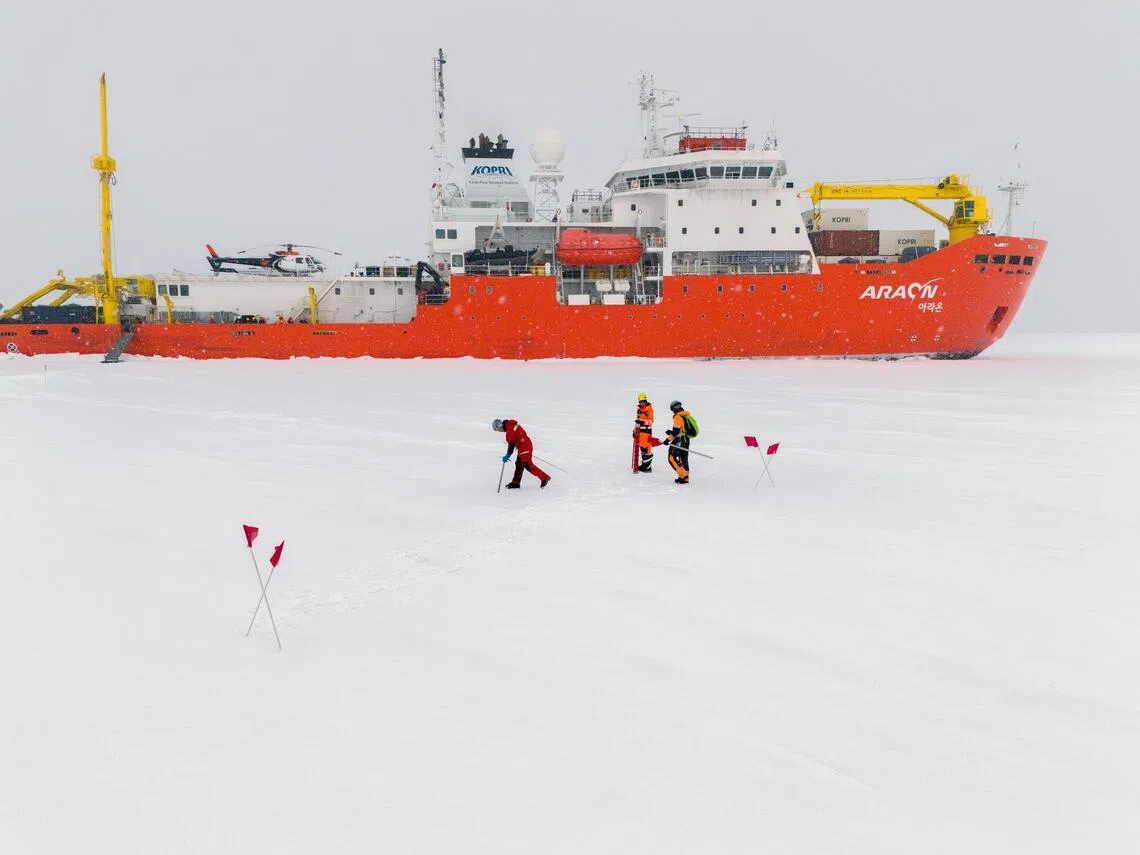
The study followed 12 so-called hivernauts based at Concordia, a French and Italian research station on the Antarctic Plateau, over the course of their 10-month mission.
As the hivernauts ran experiments, fixed machinery and shared meals, sensors recorded their proximity to each other. At various points, they also completed questionnaires measuring loneliness, paranoia, individual performance, team conflict and cohesion.
Winter temperatures at Concordia can reach minus 80 degrees Celsius, making it impossible to go outside without specialised gear. The station spends around four months in total darkness and its nearest neighbour is 560 km away.
Hivernauts have private sleeping quarters, but share their research and social space.
As the winter progressed, the hivernauts reported increasing levels of loneliness and paranoia, and rated their individual performance lower. Social interaction with crewmates did not help: Close-range interactions were correlated with worse ratings of group conflict and more paranoia. Over time, the hivernauts also increasingly clustered by nationality.
In normal organisations, more contact with colleagues is usually good for well-being. “But it seems to be in this confined environment it is exactly the opposite,” explained Jan Schmutz, an author of the study.
Dr Schmutz suspects that the difference may stem from a lack of privacy. “We humans are deeply social creatures, but also there are boundaries.”
Though Antarctic researchers are psychologically screened before heading south, there are still examples of tensions boiling over.
Earlier this year, a South Korean researcher was evacuated from the Jang Bogo research station after threatening colleagues with a makeshift knife. In 2018, a Russian engineer at another Antarctic base stabbed a colleague who had allegedly revealed the endings of several books.
The latest study focused on a single crew over a single winter, but its results will hold lessons for long-duration space missions. Dr Schmutz thinks that soft skills, such as teamwork and conflict management, should form a larger part of pre-mission training.
That way, more researchers may return from their stints with the joyous camaraderie of the Artemis crew.
©2026 The Economist Newspaper Limited. All rights reserved