Ringgit leads regional charge against USD on vaccine optimism and canned HSR

Singapore
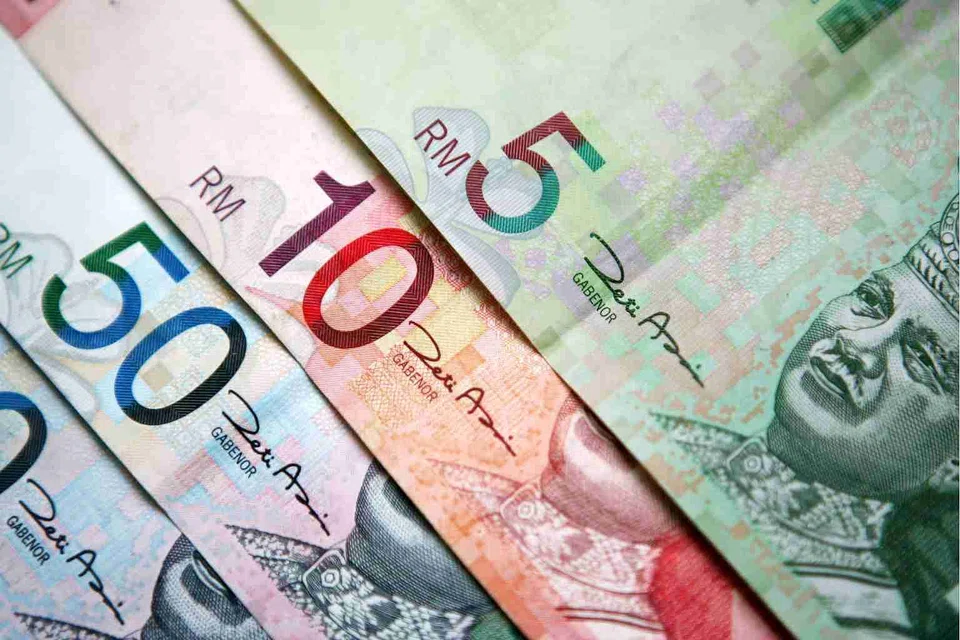
MALAYSIA'S ringgit welcomed 2021 by rising against the US dollar, in a movement underpinned by Covid-19 vaccine optimism and the news that the high-speed rail (HSR) project that was to connect Malaysia's capital Kuala Lumpur to Singapore would be canned.
The ringgit led the charge by regional currencies against the greenback, crossing the four-level mark to trade around 3.9 to the dollar. In contrast, the Kuala Lumpur Composite Index (KLCI) fell about 2 per cent, led by weakness among glove makers, to hit 1,593.12 on Monday, down from the previous close at 1,627.21.
Danny Goh, Credit Suisse's co-head of Asean Securities Research and head of Research, Malaysia, said: "Looking at the weakness in some of the other (Malaysian) stock prices, it looks like the market is responding negatively to the news on the cancellation of the KL-Singapore HSR.
"I believe the project is beyond the budget of Malaysia's government. So perhaps that could have contributed to the strength of the ringgit because people see that, by cancelling the project, the government is focusing more on the fiscal strength of the country, rather than on growth."
The 350 km KL-Singapore line was initially estimated by the Barisan Nasional government to cost RM72 billion; the subsequent administration led by Mahathir Mohamad re-pegged it at RM110 billion in 2018, saying that hidden costs had not been accounted for.
The latest cost estimate puts the cost at around RM65 billion.
The project had been suspended since September 2018 as Malaysia undertook a cost review and proposed various changes, including to the model, alignment and station design. The new structure was expected to afford it greater funding flexibility, and enable an earlier start for the project as a key pump-priming initiative.
The Minister in the Prime Minister's Department (Economic Affairs), Mustapa Mohamed, noted that the terms of the 2016 Bilateral Agreement were also no longer viable following the Covid-19 pandemic.
Citi's analyst Cheryl Tan said: "The termination is not entirely surprising following recent media reports, which highlighted that the Malaysian government will be undertaking a detailed study to explore all possible options for the project, including the viability of a domestic HSR (with the track ending in Johor instead of Singapore)."
A key pushback for the project was its similarity to the Gemas-Johor Baru Electrified Double-Tracking Project (EDTP), a RM9.5 billion project that is making steady progress and is scheduled for completion by October 2022. When it is up and running, a journey on it between Kuala Lumpur and Johor Bahru will be shortened from seven hours to four.
The EDTP is also the final piece of the existing Keretapi Tanah Melayu Bhd (KTMB) network, which is to be upgraded. Once completed, there will be a continuous rail connection from the southern tip of the Malaysian peninsula to Padang Besar on the Thai border.
Elsewhere in the region, most Asian currencies rallied against the US dollar on Monday. Apart from the Malaysian ringgit, the Indonesian ruppiah and Chinese yuan were also among the leaders, said Margaret Yang, DailyFX Strategist at IG.
"This is largely attributed to worsening virus situation in the US, which has spurred further monetary easing and stimulus hopes, which are weighing on the greenback. A weakening US dollar may boost capital inflow into emerging-market assets and currencies, which have already performed strongly in the second half of 2020."
Ms Yang said the recent rise in palm oil prices may also be underpinning the strength of the Malaysian ringgit.
Patrik Schowitz, global multi-asset strategist at JPMorgan Asset Management, which is underweight on the dollar, said: "Uncertainty is diminishing and the strong global growth recovery should favour the rest of the world, so we think the USD has some overvaluation to work off."
Investors are brushing aside concerns of the rising number of virus cases in Asia, and wagering that China will lead the region in economic recovery. From the yen to emerging-market currencies, the likes of Goldman Sachs Group and BlackRock expect further gains against the dollar.
Stephen Innes, Axi's chief global market strategist, said: "The market continues to build in boatloads of optimism for a global growth recovery in 2021, and an accompanying downward trajectory for the US dollar as the primary consensus view.
"Vaccine optimism is clearing the runway for the ringgit to take flight in 2021, as the world returns to normal travel and consumption patterns, which will eventually support higher oil prices."
The Singapore dollar hit its highest since April 2018 on Monday, after data indicated that the city-state's growth for 2020 will shrink by less than expected.