Foreigners seek South Korean stocks, bonds in March after three months of selling
 Add BT as a preferred source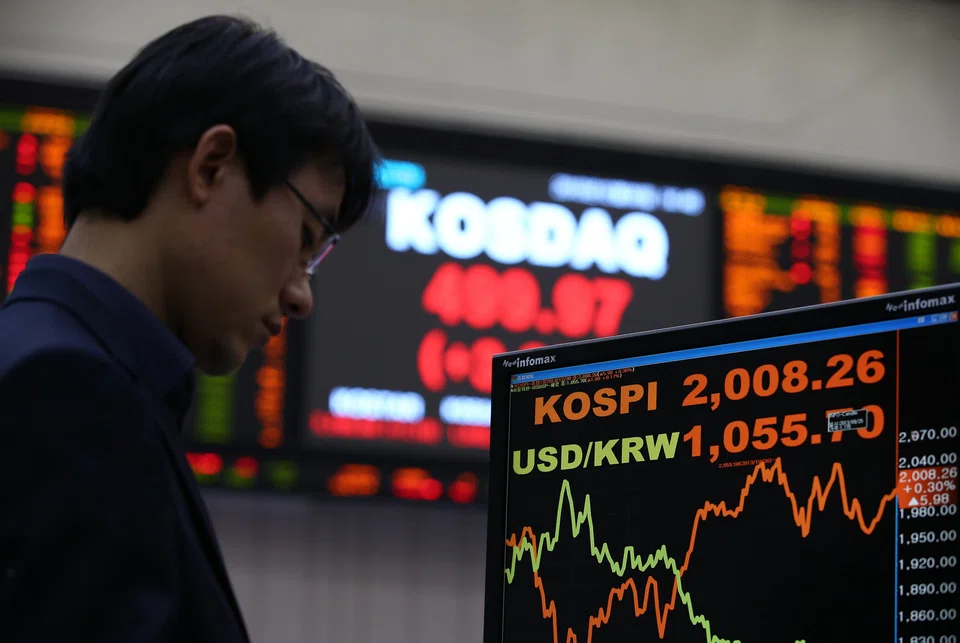
DeeperDive is a beta AI feature. Refer to full articles for the facts.
[SEOUL] South Korean stocks and bonds recorded foreign inflows for the first time in four months in March, according to official data on Monday, supporting comments by policymakers that market volatility at the start of the year is settling down.
Foreign investors boosted their bond holdings by 570 billion won (S$668.4 million) in March, according to Financial Supervisory Service (FSS) data, after pulling 4.2 trillion won worth of bonds in February.
Swiss investors raised their bond holdings by 1.2 trillion won last month, ahead of those in Australia and China who increased their investments by 397.0 billion won and 366.5 billion won respectively.
South Korean government officials have pointed in recent weeks to renewed foreign interest in local assets as global volatility eases, quelling concerns of capital flight in Asia's fourth-largest economy.
The monthly FSS data does not provide separate explanations on the asset movements.
As of end-March, investors in China had the biggest foreign holdings of South Korean bonds, equal to 18.4 per cent of all offshore investment, followed by Swiss and US investors with 14.8 per cent and 14.6 per cent respectively.
Navigate Asia in
a new global order
Get the insights delivered to your inbox.
Offshore investors bought 4.4 trillion won of South Korean shares in March, the FSS data showed, snapping up the biggest amount of stocks since buying 4.7 trillion won of stocks in April last year.
Foreigners sold 194 billion won of shares in February.
US investors topped the list, buying 1.8 trillion won of Korean stocks last month. They also held the biggest share of offshore stock investments, with 39.8 per cent as of the end of last month.
Investors in the UK and France followed, buying 958.1 billion and 527.9 billion won of South Korean shares last month, respectively.
REUTERS
Share with us your feedback on BT's products and services