

Local bond market slumps as investors stay away
January deals totalling S$638m a pale shadow of the S$2.2b achieved a year ago; lack of clarity cited for the drop in demand
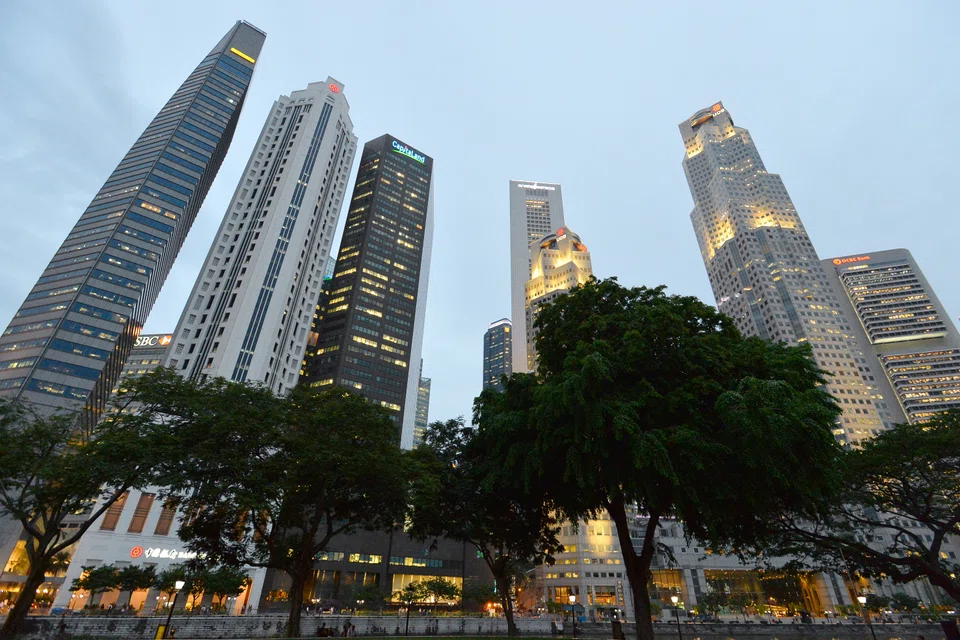
Singapore
VOLATILITY is spooking bond investors, and fed up with declining interest rates, they are staying away. The local bond market has slumped as investors keep their powder dry, with January sales not even reaching 30 per cent of the volume achieved a year ago.
Last month, Singapore dollar bond issuances from 11 deals raised a paltry S$638 million, compared with S$2.2 billion in January 2014.
For the whole of 2014, bond sales reached S$23.5 billion, up from 2013's S$19.8 billion. The high was S$31 billion in 2012.
"The entire market has been choppy for the past six weeks . . . in this kind of market, investors are sidelined as they are not getting clarity," said Clifford Lee, DBS Bank head of fixed income.
Mr Lee said that bond sales elsewhere has also been dismal. Last month, proceeds raised from yuan bonds was less than half at 23.8 billion yuan (S$5.12 billion) against 50.1 billion yuan in January 2014.
Mr Lee ticked off several events such as the fall in oil prices, US dollar strength, a poor macro environment and the woes of Chinese property company Kaisa that has turned sentiment sour for Asian corporate bonds.
China's central bank was the latest to join its counterparts around the world in easing monetary policy on Wednesday in a bid to stimulate the world's second largest economy. China's growth slowed to 7.4 per cent in 2014 - a 24-year low - from 7.7 per cent in 2013.
Add to that poor interest rates and it has been tough getting investors to bite.
"It's at a bit of crossroads, benchmark rates are so low right now that absolute rates are too low, even for institutions, not just private bank investors," said Winston Tay, RBS head of bond syndicate, South East Asia.
Tracking the plunging 10-year US Treasury, the yield of the benchmark 10-year Singapore Government Securities crashed through 2 per cent last month on Jan 16 to 1.81 per cent as the price rose to 110.51. It has since recovered somewhat to 1.91 on Thursday with the price easing to 109.53. Bond prices rise when yields fall, and vice versa.
The 10-year US Treasury note was 1.794 per cent on Wednesday, up from a 21-month low of 1.669 per cent on Monday as investors took profit.
Still fixed income bankers are optimistic that the worst may not be far off. Mr Lee noted that Chinese property developer Shimao Property Holdings managed to sell its bonds this week.
Shimao Properties has become the first Chinese property developer to launch a high yield bond since the sector was rocked by problems at Kaisa Group, reported Reuters.
Shimao attracted a US$6 billion order book within hours of launching its seven-year bonds on Tuesday. However, the indicated yield of about 8.5 per cent is estimated to be 100 basis points higher than what it would have paid in early December, suggesting that the sector is set for significantly higher funding costs.
"At least, the market could agree on a price," said Mr Lee, referring to the wider premium.
RBS's Mr Tay is also hopeful that the bond market would get better, citing upcoming refinancing deals.
While the SGD market has been muted in the first month of 2015, he said, RBS does expect primary activities to pick up as there is an ever growing list of issuers who are either actively engaging investors or waiting on the sidelines updating their documentation.
"There is a relatively large amount of bonds (S$4-4.5 billion) from government-linked entities and tier 1 corporate issuers that are due for refinancing and institutional investors, particularly the insurance companies and asset managers, will welcome these potential deals."
TRENDING NOW

If Europe goes to war, the fallout will be felt in East Asia

Government to bring forward raising of retirement age, give employers more financial support to create flexi-load jobs

Indonesia stocks suffer worst plunge in nearly 30 years as MSCI proposes standalone status

Mapletree Industrial Trust posts 6.6% drop in Q2 DPU to S$0.0297

