Singapore banks to be allowed to invest in digital consumer platforms
But any such investment will be capped at 10% of the bank's capital funds, says Heng Swee Keat
Singapore
THE Monetary Authority of Singapore (MAS) will let banks in Singapore invest in digital consumer platforms such as Carousell and Qoo10, so that they can have stakes in such "permissible non-financial businesses" related to or which complement their core financial businesses.
Minister for Finance Heng Swee Keat said on Tuesday evening that MAS will streamline regulatory requirements for banks seeking to conduct or invest in digital platforms that match buyers and sellers, and engage in the online sale of consumer goods and services. The investment in such related businesses will, however, be capped at 10 per cent of the bank's capital funds.
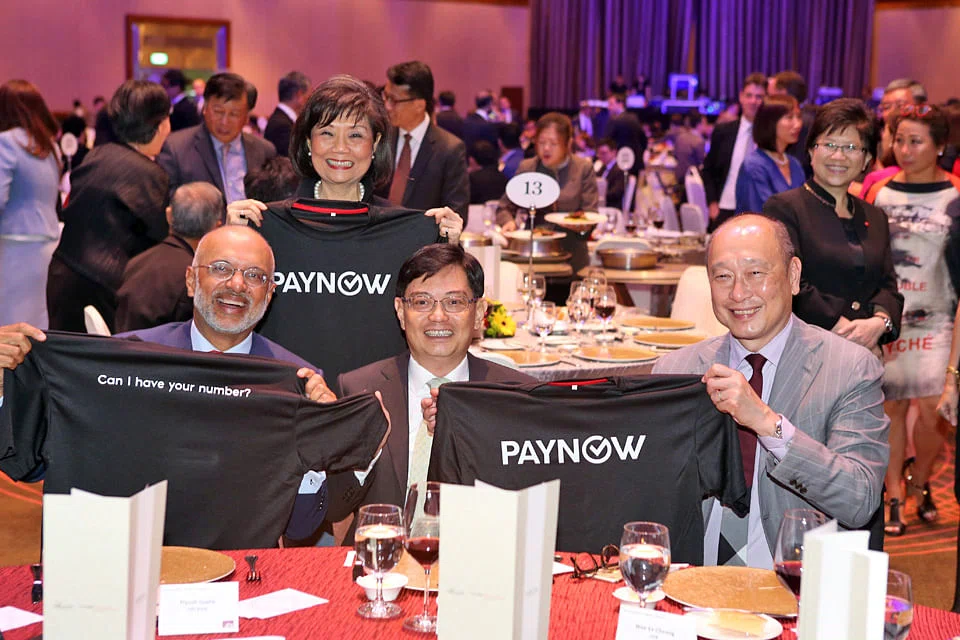
Speaking at the Association of Banks in Singapore (ABS) annual dinner, he said: "Banks are currently prohibited from selling consumer goods. But non-bank digital players are now offering a seamless transactional experience in the sale as well as payment of consumer goods."
In simplifying the requirements, MAS says banks will not need to seek prior regulatory approval before conducting or acquiring major equity stakes in these "permissible non-financial businesses". The regulator will also remove requirements such as the conducting of regular stress tests and external audits. The changes will refine the 2001 "anti-commingling" framework for banks, which separates their financial and non-financial businesses to ensure that they focus on their core businesses.
The non-financial businesses that remain prohibited as investment options are property development and management, hotel and resort facilities, as well as certain commodities-related businesses.
There are non-financial businesses that sell consumer goods, but not via digital platforms mainly - supermarket chains, for example; banks would still have to seek MAS's approval for such investments. Mr Heng said: "We do not want banks to engage in the sale of consumer goods and services as a business in its own right."
MAS will run a consultation on the streamlined framework by September.
Singapore will also set up a forum for the payments industry and businesses, so players can gather to discuss payment strategies, said Mr Heng. They can also promote inter-operable payments services.
Responding to the MAS announcement, DBS chief executive Piyush Gupta said: "The logic is compelling. With the ubiquity of the smartphone, customers increasingly want banking to be seamlessly integrated into their daily lives." He noted that in China, ICBC (Industrial and Commercial Bank of China) has a website that is one of the leading online shopping malls. "There are a number of areas where a banking service can be nicely integrated into e-commerce, and we welcome the opportunity to do so."
Earlier at the dinner, he warned that the banking industry could be hollowed out amid new threats, and called for "thoughtful regulation" even as the public and private sectors team up to consider the uncertainties wrought by disruption today.
"As new players enter our industry, they operate much like banks, but often benefit from a more favourable regulatory regime, (set up) in the desire to spur innovation and competition."
Mr Gupta, the incoming ABS chairman, said: "This has the possibility of bringing tremendous benefit in terms of customer outcomes. However, the impact this has on economic value capture within the system is somewhat less clear."
Besides the impact on the financial services, the advent of fintech and disruption throws up questions on employment, he said. Advancements in technology will undeniably put several white-collar jobs at risk, but a key question to ask is what the pace of this disruption is.
And, by their very business models, most fintechs are not large job creators. He noted, for instance, that Ant Financial acquired 100 million new clients last year, but hires only around 7,000 staff.
The challenge of Big Data lies also in preventing financial exclusion. For example, Mr Gupta said, insurance companies operate today on the principle of socialisation of risk, but if they can predict a person's risk of contracting cancer relative to his peers, that individual could be unable to obtain insurance coverage.
Outgoing ABS chairman and UOB chief executive Wee Ee Cheong said the financial sector has to reinvent itself, but has to strike a balance between growth and stability, and between enterprise and discipline.
"While pursuing various initiatives in the race to be a smart financial centre, let's not lose sight of our ultimate objective. It is not about pursuing technology or efficiency for its own sake, but to achieve sustainable business growth and quality of life for customers."
He noted that Singapore ranks well in innovation and going digital, but is lower placed in business agility, adaptive attitude and in nimbleness. "We have talent and resources from the public and private sectors. But we need agility and a can-do spirit to succeed in a world where no one is standing still. Perhaps we need to embrace ambiguity more readily, to make swifter decisions in the face of incomplete information, and to take on more calculated risks."
READ MORE: Big push for digital payments with new p2p fund transfer