S'pore group working on Know Your Customer blockchain system
The consortium, which includes 3 banks, said to be the first in South-east Asia
Singapore
THE Republic is yet another step closer to using blockchain technology to improve Know Your Customer (KYC), currently one of the most tedious, complex and highly regulated of financial processes.
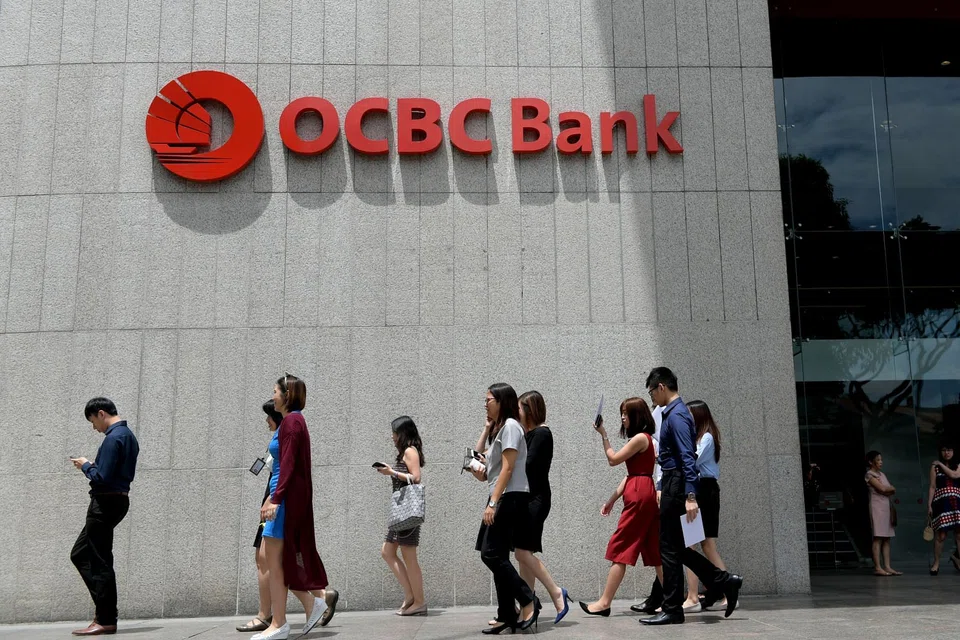
A consortium formed by OCBC, HSBC, Mitsubishi UFJ Financial Group and Singapore's Infocomm Media Development Authority has successfully completed a proof-of-concept (POC) for a KYC blockchain, the parties announced on Tuesday.
This is believed to be the first time in South-east Asia that a consortium comprising three banks is jointly developing a KYC blockchain to make KYC more efficient and secure.
KYC is the process by which financial institutions identify and verify the credentials of their clients, such as when their clients open a new account or apply for a credit facility.
Using blockchain will improve the experience of onboarding customers and reduce the inefficiencies and costs associated with KYC and compliance, the parties said.
Costs to financial institutions are currently "very high" - in part because KYC is conducted by each bank separately and customer information is not shared with other financial institutions.
This renders the process inefficient and inconvenient as the customer is required to provide the same set of personal particulars and information to a bank each time he or she starts a new banking relationship.
"The manual process also gives rise to inconsistent information being collected by banks, and customer information not being promptly updated," the parties said.
The KYC blockchain - which runs on a distributed ledger technology platform - will allow structured information to be recorded, accessed and shared across a distributed network using advanced cryptography.
This enables banks to collect, validate and share customer information (with the customer's consent) accurately, efficiently and securely. It is also said to be able to reduce the duplication of information and manual checks for both banks and customers, and enhance the quality of the customer information that is stored.
Moreover, customers' information that is encrypted on the shared ledger can be validated by referring to government registries, tax authorities and credit bureaus. Banks, meanwhile, can store secured digital records of the validation process on the shared KYC platform to streamline auditing and regulatory reporting.
The consortium's prototype performance was tested between February and May this year. "It remained stable even with a high volume of information flow, was resistant to tampering by third parties and maintained confidentiality by permitting access to the ledger's information only with legitimate authentication," said the parties.
Lessons obtained from the POC will go towards the further study, development and refinement of the shared ledger architecture for potential future deployment.
Other companies pursuing a KYC blockchain include IBM (which has partnered Singapore fintech startup KYCK! for the project), and global consultancy firm, Deloitte.