

Swiss franc, yen rise as North Korea tensions brew
 Add BT as a preferred source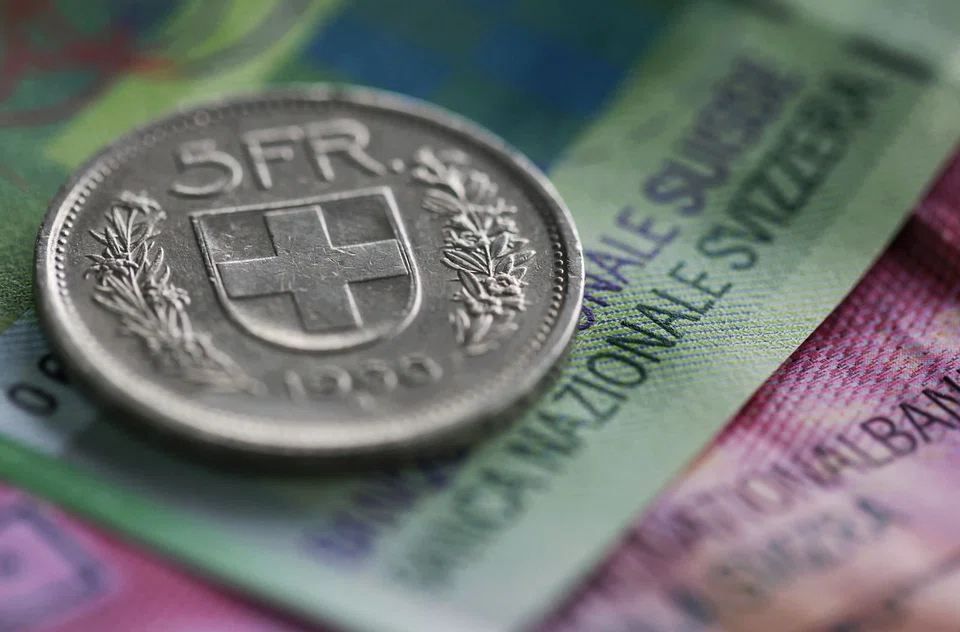
DeeperDive is a beta AI feature. Refer to full articles for the facts.
[NEW YORK] The Swiss franc rallied hard against the euro and the US dollar on Wednesday, as increased tensions between the United States and North Korea led investors to look for assets deemed as less risky.
The Swiss franc was on pace for one of the largest single-day jumps against the euro since the Swiss National Bank removed its cap on the currency in January 2015. The greenback was down 1.1 against the franc, its worst drop in more than six weeks.
The US dollar also slipped 0.26 per cent lower against the yen to 110.01 yen.
The Swiss and Japanese currencies are often sought in times of geopolitical tension partly because the countries have big current account surpluses.
Japan is the world's biggest creditor nation and there is an assumption investors there will repatriate funds should a crisis eventuate.
"Obviously we are looking at the increased tensions between the US and North Korea," said Brad Bechtel, managing director FX at Jefferies in New York.
Navigate Asia in
a new global order
Get the insights delivered to your inbox.
North Korea said on Wednesday it is "carefully examining" plans for a missile strike on the US Pacific territory of Guam, just hours after US President Donald Trump told the North that any threat it presented to the United States would be met with "fire and fury".
"It's just a classic risk-off day," said Greg Anderson, global head of foreign exchange strategy at BMO Capital Markets in New York.
Weaker US Treasury yields also helped the yen, boosting its appeal relative to the greenback.
US Treasury yields fell on Wednesday, with yields on the benchmark 10-year note hitting a six-week low, as investors reached for safe-haven assets such as government debt.
The US dollar index, which tracks the greenback against six rival currencies, was down 0.12 per cent to 93.53, after rising as high as 93.888 earlier in the session.
Most Asian currencies stumbled, with the Korean won on pace for its biggest fall in nearly eight weeks.
Worries about increased US-North Korea tension also weighed on the Canadian dollar, which weakened against its US counterpart, despite higher oil prices and stronger-than-expected domestic housing data.
Sterling was little changed at US$1.30 and near a 2-1/2-week low, as investors looked to key data due next week for clues on the health of the British economy as the country prepares to leave the European Union.
REUTERS
Share with us your feedback on BT's products and services
TRENDING NOW

StarHub hands Ensign InfoSecurity control back to Temasek in S$115 million deal, books S$200 million gain
Singaporeans can now buy record amount of yen per Singdollar

Air India asks Tata, Singapore Airlines for funds after US$2.4 billion loss

Keppel DC Reit posts 13.2% higher Q1 DPU of S$0.02833 on strong portfolio performance

