Swiss National Bank to adopt negative interest rate
Move is to hold down value of Swiss franc amid turmoil in global currency markets
Paris
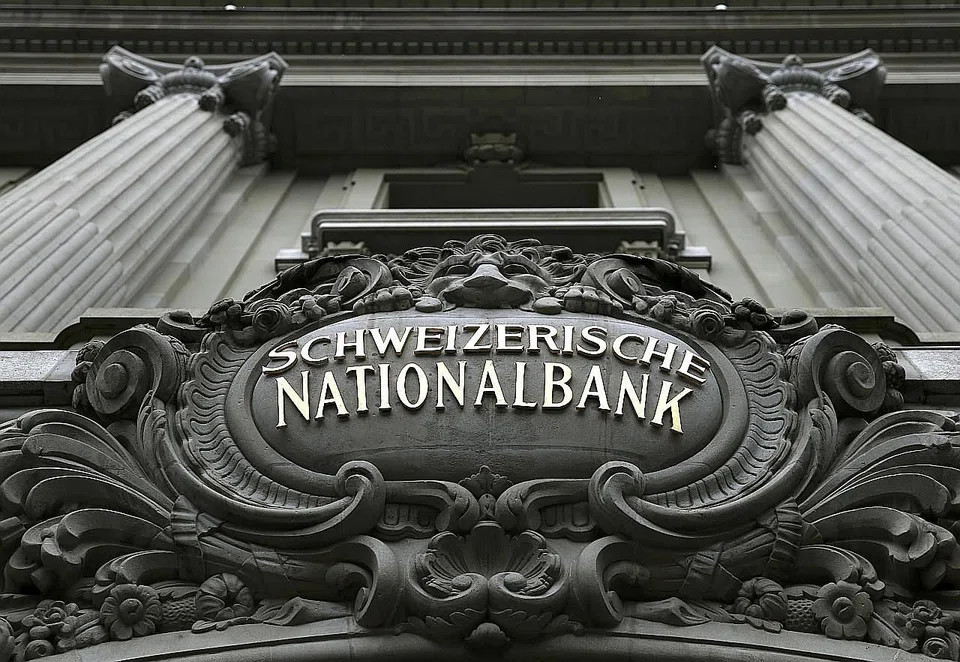
SWITZERLAND is introducing a negative interest rate on deposits held by lenders at its central bank, moving to hold down the value of the Swiss franc amid turmoil in global currency markets and expectations that deflation is at hand.
The Swiss National Bank said in a statement from Zurich on Thursday that it would begin charging banks 0.25 per cent interest on bank deposits exceeding a certain threshold, effective on Jan 22.
The bank acted as the crisis in Russia and plummeting oil prices have caused a run on emerging market currencies. Switzerland, known for its fiscal rectitude and banking secrecy, tends to attract capital inflows as money flees chaos elsewhere. But that puts pressure on the franc, threatening to make exporters less competitive and raising the risk that very low price pressures will tip the economy into outright deflation.
"Over the past few days, a number of factors have prompted increased demand for safe investments," the central bank said. "The introduction of negative interest rates makes it less attractive to hold Swiss franc investments, and thereby supports the minimum exchange rate."
In September 2011, with the eurozone's sovereign debt crisis in full swing, the central bank announced a policy of restraining the franc's value to no less than 1.2 francs per euro, and said that it was "prepared to buy foreign currency in unlimited quantities" to defend that level. It said on Thursday that it remained committed to enforcing that policy "with the utmost determination".
The franc, which had been creeping towards the central bank's limit on the currency, retreated modestly. The euro rose 0.3 per cent to 1.2046 francs while the dollar rose 0.8 per cent to 0.9805 franc.
Analysts were sceptical that the new policy would significantly reduce demand for Swiss assets while emerging markets were in turmoil.
"It's an external factor that has precipitated them to take this action," said Derek Halpenny, the European head of global markets research at Bank of Tokyo-Mitsubishi UFJ in London. "Is a negative interest rate going to solve their problem? I don't think so."
Still, Mr Halpenny said, it was "a 100 per cent certainty" that the Swiss National Bank's 1.2-franc line in the sand would hold for as long as the central bank was willing to vacuum up as many euros as needed. The central bank maintains that floor by selling francs on the open market in exchange for euros, pushing down the franc and supporting the euro.
Since 2009, Mr Halpenny noted, the central bank has quintupled its foreign currency holdings to 470 billion francs (S$630.39 billion), as it intervened to hold down the franc.
The central bank said that the new policy was meant to push its key interest rate - the three-month London interbank offered rate for Swiss franc loans between banks - below zero. Doing so would tend to make short-term Swiss assets such as franc-denominated money market funds and debt securities less attractive. The policy, which is not aimed at individuals, affects only financial institutions on the portion of their deposits over 10 million francs.
Thomas Jordan, governor of the Swiss central bank, told a news conference in Zurich on Thursday that the effect on the rates paid on individual savers' accounts by banks was beyond the central bank's responsibility, but that the move was "no different from any other interest rate cuts by a central bank". The interest rates paid to savers in Switzerland are already extremely low, so there is little room for lenders to cut further.
In putting in place the negative rate, in essence a tax on excess deposits, the Swiss monetary authority joins the European Central Bank, which introduced its own negative 0.1 per cent deposit rate in June and then changed that to minus 0.2 per cent in September.
The European Central Bank action was aimed at a different problem: the failure of eurozone banks to increase lending to businesses, one of the factors that is holding back growth in the region. So far, the action has not borne fruit, and lending has continued to contract. NYT