

UOB's medium-risk fund doubles assets in 3 months to S$2.2b
Income Builder in turn invests in 3 other funds and is meant to evenly straddle between risk and return
Singapore
IN AN investor universe called Singapore where most investors are conservative, and a smattering few are big risk takers, UOB has managed in three months to double its assets in a fund that is meant to evenly straddle between risk and return.
And the unit trust, which has returns hovering around 5 per cent for its moderate risk, should eventually lift returns to 7-8 per cent as the US economy recovers, and interest rates increase, a top executive at the bank told The Business Times.
UOB's Income Builder fund attracted S$2.2 billion in assets under management (AUM) as at end-August. Around May, the AUM for the fund stood at just over S$1 billion.
Introduced in October last year, Income Builder is a fund that in turn invests in three other funds - or a fund-of-funds. The trio is made up of the Blackrock Multi-Asset Income Fund, the JP Morgan Global Income Fund and the Schroder Global Multi-Asset Income Fund. To be clear, given the layers of fees for funds-of- funds, they also tend to charge higher fees than others.
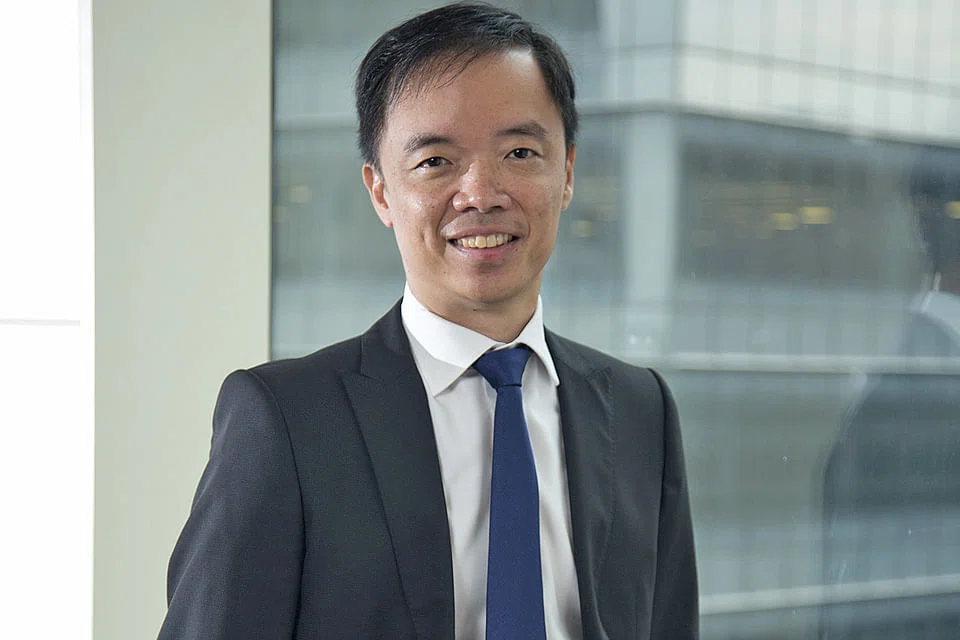
"We have selected funds that are termed volatility-controlled, but it's just a more technical term for managing risk. We've always believed that talking about returns, starts from talking about risks," Dennis Khoo, head of personal financial services, Singapore, UOB, told BT.
Broadly, the three funds have the flexibility to adjust their exposure to mainly global equities and bonds, and ensure the volatility in the portfolios does not exceed 10 per cent.
These funds also use derivatives to hedge out issues such as duration risk, which could play out in the form of capital loss on long-dated bonds in a rising interest rate environment.
Mr Khoo said the funds fell less than expected during the recent market rout in the third quarter, and have mostly recovered since then, particularly as the funds tend to invest in dividend stocks.
"We expect that the payout from the Income Builder fund should move towards the 7 to 8 per cent range that has been the typical norm before the financial crisis", for such income-generating products, said Mr Khoo, noting that a rise in rates will reflect strength in the US economy and among corporates.
He observed that Singaporeans are conservative; indeed, a large part of their assets are in fixed deposits and savings. Their short-term outlook has partly kept them away from the Singapore savings bonds (SSBs) as well, which has registered poor take-up.
"The problem with Singaporeans is that they are also very short term. It's 10 years, and frankly, it's not a very good deal, because everybody knows that interest rates are going up," said Mr Khoo, referring to the duration of the SSBs. "(There's) something that we need to correct: that investing isn't a short-term thing. It's something that you do over a regular basis, over a period of time."
The understanding of risk and return must come from both customers and bankers, said Mr Khoo, who is currently working to match relationship managers (RMs) to clients according to their risk profile, and for bankers to explain risks better. For example, an RM should be able to present three different bonds to a client, and explain the difference in credit risk that determines the coupon rate.
"I don't think relationship managers are not aware of the fact that it starts with risk," said Mr Khoo. "But there may be a concern that if you start talking about risk, then customers get afraid of purchasing."
TRENDING NOW

Once staunchly pro-China, Malaysian Chinese businesses are now distancing themselves from Beijing

Singapore’s wealth management success should extend to everyday families
Stocks to watch: Jardine Matheson, Frasers Property, Advanced Systems Automation, Southern Alliance Mining

‘Wasting money, spending tokens’: Companies still in search of AI use cases with worthwhile ROI, says Broadcom’s Hock Tan

