

Brokers’ take: DBS downgrades Sabana Reit to ‘fully valued’ on near-term uncertainties
 Add BT as a preferred source
Zhao Yifan
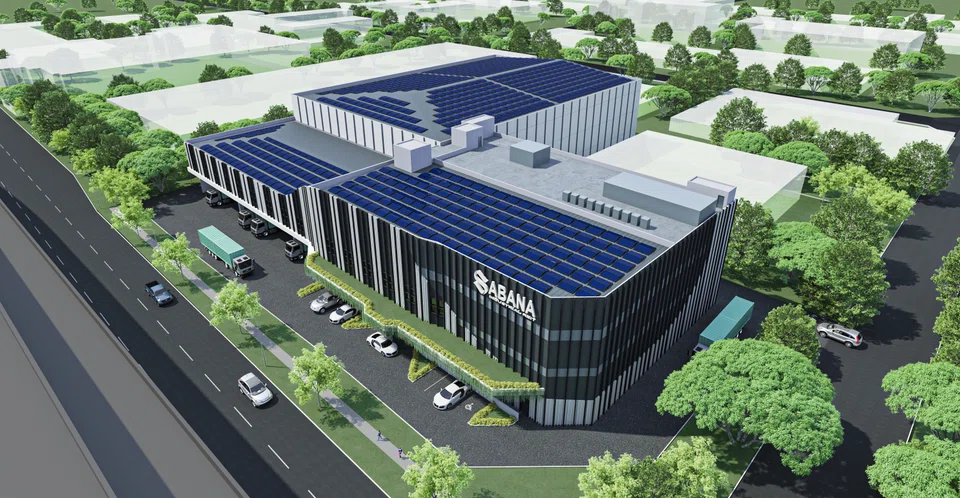
THE upcoming internalisation of Sabana Industrial Real Estate Investment Trust ’s (Sabana Reit) management could signal potential overheads that could impact overall returns, according to DBS Group Research. On Tuesday (Aug 8), the research house downgraded its call on Sabana Reit to “fully valued” from “hold”, while reducing its price target to S$0.30 from S$0.48.
The downgrade came after an extraordinary general meeting (EGM) on Monday, where unitholders of Sabana Reit voted to remove Sabana Real Estate Investment Management and kick off the process of internalising the Reit’s manager.
The research house expects Sabana Reit’s performance as Singapore’s first internalised Reit manager to “create additional uncertainties”, at least in the short term.
“While cost rationalisation and a more aligned management team with unitholders’ interest are mooted benefits, we believe that this is likely felt in the medium term. The current transactional phase could mean additional costs and resources which could add pressure to the returns of the Reit,” said DBS’ analysts.
This has led to the analysts raising their cost of equity assumptions, resulting in the lower target price.
Moreover, while forward yields remain attractive at 7.3 per cent for the Reit, the analysts remain cognisant of potential cost spikes, along with uncertainties around the Reit’s refinancing.
According to their calculations, every 100 basis-point increase in borrowing costs will lead to a 9.2 per cent decrease in distribution per unit (DPU), which will result in the DPU yield falling to 6.6 per cent from the current estimation of 7.3 per cent.
“Although it is uncertain if there will be any impact to borrowing costs in the immediate term, we believe that, given the Reit’s internalised status, lenders may relook credit spreads when loans come due for refinancing,” they noted.
DBS envisioned further EGMs and administrative procedures to be carried out in the coming months, leading to additional costs and even greater pressure on the Reit’s returns.


“The process of internalising and searching for replacement management candidates could be a long drawn-out process that also comes with additional costs and resources, potentially eroding any expected cost savings, at least in the near to medium term.”
Units of the Reit closed flat at S$0.405 on Aug 4 before the Reit’s manager called for a trading halt on the morning of Aug 7.
Decoding Asia newsletter: your guide to navigating Asia in a new global order. Sign up here to get Decoding Asia newsletter. Delivered to your inbox. Free.
Copyright SPH Media. All rights reserved.
TRENDING NOW

Profit with purpose: Kim Choo Kueh Chang’s pivot from public listing to protecting heritage

Singapore Kitchen CEO, senior manager charged with alleged fraud, falsifying accounts; both to stay in jobs for now

Yeo’s, Tiger Beer and now Gardenia – flight of food manufacturing from Singapore might be just as planned

Should you sacrifice some CPF Life income in favour of ILPs? Tread carefully

