

Catalist firms punching above their weight post-IPO
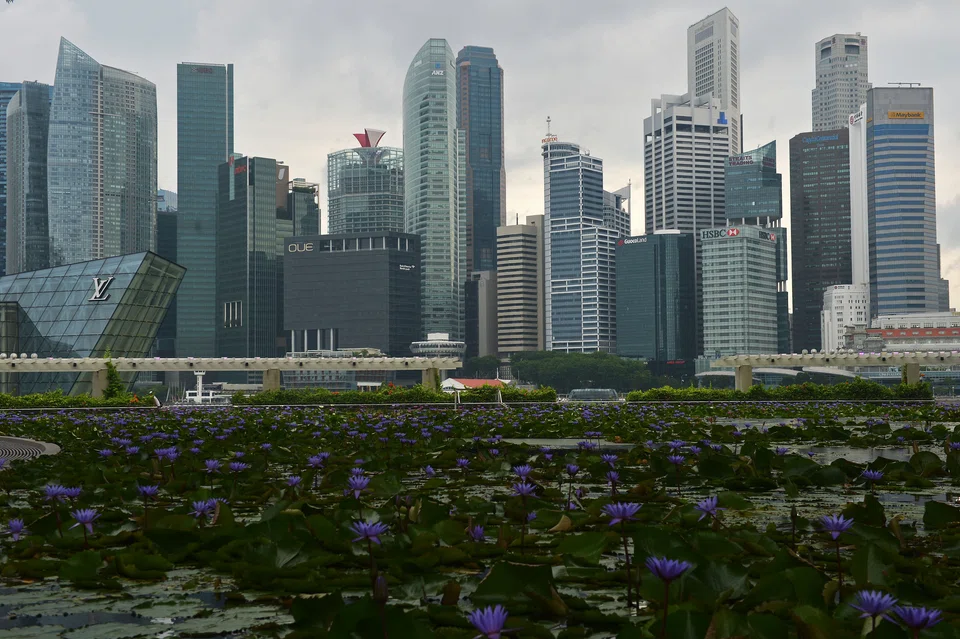
A RECENT report on initial public offerings (IPOs) showed that Singapore has captured South-east Asia's largest share of proceeds in 2016, reversing last year's meagre count.
A Deloitte Singapore study showed a total of 16 IPOs in Singapore so far in 2016, raising S$2.3 billion and adding S$4.4 billion in market capitalisation at listing. That represented 36 per cent of the S$6.2 billion raised in South-east Asia, the largest share of IPO proceeds in the region.
Singapore's relatively active IPO market in 2016 was in stark contrast to the previous year, which saw just S$512.4 million raised from 13 deals.
"Singapore IPO performance improved in 2016," Deloitte wrote in its report. "This is in spite of global issues such as Brexit, 2016 US presidential election, uncertainty surrounding a Federal interest rate hike, and a decrease in domestic GDP year-on-year growth rate in Q3 2015 of 0.6 per cent."
The study looked at IPOs over the past three years - 2014-2016 - and the cumulative amount raised in Singapore of S$6.2 billion was second in South-east Asia, behind Thailand's S$6.3 billion.
What most reports did not pick up from the study was the post-IPO performance and here Singapore put up a dismal showing, the worst among the six South-east Asian countries.
The return in share price from IPO date to Nov 15, 2016, from the past three years was a mere 10 per cent. Thailand, Indonesia and Vietnam were way ahead with 61 per cent, 56 per cent and 51 per cent respectively. Malaysia was 19 per cent and the Philippines 16 per cent.
Delve deeper and the positive post-IPO performances in Singapore came mainly from second board Catalist companies, which is not surprising given that they have dominated the listing activity in the three years.
Catalist companies generally remain below the radar given the lack of coverage from brokerage houses as these are small companies which are deemed riskier and lacking in governance. And there have been not a few horror Catalist stories. Critically, before listing, Catalist companies do not have to show track records unlike their mainboard cousins. Which is not the same as not having a track record.
In fact, the sponsors of the Catalist listings always tell the companies "if no track record, how to sell?", said Ernest Kan, Deloitte Singapore deputy managing partner (markets).
In 2014, there were 25 IPOs comprising 16 Catalist and nine mainboard companies.
Four Catalist companies continue to reward IPO subscribers three years later with one flat; the whopper is TalkMed Group Ltd which has returned 422.5 per cent to S$1.045 on Nov 15. Its IPO price was 20 Singapore cents when it listed on Jan 30, 2014.
Of the nine mainboard IPOs in 2014, only two are positive - Japfa and Keppel DC Reit.
In 2015, there were 13 IPOs of which only one was mainboard and so far that is in the red. Three of the Catalist IPOs are in the money. Another beast is Singapore O&G which returned 362 per cent, Choo Chiang Holdings is up 5.7 per cent and Jumbo up 146 per cent.
This year's Catalist crop has been pretty healthy. Of the 11 IPOs, seven are in the money.
Out of the five mainboard IPOs in 2016, only one is positive - Frasers Logistics and Industrial Trust. Manulife US Reit is borderline. Listed on May 20, it hovers around its IPO price of US$0.83 for the past several months.
One analyst said that the positive returns post-IPO may be due to undervalued pricing to overcome the risky perception of Catalist companies. Mainboard aspirants, being bigger companies, enjoy better brand recognition and investment bankers need not underprice them to sell.
Another ventured that Catalist companies being small make them easier for investors to track and understand, and when they see stable performances, confidence increases.
"Mainboard companies are big - sometimes it's difficult to know what they're doing."
Sometimes small can be beautiful.
TRENDING NOW

South-east Asia has lost Nvidia’s best salesman

Demand, tech capabilities position Apac and AI as Skyscanner’s next growth frontiers: CEO Bryan Batista
Peter Kwee’s Ridley Park bungalow on the market with S$100 million asking price

Beyond the greenback, Vietnam’s big borrowers turn to Asian-currency bonds

