

Post-IPO Japfa is not confidence-inspiring
WHEN Indonesia agri-food company Japfa Ltd listed in Singapore in August, it was widely touted as a triumph for the local initial public offering (IPO) market. With a market capitalisation of just over S$1 billion, Japfa was seen as an institutional stock that offered exposure to the fast-growing Indonesian economy as well as China and the rest of the region.
It was a story that sold well and was seen as being key in helping to restore confidence in Singapore stocks, which had fallen to one of its lowest points in recent memory.
As it turned out, Japfa's IPO did in fact generate some interest - food is after all a recession-proof commodity, so the IPO of 248 million shares of S$0.80 each was five times subscribed, whilst the over-allotment portion of 37.2 million shares was fully exercised.
From the point of view of the company and its underwriters these were very agreeable numbers and shortly after the stock listed on Aug 14, there was ample opportunity for IPO investors to cash out at a profit - the stock on Aug 27 closed at S$0.95 after touching S$0.96 earlier in the day.
For early entrants who sold around that period, the return would have been a very acceptable 18-20 per cent in less than two weeks. For those who bought during that period, however, the same cannot be said - the stock fell below the S$0.80 offer price on Oct 8, about two months after its debut.
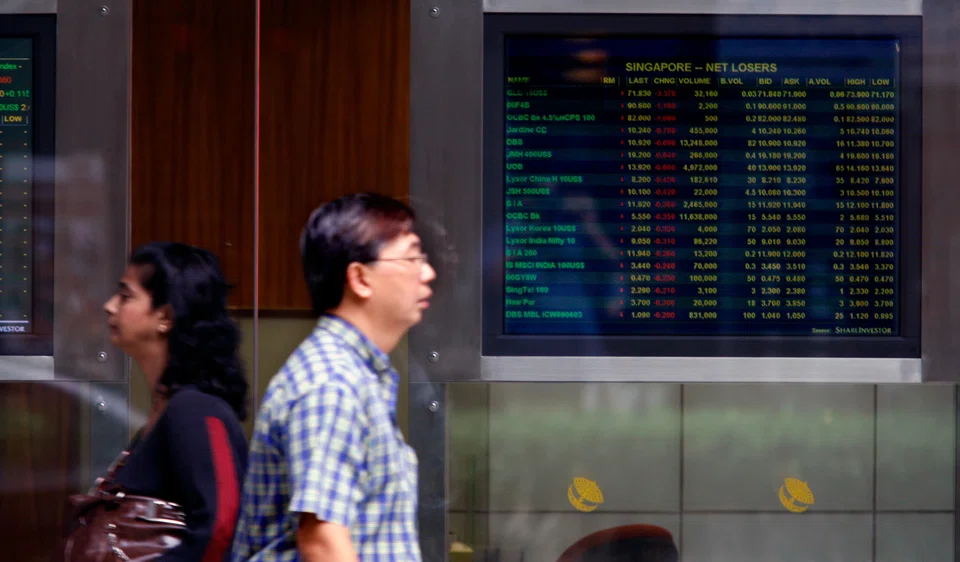
Even so, it held reasonably steady until the end of last week, when it closed at S$0.765 but then on Monday this week, it crashed S$0.10 or 13 per cent to S$0.665; this was then followed by a further S$0.055 loss at S$0.61 on Tuesday. It managed a S$0.03 rebound on Wednesday but the decline from the IPO price is still a considerable 12.5 per cent. From the high, the fall is even more severe - 33 per cent.
The reason for those selloffs was that the company's subsidiary, Japfa Comfeed Indonesia, on Friday last week reported a shocking 90 per cent drop in core Q3 earnings and that this had prompted many in the market to ask: "How is it that things could have gone wrong so quickly after listing, and why was there no guidance in the prospectus?"
According to DBS Group Research's Flash Note on Monday, weaker demand was the main cause and since the subsidiary was estimated to contribute around 44-49 per cent of the parent's earnings, DBS said it would be reviewing its S$1.16 target stock price for Japfa.
The same is probably the case for the other houses which cover Japfa, all of which had called a "buy" before this week - Standard Chartered just a fortnight ago on Oct 20 initiated coverage of the company when the shares were trading at S$0.75 with a S$0.95 target, whilst Bloomberg lists CIMB's target, set at the end of September, as S$1.25.
Of course, it is still possible for the stock to recover and hit those targets. And hopefully for investors still holding the stock after buying at higher prices, a rebound will come sooner rather than later.
Moreover, as far as the IPO managers and associated finance professionals are concerned, all the right boxes appear to have been ticked - the IPO was oversubscribed, there was no need for Credit Suisse, one of the underwriters, to perform any price stabilisation post-IPO, the over-allotment portion was exercised, the stock did perform immediately after listing and the Singapore Exchange added a billion dollar company to its list of customers.
You'd have to ask though: Is this good enough? For sure, investing in IPOs is a risky business and caveat emptor applies perhaps more so than otherwise since these are companies with no public track record. Moreover, there are other IPOs this year which have tanked badly. Most investors would also accept that volatile profits are part of doing business.
But a 90 per cent earnings drop in a key subsidiary of a "star" IPO just two months after listing with no prior guidance is surely stretching the bounds of caveat emptor to the maximum and there are many who are now questioning the entire IPO process.
In the final analysis, caveat emptor will hold sway and the market will move on. The problem is that confidence in equities and the system has not been enhanced - if anything, it has been even more damaged.
TRENDING NOW

Fed hike throws Singapore banks a margin lifeline; UOB likely to benefit more

He built the Vingroup empire. Now South-east Asia’s richest man is handing some key roles to his sons
Chagee, Mixue and Luckin won the market. Sustaining their edge is the harder part

Canada is upping oil flows to Asia, but South-east Asia’s refineries aren’t ready to handle them yet

