

Singapore banks return capital but draw mixed sentiments; earnings stay resilient in Q4
They recorded continued recovery in loans, even as interest rate cuts in late 2024 weighed on their net interest margins

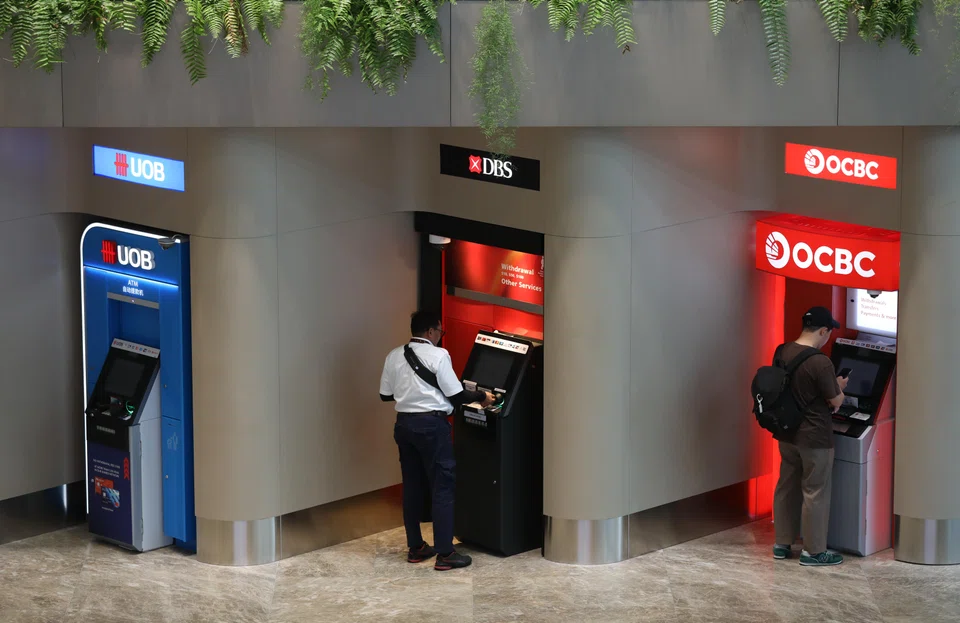
THE Singapore banks posted stable earnings for the fourth quarter ended December, amid expectations that a resilient Asean economy will continue to support their growth outlook in 2025.
But investors were divided over the lenders’ respective capital return plans, which come as they attempt to lower excess capital resulting from changes to global bank capital requirements.
DBS announced a capital return dividend of S$0.15 per share to be paid out each quarter over 2025. It expects to pay out a similar amount of capital in the next two years – this is on top of its S$3 billion share buyback programme announced during its Q3 results.
UOB proposed a special dividend of S$0.50 per share – paying out S$800 million of UOB’s surplus capital – over two tranches in 2025, and introduced a S$2 billion share buyback programme.
Meanwhile, OCBC announced plans to return S$2.5 billion of capital to shareholders over two years via special dividends and share buybacks.
Shares of DBS rose to a historic level – past S$46 – after its results were announced.
While markets anticipated its strong performance, they likely did not expect the additional “capital return” dividend, especially after DBS announced a buyback just last quarter, said Michael Makdad, senior equity analyst at Morningstar.
Its capital return plans should deliver dividend yields of more than 6.5 per cent, justifying a higher valuation when coupled with its increasing focus on improving return on equity (ROE), said Thilan Wickramasinghe, head of Singapore equities research at Maybank Securities.
Wickramasinghe also has a higher valuation for UOB – together with its capital management plan, UOB’s ROEs in the next three years should be at least three percentage points higher than the past 10 years.
“A strong capital returns mandate is bolstering yields and earnings per share,” he said.
Yet, several analysts noted that OCBC’s capital returns plans lagged peers.
Makdad said its smaller size may be inconsistent with OCBC’s larger excess capital, even though the buybacks were a positive surprise.
OCBC shares fell after its results were made public. Earnings missed consensus estimates, and OCBC also cut its final dividend to S$0.41 per share, from S$0.42, even though it recommended a special dividend of S$0.16 per share.
Citi analyst Tan Yong Hong said that the cut in the final dividend likely drove concerns over sustainability of dividends in the event of possible earnings risks.
“The clear preference among investors was having special dividends incremental to ordinary dividends,” Tan said.
Results wise, the three lenders recorded continued recovery in loans, even as their net interest margins (NIMs) were weighed by interest rate cuts late in 2024.
Wealth was seasonally weaker in Q4 2024, but analysts noted that each of their wealth franchises showed resilience.
Year on year, DBS’ assets under management (AUM) rose 17 per cent to S$426 billion; UOB’s AUM was up 8 per cent at S$190 billion; and OCBC’s increased 14 per cent to S$299 billion.
Overall, DBS posted an 11 per cent rise in Q4 profit to S$2.52 billion. UOB’s net profit gained 8.6 per cent to S$1.52 billion. OCBC’s net profit of S$1.69 billion was up 4 per cent on year.
2025 targets
The respective bank managements shared mixed sentiments in their 2025 outlook.
While DBS and UOB were upbeat on Asean resilience despite global uncertainty, OCBC was considerably more conservative in its 2025 targets.
OCBC expects three rate cuts for 2025 – compared with its peers’ expectations of one or two cuts for the year.
CEO Helen Wong said that the volatile environment and heightened trade tensions could impede global growth, even as Asean economies remain resilient.
OCBC guided for NIM to be around 2 per cent, its cost-to-income ratio in the low 40s and credit costs in the range of 20 to 25 basis points.
Morningstar’s Makdad said the NIM and cost guidance was “overly conservative”, but noted that OCBC faces risks of higher credit costs due to the struggling Hong Kong commercial real estate market.
Meanwhile, UOB’s buyback announcement – its first in decades and larger than anticipated – reflects the management’s confidence in its earnings outlook, Makdad said.
He added: “While we believe the loan and fee growth targets may be somewhat ambitious, we remain positive on UOB’s earnings outlook for 2025.”
Maybank’s Wickramasinghe also expects UOB’s integrated Asean strategy to catalyse fees and credit growth going forward, which could help diversify the loan book towards growth sectors with better credit quality.
Additionally, analysts are keeping watch on the leadership transition at DBS, where deputy CEO Tan Su Shan is slated to take over the top job on Mar 28.
Makdad said: “We will be watching for any changes in growth strategies, though we expect continuity given the solid performance under CEO Piyush Gupta, to which Tan has contributed in key roles.”






