

SPH Reit's Q4 DPU beats IPO forecast by 6.1%
Payout of 1.39 Singapore cents brings full-year distribution to 5.99 cents; annualised yield of 6% based on IPO price

Michelle Quah
Singapore
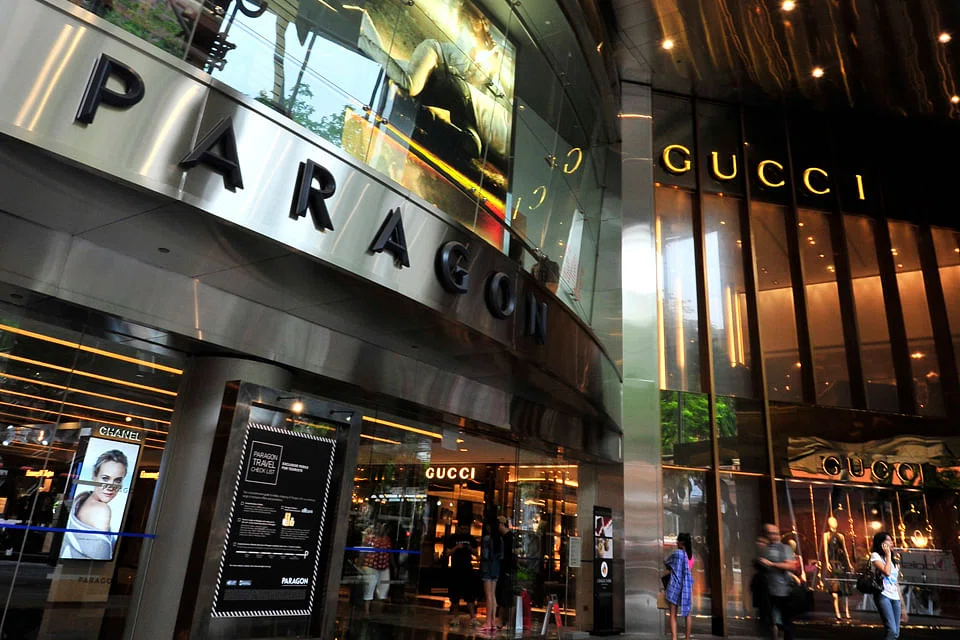
SPH Reit, which owns Paragon and The Clementi Mall, reported on Monday distributable income that came in above expectations, as well as continued full tenancy for the two retail malls in its portfolio.
The real estate investment trust, which is majority owned by media group Singapore Press Holdings, achieved an income distributable to unitholders of S$34.9 million for the fourth quarter ended Aug 31, 2014. This translates to a distribution per unit (DPU) of 1.39 Singapore cents for the quarter - 6.1 per cent higher than forecast in its initial public offering (IPO).
This marks a steady quarterly DPU for the Reit since IPO.
Its total DPU for the full financial year - which ran from its listing date of July 24, 2013, to Aug 31, 2014 - was 5.99 Singapore cents, 3.8 per cent higher than the IPO forecast.
On an annualised basis, the distribution represented a yield of 6.0 per cent, based on its IPO price of S$0.90, and 5.1 per cent, based on its closing price of $1.065 on Aug 29, said SPH Reit Management.
SPH Reit units closed trading on Monday at S$1.06, down half a cent amid a broad market retreat.
The fourth-quarter distribution will be paid to unitholders on Nov 14.
It also announced that both properties in the trust, Paragon and The Clementi Mall, maintained their track record of full occupancy.
Net property income for Paragon and The Clementi Mall exceeded forecasts by 3.1 per cent and 0.8 per cent, respectively, "due to proactive management of expenses".
Paragon achieved a rental reversion of 10.5 per cent for the year, while The Clementi Mall's was 5.5 per cent.
The Clementi Mall completed its first rental renewal cycle in 2014 and achieved a tenant retention rate of more than 90 per cent by net lettable area (NLA). The average rental rates achieved for expiring leases in the full year were 5.5 per cent higher than the average rates of the preceding leases typically contracted three years ago.
"The strong operational performance is a testament to the manager's proactive leasing strategy that treats the relationship with tenants as a partnership, focusing on sustainable returns for both landlord and tenants," SPH Reit Management said.
It also announced that its portfolio was valued at S$3.16 billion by DTZ Debenham Tie Leung (SEA), as at Aug 31, 2014 - representing an increase of 3.4 per cent from the IPO valuation of S$3.05 billion.
It added that, as compared to the pro-forma financial position in the IPO prospectus, the net asset value per unit has increased from S$0.89 to S$0.93, and gearing was reduced from 27.3 per cent to 26.0 per cent, as at the end of Aug, 2014.
SPH Reit Management CEO Susan Leng said: "We are pleased that the unitholders of SPH Reit have enjoyed a commendable total return of 25.0 per cent for (its) maiden year.
"On the outlook for FY2015, the near-term economic growth for Singapore is expected to remain modest, amidst uncertainties in the global environment and constraint of continuing manpower crunch on some domestic-oriented, labour-intensive sectors. Barring any unforeseen circumstances, SPH Reit's two high quality and well-positioned retail properties in prime locations are expected to remain resilient and turn in a steady performance. We are confident that our philosophy of continual enhancement will sustain future performance," she added.
As for its asset enhancement initiatives (AEIs), SPH Reit Management said works for a chiller decanting project - which will create about 5,000 sqf in NLA - are expected to be completed in FY2016. Details for another two AEIs - projected to yield another 5,000 sqf of NLA, and still in the planning stage - will be announced later.
TRENDING NOW

Grab CEO’s wife Chloe Tong on life with Anthony Tan and finding her purpose

He built the Vingroup empire. Now South-east Asia’s richest man is handing some key roles to his sons

Singapore’s S$80 million vertical farm must pass the 50-cent test to succeed

Data centre energy demand from Asean telcos not a ‘big risk’, says industry group

