Stars aligning for Pacific Star Development
Group eyeing more projects in Malaysia and Bangkok, with new markets Ho Chi Minh City and Jakarta on the radar.

Anita Gabriel
Singapore
NOTHING screams more effectively for investor attention than a company that has remade itself and is starting to show the money after two years of losses.
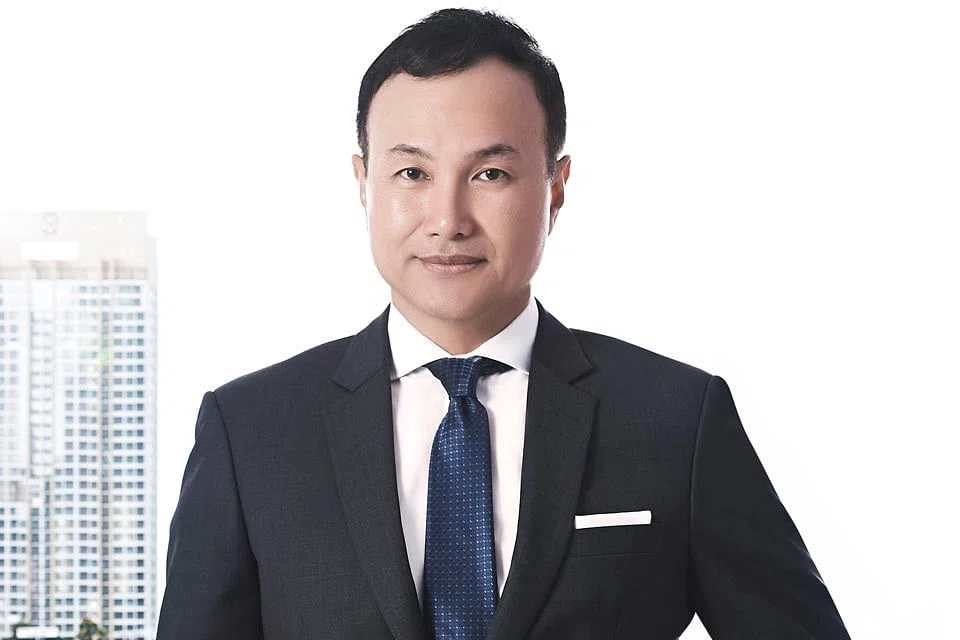
Take Singapore-based Pacific Star Development - a real estate firm with a flagship project in Iskandar Malaysia and a joint-venture in Bangkok.
"Reincarnated" from LH Group via a S$140 million reverse takeover in February this year into a developer with roots in real estate fund management, Pacific Star Development has cracked a dreary streak of eight quarters of losses. It rang in quarterly net profits of S$2.3 million for the three months to March from a loss of S$462,000 a year ago. Thanks to the property business, topline for the period jumped four-fold to S$14.9 million.
No surprises then, when its chief executive and managing director Glen Chan says: "We are optimistic that going into the next three quarters of reporting, there will be a turnaround in the company versus the previous quarter(s)".
Yet, its stock showing since its fresh start on Catalist is a pale shadow of the promise it may hold.
Dampened by nada trading on certain days, no thanks to the stock's tightly held shareholding pattern - its top 20 shareholders own over 95 per cent of the company - the counter now rests at around 24 Singapore cents with an average trading price of 21.9 Singapore cents versus its debut price of 33 Singapore cents.
The lack of liquidity in the stock is unlikely to change soon as its three largest shareholders - Singapore-listed Chuan Hup Holdings' wholly-owned unit CH Biovest and Mr Chan's controlled Glaxier City and Double Blessing Holdings - who collectively own nearly 68 per cent of the stock have a moratorium on the sale of shares until 2019.
Undistracted by the stock's drab performance, Mr Chan says the group's Asean agenda is intact. It has two projects currently under development - a mixed development, Puteri Cove Residences, in Iskandar Malaysia including luxury apartments, serviced suites managed by Pan Pacific Hotels and lifestyle retail centre and The Posh Twelve, a high-rise residential apartment project in Bangkok.
If he has his way, by end-year, the group's Asean portfolio could bulk up with four more projects in Malaysia - in Iskandar Malaysia and Kuala Lumpur (KL) city centre - and another two in Bangkok.
Discussions on these pipeline projects with land owners and strategic partners are in advanced stages with negotiations for the projects in KL "75 per cent done", according to Mr Chan.
"If these pipeline projects take shape, we are easily talking about some 400,000 square metres of GFA (gross floor area)," says the real estate veteran in an interview with The Business Times.
Two new markets, Ho Chi Minh City and Jakarta, are on the radar too with "exploratory" talks ongoing.
"The idea is to have an Asean footprint and focus management time, energy and resources on this very good story," says Mr Chan, adding that the projects would be centred on mixed use, high-end residential, niche resorts and retirement projects.
South-east Asia's appeal for developers such as Pacific Star is only too clear cut - a rapidly growing population, rising affluence and urbanisation, high savings rates and a propensity for property purchases.
In the immediate term, it's the group's high end project Puteri Cove Residences, which has won several awards in recent years and will be launched by year-end, that could generate most excitement.
This even as fears persist of oversupply in Malaysia's southern growth corridor as a result of over building by Chinese companies, which has inadvertently diluted the appeal of the country's once-booming Iskandar that had reached a tipping point four years ago.
These concerns are real, admits Mr Chan, but now may appear a tad overdone.
He says this because many developers have since "mothballed" their launches on the back of expectations of a supply glut which has reduced the earlier future supply numbers.
"Because the concerns were real, there was automatically a mechanism where there were no new launches by developers. The mothball means that there won't be as big a supply that was earlier planned for the next one to four years," he elaborates.
"Yet, on the ground, there are new industries and jobs being created," he adds.
In other words, there is demand and developers such as Pacific Star may benefit. It helps too that the group has already sold nearly 70 per cent to date of Tower 1 and Tower 2 of Puteri Cove Residences. Half of its buyers so far comprise Singaporeans while 20 per cent are Malaysians, 12 per cent Indonesians and the balance are from various other countries.
Another encouraging trend, he says, is that most of the buyers are owner occupiers, according to a survey conducted by the company. Puteri Cove Residences commands a premium price of RM1,400 (S$445) average psf which is among the highest in the Iskandar Malaysia area. "We haven't cut our prices at all and have maintained them since the soft launch in 2013," he says.
Property, the lynchpin of the company's turnaround story, may not quite be the only silver lining looking ahead.
Having divested the vehicle division that was inherited from LH Group, Pacific Star plans to stick with its bleeding aluminium business, a big part of which involves design, fabrication and installation of curtain walling system targeted at both the HDB and private segments.
"We are going out to the market to bid for new jobs among the HDB projects. We have experienced people in the team so the direction is to get more contracts and run it as a going concern," he says, pointing out that the HDB building programmes in Bidadari, Toa Payoh and Woodlands could give it a shot at that.
"It's about volumes. The more projects we have, the bottom line (of the business) would return to the black. We must have enough and more contracts to cover the division's overhead."