Time for Singtel to sell SingPost stake
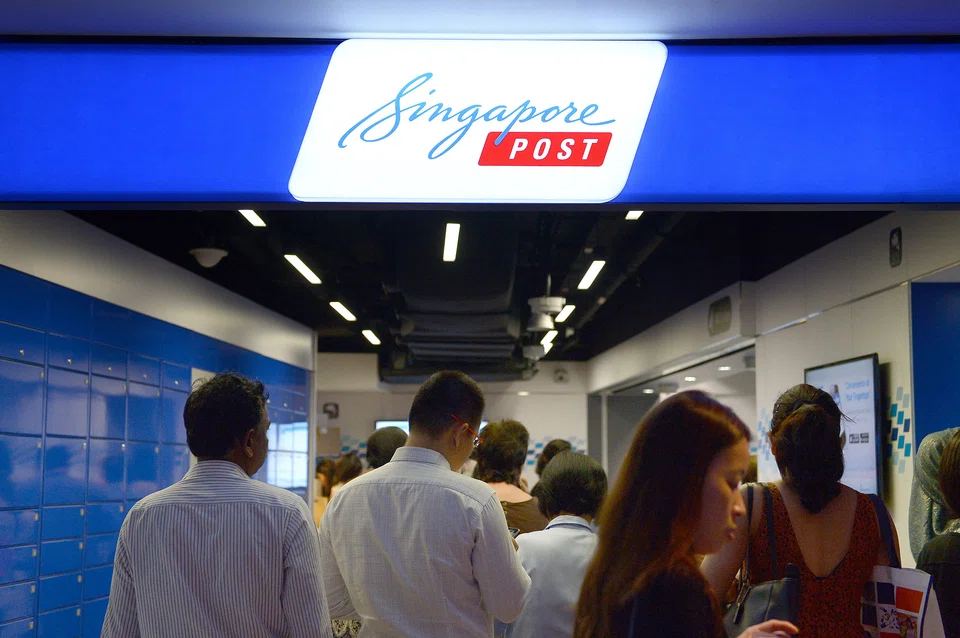
AS the end of the first quarter approaches, with annual general meeting season on the horizon, one question might be on investors' minds: Could Singtel be thinking about selling its stake in Singapore Post? And should it?
Seeing how rapidly the telco wars are heating up here, that possibility is beginning to seem not that much of a stretch. And if the right buyer can be found, a parting of ways could turn out to be win-win for all parties.
Though Singtel has thus far kept mum on its plans regarding SingPost, its name has come up in recent market talk of potential non-core divestments. Observers point to the prospect of stiffer competition in the telco industry as the sector liberalises, noting that the three incumbents may be more inclined to bolster their war chests before the entry of a fourth telco. The recent unveiling of data-only mobile plans by contender MyRepublic has already led them to push out new offerings, and competition is likely to only get keener from here.
Fortunately for Singtel, it does not face the worst of that, since the majority of its earnings come from outside Singapore. This lets it enjoy some bargaining power, were it to consider divesting.
But while it does not need to sell anything, extra cash and agility from streamlining could certainly come in handy for Singtel as it fends off upstart challengers in a bid to retain its domestic crown.
Selling points
Singtel is SingPost's single largest shareholder, and its stake could fetch a pretty penny. The telco holds 23 per cent of SingPost, according to its 2015 annual report, down from 25.5 per cent in 2014.
This works out to roughly 497 million shares - worth about S$815.1 million as at end-2015 based on SingPost's closing price of S$1.64 per share on Dec 31. Any whiff of this chunk possibly being in play could send SingPost stock up further.
The postal and e-commerce group, which essentially moves physical items from Point A to Point B, is most likely a non-core asset for Singtel, which has instead been expanding on the digital front with recent investments in the cyber security and digital marketing. Singtel also does not appear to have much say in how SingPost is run. The telco's representative on SingPost's board, Bill Chang, does not sit on SingPost board's executive committee, which is responsible for approving investments and divestments within threshold limits set by the board.
Another factor that favours a divestment now is SingPost's recent share price movement and how that affects Singtel.
Sum-of-the-part valuations for Singtel were dragged down too when SingPost shares fell in January after the group revealed some still-unresolved corporate governance issues. But it would have been more painful to put SingPost on the block then, with the stock falling to as low as S$1.29 at one point.
By now, however, SingPost shares have more or less recouped their year-to-date losses, which assuages fears of selling it too cheap.
Buy-in
The current setting may also be increasingly favourable for attracting buyers, as the e-commerce and logistics sector continues to draw keen investment interest from large, sophisticated investors. Chinese e-commerce giant Alibaba's logistics arm, for instance, recently completed a funding round that included major institutions such as Temasek, GIC and Khazanah. Indonesian conglomerate Lippo Group is expanding into digitalising procurement for businesses.
The Asia Pacific region, which SingPost's e-commerce segment focuses on, has become the biggest e-commerce region globally. This area racked up US$567 billion in online retail spending in 2014 and continues to grow, according to estimates in a September 2015 report from payments network Mastercard.
SingPost's growing e-commerce and logistics business offers prospective buyers a juicy slice of that pie. Established e-commerce firms recognise its appeal - Alibaba has proposed to raise its stake in SingPost from 10.35 per cent to 14.51 per cent.
Moreover, Singtel and a prospective buyer of its SingPost stake do not have to be the only ones benefiting from the divestment: If a buyer can be found that is able to help SingPost along in its current task of integrating its various acquisitions, SingPost's other shareholders stand to gain too.
Changing trends
One potential barrier to a divestment might be local law. Under the Postal Services Act, any entity that seeks to own or control 12 per cent or more of the national postal services provider must seek the regulator's approval before proceeding with the acquisition.
SingPost has an indirect link with Temasek as the Singapore investment company owns 51.2 per cent of Singtel as at March 31 last year.
Since Singtel's 23 per cent stake in SingPost is above the 12 per cent threshold, the regulator - in this case, the Infocomm Development Authority (IDA) - could veto a sale. If the stake had to be sold in two separate chunks a deal might be harder to arrange.
But unless a prospective buyer of the stake clearly poses some national security risk or other issues, the '12 per cent' rule does not necessarily have to throw a spanner in the works.
If Temasek were to decide to let SingPost move out from beneath its umbrella, SingPost would not be the first fully privatised national postal services provider. The British government ended 499 years of public ownership of the Royal Mail in October 2015, when it sold off its remaining stake for nearly £600 million (S$1.17 billion) to institutional investors (and gave a residual 1 per cent for free to Royal Mail workers).
On its end, Temasek has shown its adaptability to changing global trends. It has let go of homegrown Neptune Orient Lines (NOL), which had been founded as Singapore's national flag carrier in 1968 partly with the idea that its ships would be able to carry cargo to and from Singapore in times of crisis.
Temasek no longer needs to keep NOL in its stable likely because the shipping industry has evolved. Postal trends may be going the same way. Under Singtel's careful stewardship, SingPost has managed to transform into a potentially exciting e-commerce play. If the conditions are now ripe for a divestment that can reap benefits for all involved, then it could well be time for SingPost to fly the nest and take wing.