

China, India surpass US as most attractive renewables markets: report
 Add BT as a preferred source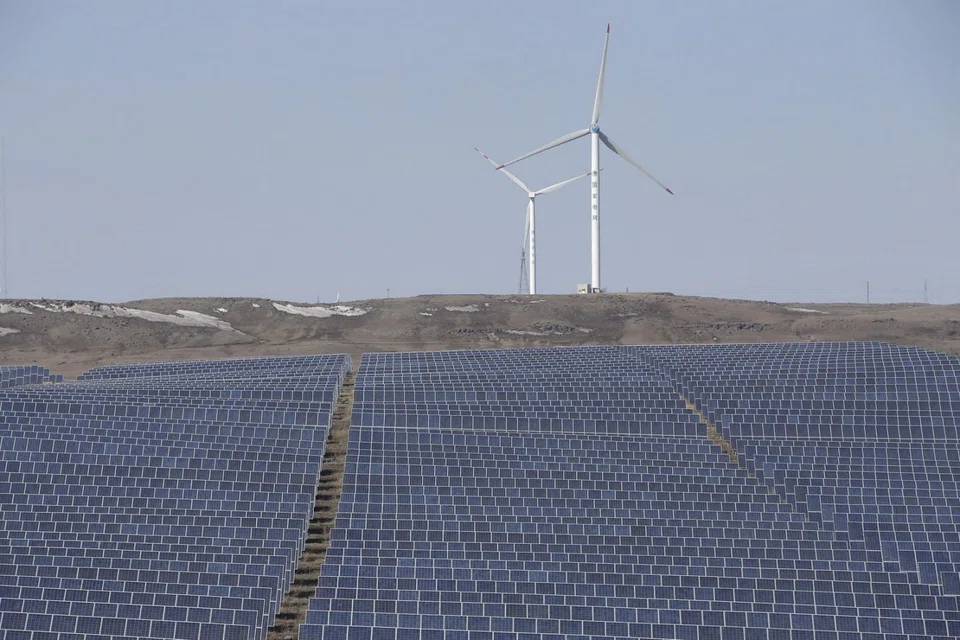
DeeperDive is a beta AI feature. Refer to full articles for the facts.
[LONDON] China and India have surpassed the United States to become the two most attractive countries for renewable energy investment, a report by UK accountancy firm Ernst & Young showed on Tuesday.
In an annual ranking of the top 40 renewable energy markets worldwide in terms of allure, China was the top country, followed by India.
The United States, which ranked the highest last year, slumped to third place, due to a shift in US energy policy under President Donald Trump.
Mr Trump has issued orders to roll back many of the previous administration's climate change policies, revive the US coal industry and review the Clean Power Plan, which requires states to cut carbon emissions from power plants.
Meanwhile, China announced this year that it would spend US$363 billion on developing renewable power capacity by 2020. India's government has unveiled plans to build 175 gigawatts of renewable energy generation by 2022.
Among European countries, Germany ranked fourth, France eighth and Britain moved to 10th place, from 14th last year.
Navigate Asia in
a new global order
Get the insights delivered to your inbox.
While Britain's renewable investment environment is more settled than in recent years, which were beset by subsidy cuts, future energy policy after it leaves the European Union is uncertain, the report said.
"The UK's reappearance in the top 10 is the result of other countries falling away - notably Brazil, which cancelled a wind and solar auction in December - rather than any particularly encouraging resurgence," said Ben Warren, EY's head of energy corporate finance.
REUTERS
Share with us your feedback on BT's products and services
TRENDING NOW

Shelving S$5 billion office redevelopment plan proved ‘wise’ as geopolitical risks mount: OCBC chairman

Eurokars Group introduces rental car franchises Enterprise Rent-A-Car, National Car Rental, and Alamo to Singapore

20 photos that show how dramatically Singapore has changed in two decades
Singapore’s key exports up 15.3% in March from electronics surge, exceeding forecasts

