

Nigeria's Southwest cocoa belt hit by dieback disease
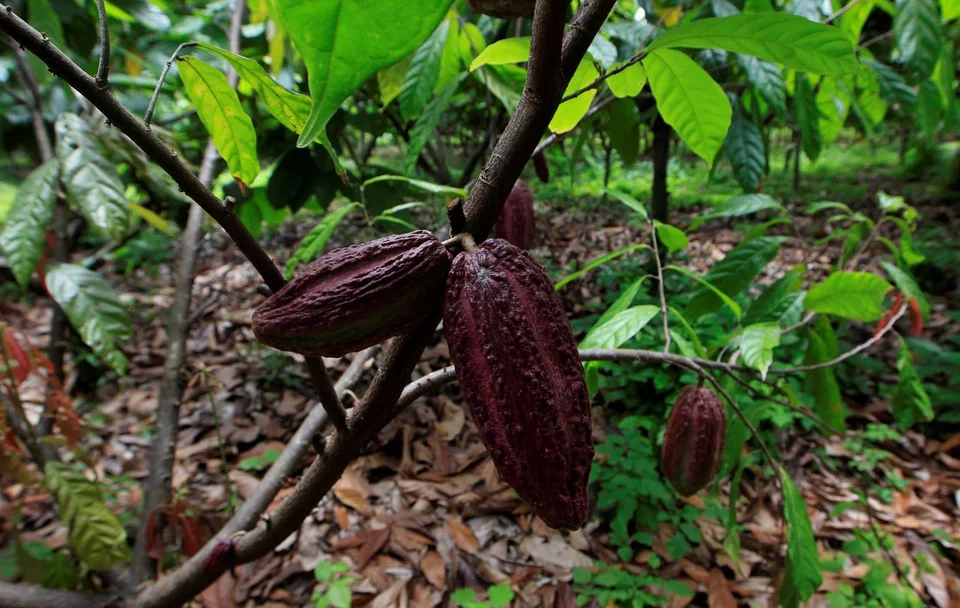
[LAGOS] Cocoa farms in southwestern Nigeria, the country's main growing region, have been bit by outbreaks of a fungal disease identified as dieback, which causes plants to wither and die.
"The trees are drying off from their tops and progressively through the stems and down to the roots," said Sola Akingbade, a farmer based near the city of Abeokuta, adding that about 125 neighboring plots were also affected. "Most of them have now turned black with their leaves showing signs of dying." The Cocoa Farmers Association of Nigeria has received reports that about 2,500 cocoa trees have the disease in Ogun state, which contributes about 10 per cent of the country's cocoa, according to Taiwo Williams, the local coordinator. The estimated loss from the infections in the area could reach 750 metric tons of cocoa, he said.
Nigeria is ranked as the seventh-biggest producer of the chocolate ingredient worldwide after slipping from fourth two years ago, according to the International Cocoa Organization. The country's two cocoa harvests include the smaller mid-crop that's harvested from April to June, and the October to December main crop.
Dieback disease is prevalent in regions that have a shallow rock depth, denying tree roots access to nutrients in the dry season and leaving them vulnerable to fungal attack, according to Abiodun Adedeji, a researcher at the Cocoa Research Institute of Nigeria in the southwestern city of Ibadan.
BLOOMBERG
Share with us your feedback on BT's products and services
TRENDING NOW

Stocks to watch: CapitaLand Ascott Trust, Keppel Infrastructure Trust, iFast, ESR Reit, First Sponsor

Indonesia says gas export cuts to Singapore remain within contract terms

If Europe goes to war, the fallout will be felt in East Asia

Government to bring forward raising of retirement age, give employers more financial support to create flexi-load jobs

