

China's forex intervention spurring 'vicious circle'
Singapore
CURRENCY wars - in which currencies are devalued to boost exports - appear inevitable given the thick brew of high debt and faltering global demand, and as structural reform remains unlikely, senior Rabobank analysts said at a briefing on Tuesday.
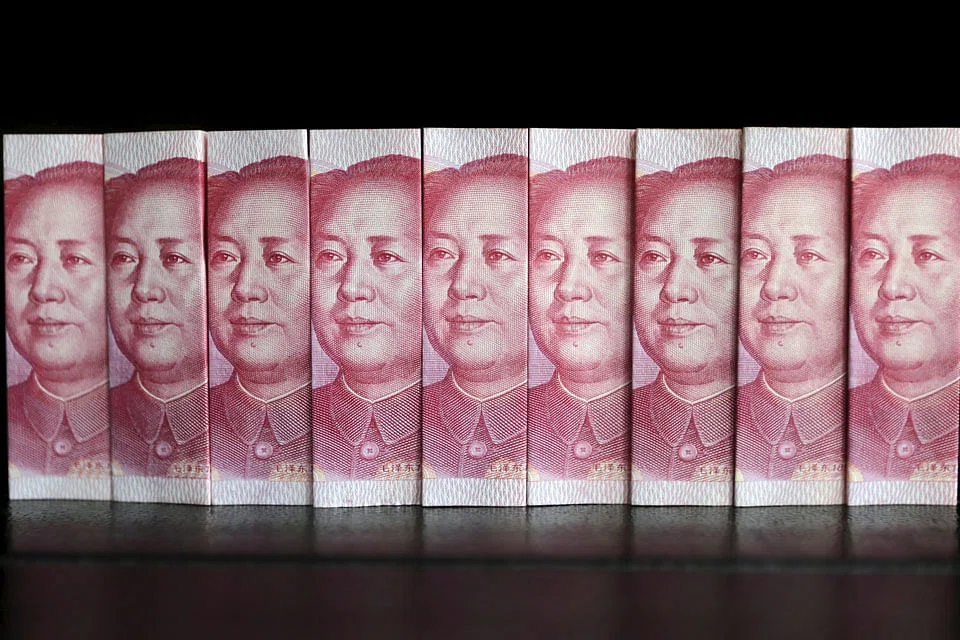
This comes as China's intervention to prop up the yuan has created a vicious circle, with liquidity paradoxically tightening as more capital is being pumped in. China's central bank has cut interest rates, and pumped funding into the banking sector.
Its foreign exchange reserves - through which the Chinese central bank sells dollars to support the home currency - will soon hit critical levels in about six months, once foreign debt and six months of imports are taken into account, said Michael Every, head of financial markets research, Asia-Pacific, at Rabobank. At that point, Chinese regulators will be forced to stop intervening in the markets and let the yuan fall, he said.
The People's Bank of China (PBOC) said this month that its foreign exchange reserves dropped by US$93.9 billion - the largest-ever monthly outflow in dollar terms. China has used its hefty reserves to hold up the yuan after the currency was effectively devalued in August via a change in the way the yuan is traded. The band for the yuan - which trades against the US - will now have a daily midpoint that better reflects market sentiment.
China has seen a dramatic outflow of capital - a trend that began before the market rout this year, Mr Every highlighted. Chinese banks posted net capital outflows of US$109 billion in the first quarter of 2015, a Bank for International Settlements report said.
This comes amid doubts over China's growth. Rabobank referred to the Li Keqiang index as a way to suggest that China's growth is weakening. Based on that unofficial index, China's growth is closer to 5 per cent, Rabobank's data showed.
This index takes in data the Chinese premier supposedly found most reliable. A Wikileaks memo from 2007 suggested that Mr Li - then in charge of Liaoning province - only looked at three data points he found to be trustworthy: the cargo volume on the province's railways, electricity consumption and bank loans.
Meanwhile, Singapore's GDP - which is highly correlated with that of China - is slowing. "Why are things not all sunshine here," asked Mr Every.
Broadly, currency wars prove ineffective since the trade pie is not growing. "Having run out of tools, currency is one of the last levers they have," said Jan Lambregts, global head, financial markets research, at the Dutch bank.
For example, given the decline in trade, the recent credit growth seen in eurozone has not been spurred by exports, but by consumption. "The key driver behind that is oil," he said.
A weak currency is good for borrowers. The boost in inflation, and therefore income, makes it easier to pay debts in local currency terms.
While the only logical alternative to currency wars is structural reform, this is unlikely, the analysts suggest.
Supply-side reform - which among others things, improves productivity - is "very painful and very unpopular". Policy-makers would also have to consider debt defaults, and address income inequalities. The latter creates a situation where capital is so concentrated in a few hands that everyone else would be forced to borrow to get along in life, they noted.
TRENDING NOW

VietJet hit with global asset freeze in FitzWalter dispute

FCT, NLB to turn Causeway Point’s former cinema space into reading hub in mall revamp

Family offices ‘kept captive’ by relationship managers turn to independent advisers, direct deals

Olivia Lum, ex-CFO not giving evidence in their Hyflux trial

