

Dow hits historic high on strong Q3 GDP
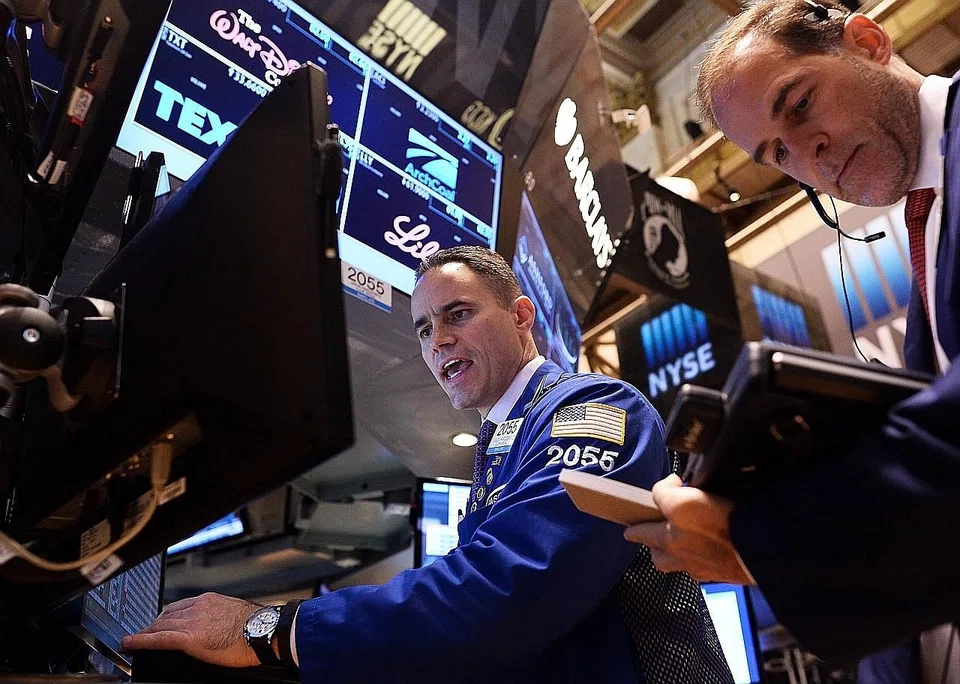
New York
AN unexpectedly strong report on economic growth pushed the Dow over 18,000 for the first time in its history, with the index reaching a high of 18,020.19 in early trading on Tuesday.
The final estimate of the US gross domestic product (GDP) for the third quarter was revised up to a 5 per cent annual pace, its quickest in 11 years, from 3.9 per cent reported last month, on stronger consumer and business spending, the government said.
The report easily topped expectations calling for a 4.3 per cent pace. "That is a solid number, that is really what you want to see, you want to see it in demand," said Jack Ablin, chief investment officer at BMO Private Bank in Chicago. "That is a huge plus, a five handle on GDP is astounding to me, but I'm not going to turn it away - Merry Christmas."
Major Wall Street indexes have risen for four straight sessions, pushing the benchmark S&P index to its 50th record high of the year. The S&P has risen 5.4 per cent over that period, its best four-day run since July 2010. The rally comes on the heels of a selloff, sparked by a slump in oil prices that saw the index drop nearly 5 per cent from its prior record high set on Dec 5.
Fifteen minutes into trade, the Dow stood at 18,015.53, up 56.09 points or 0.31 per cent. The S&P 500 gained 5.76 or 0.28 per cent to 2,084.30, while the tech-rich Nasdaq Composite Index added 3.83 or 0.08 per cent at 4,785.25.
"The US economy is really on track to continue to grow at a healthy pace," David Wartenweiler, chief investment officer at Habib Bank AG, said by telephone from Zurich. "Part of the rebound we're now witnessing has to do with the realisation that the selloff was overdone."
Tuesday's figures built on the momentum from the second quarter, when growth came in at 4.6 per cent. The US economy contracted 2.1 per cent in the first quarter of 2014, a weak result mainly attributed to the abnormally cold winter, but has since recovered strongly.
US consumer spending also recorded its biggest gain in three months in November as low petrol prices freed up income for discretionary spending, in a show of strength in the economy.
The Commerce Department said consumer spending, which accounts for more than two-thirds of US economic activity, rose 0.6 per cent after an upwardly revised 0.3 pe rcent increase in October.
Economists had forecast consumer spending rising 0.5 per cent last month after a previously reported 0.2 per cent increase.
When adjusted for inflation, consumer spending increased 0.7 per cent, the largest rise since August, after advancing 0.2 per cent in October. Sturdy consumer spending could see economists lift their gross domestic product estimates for the fourth quarter, which are currently between a 2.1 per cent and 2.6 per cent annual pace.
It adds to stronger employment and industrial production data and could draw the Federal Reserve closer to start raising its short-term interest rate in mid-2015, having kept it near zero since December 2008. Spending is being buoyed by extremely low petrol prices as well as a strengthening labour market, which should help to cushion the economy from slowing growth in China and the euro zone, as well as a recession in Japan.
Petrol prices have declined 85 cents this year to an average of US$2.39 per gallon, according to AAA.
With job gains broadening, income increased 0.4 per cent in November, the largest gain since June, after rising 0.3 per cent in October. The saving rate fell to an 11-month low of 4.4 per cent.
Despite the acceleration in consumer spending, weak petrol prices kept inflation in check. A price index for consumer spending fell 0.2 per cent, the biggest fall since December 2008, after being flat in October.
In the 12 months through November, the personal consumption expenditures (PCE) price index rose 1.2 per cent, the smallest rise since March, slowing from a 1.4 per cent increase in October.
Excluding food and energy, prices were unchanged after advancing 0.2 per cent in October. The so-called core PCE price index increased 1.4 per cent in the 12 months through November, the smallest rise since April.
Both price measures continue to run below the Federal Reserve's 2 per cent inflation target.
Orders for US durable goods unexpectedly declined in November as corporate investment stagnated and demand weakened for military equipment. Bookings for goods meant to last at least three years decreased 0.7 per cent, the third decline in four months. Excluding defence, orders dropped for a fourth month.
Business demand for computers, metals and electrical equipment declined or was little changed last month as the global economy cools. Orders for motor vehicles increased, underscoring a pickup in household spending that helped spur the economy in the third quarter.
Defence-related capital goods bookings dropped 8.1 per cent in November after a 10 per cent gain the prior month. Demand for non-military capital goods excluding aircraft was unchanged after a 1.9 per cent decrease in October.
Shipments of non-military capital goods excluding aircraft, used in calculating gross domestic product, rose 0.2 per cent in November after declining 0.9 per cent. Orders for commercial aircraft climbed 0.6 per cent in November.
Chicago-based Boeing Co said it received 224 orders for planes last month, the most since July. Excluding transportation equipment, which is often volatile from month to month, bookings fell 0.4 per cent.
Purchases of new US homes unexpectedly declined in November to a four-month low, underscoring a lack of momentum this year in residential real estate.
Sales dropped 1.6 per cent to a 438,000 annualised pace last month following a 445,000 rate in October that was weaker than previously estimated.
Strict bank lending standards and rising property prices have bridled the industry this year following a pickup in 2013. Further growth in employment opportunities and persistently low borrowing costs may help provide a spark for the housing market in 2015.
"Until we see incomes rise and credit standards loosen a little, we won't see any surge in home sales," Sophia Kearney- Lederman, an economic analyst at FTN Financial in New York, said before the report. "Housing's shown a very sluggish, slow climb, and it's sort of failed to gain any traction."
New-home purchases were down 3.7 per cent from November 2013 on an unadjusted basis. REUTERS, AFP, BLOOMBERG
TRENDING NOW

World’s largest offshore wind platform by Seatrium consortium on track to be completed by 2028

Is stamp collecting enjoying an analogue revival or are its best days over?

GovTech retrenches another 38 staff in second round of layoffs

MBS adjusted property Ebitda falls 20.6% in Q3 with fewer high-roller visits, weaker hold

