

Euro hits 11 1/2-yr low before ECB, stocks edge higher
 Add BT as a preferred source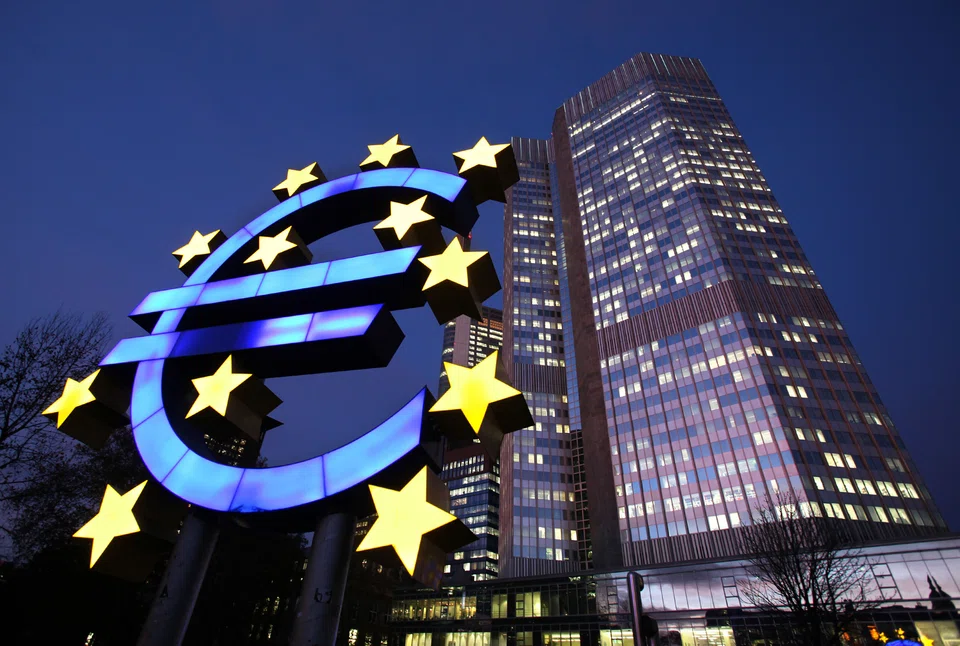
DeeperDive is a beta AI feature. Refer to full articles for the facts.
[LONDON] The euro hit an 11 1/2-year low against the dollar and European stocks nudged higher on Thursday, as the European Central Bank prepared to lay out the details of its impending one trillion-euro stimulus plan.
The common currency fell as low as US$1.1026, its lowest since September 2003, and the region's stock and periphery bond markets gained as hopes for the ECB's policy meeting in Cyprus lifted investors' spirits.
The slide in the euro came as the dollar continued to rise on expectations the US Federal Reserve is heading for its first rate increase in almost a decade this year.
For the last six weeks, the ECB has been working on how the quantitative easing plan it sketched out in January will work, amid lingering resistance from countries such as Germany and technical issues that need ironing out.
"We want to know all the details that put the meat on the bones of how they are actually going to do it," said Neil Murray, head of pan-European fixed income at Aberdeen Asset Management.
"Are they going to do it as any auction... will they look at the full German curve but only out to five years on BBB-rated countries, or will they be happy to look at 10-years on all countries until they can't buy anymore?"
Navigate Asia in
a new global order
Get the insights delivered to your inbox.
Eurozone borrowing costs held around record lows as traders took positions before the ECB's 1330 GMT post-meeting news conference.
As has been the case for a number of months now, investors were effectively paying to lend money not only to Germany's government but also to Finland, Belgium, Austria, France and the Netherlands.
German two-year yields were nudging minus 0.20 percent. That is in line with the ECB's deposit rate. Markets are questioning whether the bond-buying scheme would include assets that yield anything less than that, which would leave the ECB facing large losses.
Wall Street was expected to start higher after falling for the last two days. Jobless claims will be in focus before Friday's non-farm payrolls report, which will feed the debate on how likely the Fed is to start raising interest rates this year.
The rising dollar was weighing on emerging markets, which use increasingly expensive dollar debt to help fund themselves.
As EM currencies continued to weaken against the dollar, MSCI's benchmark EM stock index fell for its fifth straight day, its worst run since mid December.
Thai, Malaysian and Chinese stocks all posted losses in Asia, to offsetting small gains for the Nikkei in Tokyo and South Korea's Kospi.
Also adding pressure was the prospect of an economic slowdown in China. Beijing announced a 7 per cent growth target for the year and signaled that the lowest rate of expansion for a quarter of a century is the "new normal".
The ECB will also provide new eurozone economic forecasts later that are set to see their first upgrade of growth expectations for a long time. It is also expected to maintain its ban on the use of Greek bonds as collateral for its ultra-cheap funding.
As well as the ECB, 20 other central banks around the world have either cut interest rates or eased monetary policy in some form so far this year.
With the US Federal Reserve one of the few going in the other direction, the dollar climbed to an 11-year high against a basket of major currencies as 10-year Treasury yields tickled two-week highs at 2.144.
In commodities, US crude oil added to overnight gains, rising 0.65 per cent to US$51.86 a barrel. Brent gained 0.7 per cent to US$61 a barrel as investors brushed aside US inventories data to focus on tensions in Iraq and Libya.
Deteriorating security led Libya's state oil company to declare force majeure on 11 of its oilfields on Wednesday . In Iraq, Islamic State militants set fire to oil wells near Tikrit.
The rise in crude helped Russian stock markets gain.
"It seems to be that the market does seem to be paying a little bit of attention to geopolitical factors," said Virendra Chauhan, oil analyst at Energy Aspects.
REUTERS
Share with us your feedback on BT's products and services
TRENDING NOW
‘Boring’ is the new black: The stars are aligning for a Singapore stock market revival

Near sell-out launches in March boost developer sales to 1,300 units after four slow months

China pips the US if Asean is forced to choose, but analysts warn against reading it like a sports result

Genting Singapore’s Lim Kok Thay receives S$7.5 million pay package for FY2025

