

Exorcising the ghost of Asian financial crisis
Singapore
THE strength of the US dollar has created an illusion that Asian export numbers are weak, and Asian currencies are plunging - wrongly invoking the ghost of the Asian financial crisis as a result, a senior economist at DBS noted on Wednesday.
"Asia today looks nothing like Asia in 1997," said David Carbon, head of currency and economic research at the bank, at a media briefing. "We're not falling into an abyss. We're doing okay. It's just because we are measuring stuff the wrong way."
He said Asian export numbers, including those of China, are holding up when measured against the basket of the G-3 currencies - the greenback, the euro and the yen. This would strip out some distortion from the rising US dollar.
While there has been fear around the weakness of Asian currencies, the currencies have, on the whole, gained against the euro and the yen - two currencies that have effectively been devalued through quantitative easing.
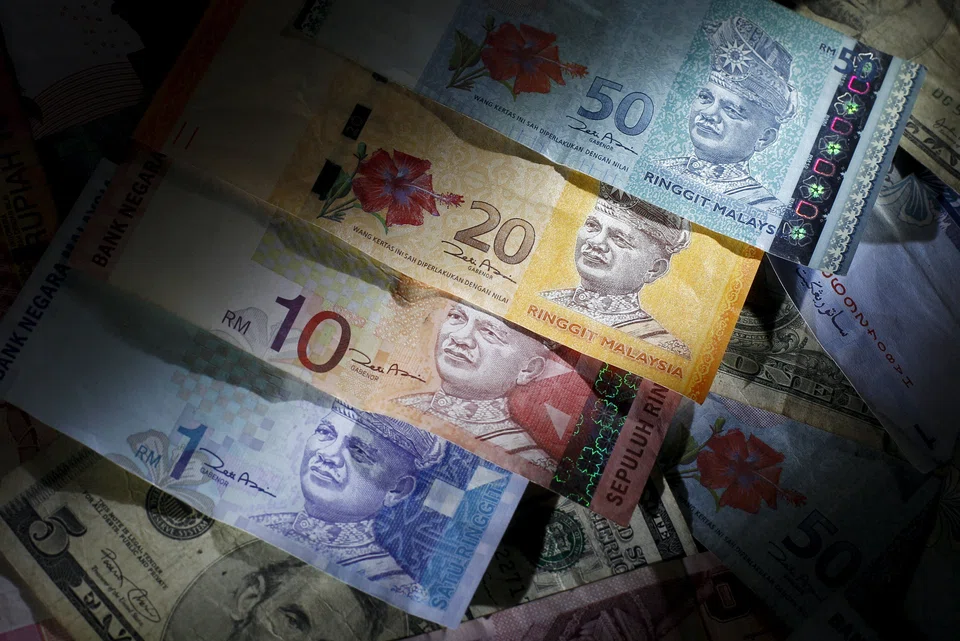
Against a basket of G-3 currencies, most Asian currencies have appreciated. The clear outlier is the Malaysian ringgit, data from DBS showed.
"You want to be swimming down the middle," said Mr Carbon, pointing to Singapore's model of following a basket of currencies to maintain stability. The Singapore-dollar nominal effective exchange rate (NEER) takes reference from an undisclosed basket of currencies. The more trade that Singapore does with a country, the greater the weight of that country's currency in the basket.
Critically, Asian countries have held plump current account surpluses - which show exports exceeding imports - ever since the Asian financial crisis. This makes them net lenders to the rest of the world.
"1997 was a debt crisis. Now Asia's paid it back," said Mr Carbon. He further questioned if Asia would expand faster if it relied on more borrowings and investments from the West, which is flush with capital, instead of holding on to what he called "monstrous surpluses".
Mr Carbon also dismissed that China's move in August to rejig the way the yuan trading band finds its exchange rate against the US dollar was aimed at devaluing the currency.
In August, the People's Bank of China said the mid-point for the trading band of the yuan against the greenback will in effect reflect the previous day's closing value. This is in line with China's market liberalisation reforms, but it also caused the yuan to drop some 2 per cent in a single day, prompting readings of a devaluation to boost export numbers.
"Why people call this a devaluation, I don't understand," said Mr Carbon, noting that the single-day devaluation was minuscule compared to the overall appreciation of the currency. "Europe and Japan are waging currency wars. China is not participating. If anything, they have held back and not joined the fight."
The bigger question is over China's structural reforms, he noted. "This is where China makes or breaks the world."
This month, China - through the Xinhua news agency - said it would take steps to reform its state-owned enterprises to ensure that the system is more modernised and market-oriented. And China is already dealing with problems with overleverage, and sniffing out those responsible for the situation.
It has carved out trillions in bad debt, and the central bank is expected to absorb it, noted Mr Carbon. "In a capitalist country, you fire the manager. In China, you run an anti-corruption campaign. If anything, they are dealing with it too quickly."
He urged caution over China's plan to shift gears through consumption, noting that Singapore enjoys both high savings rates and high per capita income. By contrast, countries such as Japan and the United States that have pursued the consumption model have had income fall.
China's problems with excess capacity - whether with steel plants, or properties - suggests poor investment, and should not be viewed as over-investment, Mr Carbon argued.
Meanwhile, the US GDP (gross domestic product) growth over the last three years was recently revised downwards, bringing growth to an average of 2 per cent. The labour market remains slack, with the recovery - even including the non-cyclical job gains in the healthcare sector - still at two-thirds of pre-crisis levels.
Core inflation has been falling, and cannot be explained away by oil prices since this index strips out energy prices, said Mr Carbon. This has implications for the Fed rate hike, which should be calibrated against inflation.
"It's not going to be because the economy needs it," said Mr Carbon, referring to the rate hike. "They just want to get it off the ground."
TRENDING NOW

VietJet hit with global asset freeze in FitzWalter dispute

FCT, NLB to turn Causeway Point’s former cinema space into reading hub in mall revamp

Family offices ‘kept captive’ by relationship managers turn to independent advisers, direct deals

Olivia Lum, ex-CFO not giving evidence in their Hyflux trial

