Fed policy fails to stem Dow's biggest two-day sell-off
Washington
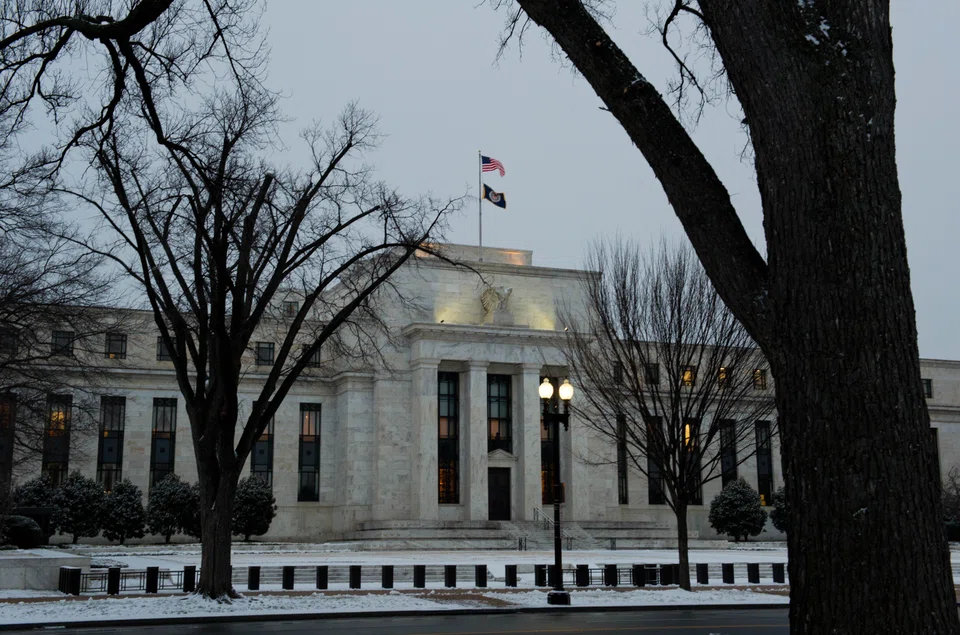
THE US Federal Reserve played a familiar tune, yet investors failed to dance.
A renewed vow of patience on interest rates and record earnings from the world's largest company couldn't prevent the biggest two-day sell-off in the Dow Jones Industrial Average in a year, as the impact of plunging oil and a stronger US dollar are showing signs of eroding profit at multinational companies.
The Standard & Poor's 500 Index tumbled 1.4 per cent on Wednesday, reversing a 0.6 per cent advance. The decline was the biggest in response to a Fed decision since June 2013, and the first time since September 2009 the gauge erased a gain of at least 0.5 per cent and closed lower by more than one per cent after a central-bank statement.
The Dow average sank 2.8 per cent during the two-day policy meeting.
"Earnings season is now more important than Fed policy, and maybe for once investors are focused on that," Eric Cinnamond, who manages the US$691 million Aston/River Road Independent Value Fund, said in Louisville, Kentucky.
"What companies are actually reporting in their outlooks is much more important than trying to figure out the wordings of one Federal Reserve statement compared to another," he added.
The Federal Reserve had boosted its assessment of the economy and downplayed low inflation readings while repeating a pledge to remain "patient" on raising interest rates.
The Federal Open Market Committee (FOMC) described the expansion as "solid", an improvement over the "moderate" performance it saw in December. It substituted "strong" for "solid" in its evaluation of job gains after a meeting on Wednesday in Washington.
While inflation "is anticipated to decline further in the near term", the FOMC said in a statement, it is likely to rise gradually towards its 2 per cent goal "over the medium term" as the impact of low oil prices diminishes. Policy makers saw a bonus in cheap energy, saying it's boosting consumer buying power.
Stocks fell as the statement reinforced expectations that the Fed will raise interest rates this year for the first time since 2006.
One caveat: officials will take "international developments" into account when considering an increase, language that sent bond yields lower.
"The Fed's decision about the timing of lift-off is not as sensitive to low inflation as before," said Laura Rosner, a US economist at BNP Paribas SA in New York and a former researcher at the New York Fed.
"Inflation is one of many factors that will be considered in deciding when to raise rates. The inflation undershoot is no longer receiving special emphasis." BLOOMBERG