Global connectivity will boost Singapore's economy, create jobs
Singapore
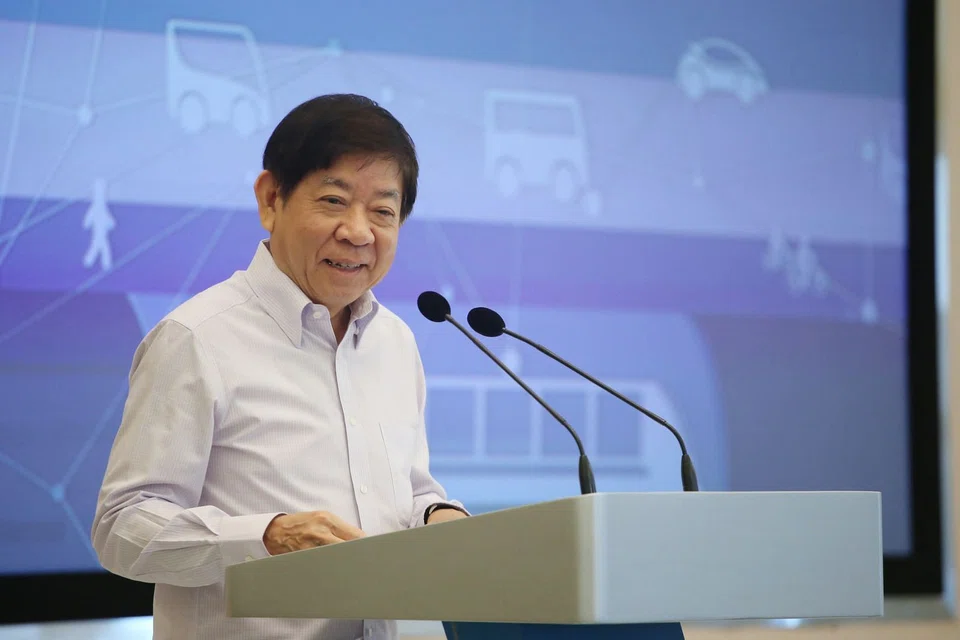
SINGAPORE'S transport network will be enhanced to connect the city-state with the rest of the world, Coordinating Minister for Infrastructure and Minister for Transport Khaw Boon Wan said on Tuesday.
Good connectivity will boost the economy, create good jobs for Singaporeans and raise their quality of life, he added in the Transport ministry's addendum to the President's Address.
The various ministries will issue their addenda - statements elaborating on their priorities and plans for the rest of the government's term - based on the five key priorities outlined by President Halimah Yacob in her inaugural address on Monday.
In his ministry's addendum, Mr Khaw homed in on building a world-class city well-connected to the world, one of the listed priorities.
Even as Singapore's aviation and maritime sectors continue to be the lifelines of the economy, they cannot be taken for granted, he said.
"Many in the region are working hard to replace us, with shipping and flight routes bypassing Singapore."
The two sectors contribute to more than 10 per cent of Singapore's gross domestic product (GDP) and 250,000 jobs.
To anchor Singapore as a world-class air hub and International Maritime Centre, the ministry will invest in the expansion of Changi Airport and the next-generation Tuas Port to sharpen Singapore's edge to "seize new opportunities and capture greater growth", he said.
The development of the Kuala Lumpur-Singapore High Speed Rail and Johor Bahru-Singapore Rapid Transit System Link will also open up more opportunities and give both countries a greater stake in each other's success, said Mr Khaw.
His ministry's addendum also covered plans to enhance public transport and active mobility.
All HDB towns will have cycling networks and good bike parking facilities by 2030. A licensing framework for bicycle-sharing operators and registration for e-scooters will be introduced by the end of this year.
The ministry is also still reviewing the regulatory framework to license the private-hire car industry, he said.
The Environment and Water Resources Ministry and National Development Ministry also outlined their plans for a "smarter, greener and more liveable city".
Singapore is developing new regional centres in Jurong and Woodlands, as well as new clusters outside the downtown core, such as the Punggol Digital District.
National Development Minister Lawrence Wong said: "These will enable us to broaden our urban development, attract more investments and support the creation of jobs closer to home."
He added that where possible, the ministry will introduce district-level infrastructure such as common services tunnels, district cooling and pneumatic waste conveyance systems in these new developments for greater resource efficiencies.
It is also looking into deploying advanced technologies such as autonomous vehicles and smart energy grids to "take Singapore's sustainable development to the next level", he said.
Minister for the Environment and Water Resources Masagos Zulkifli spoke on the carbon tax, which kicks in next year.
"In this Year of Climate Action and beyond, we will encourage and support businesses and communities to reduce our carbon footprint and promote sustainable living and working," he said.
As the population and economy grow, demands on infrastructure will increase, while manpower and resource constraints tighten, he noted.
"We must transform our environmental-services industry and workforce through technology and innovation, to support our move towards greater carbon and resource efficiency," he said.
Members of Parliament will debate the ministries' plans when Parliament sits next Monday.