

Globalisation has its pluses, but one problem is Asean's 'brain drain': Duterte
Philippines leader hopes economic blocs like Apec, Asean can do more to help those left behind by globalisation

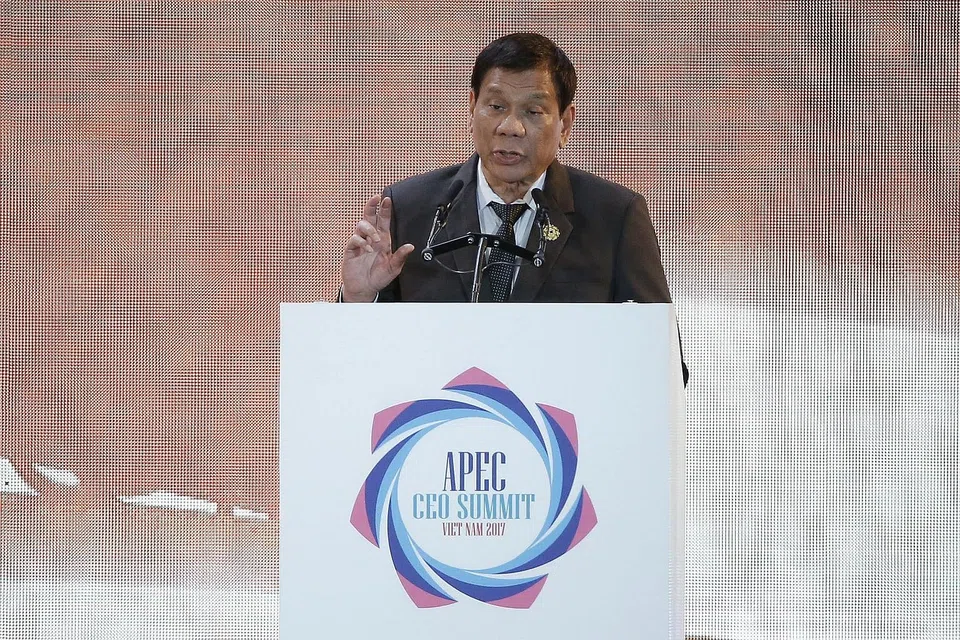
Da Nang, Vietnam
GLOBALISATION has brought its share of benefits to the world economy but there are also concerns that it has caused problems for the less developed countries, said Philippines President Rodrigo Duterte on Thursday.
In a speech to corporate executives and top government officials at a conference in Da Nang, the 72-year-old leader made the point that poorer nations are finding it tough to move up the value chain because of the mass migration of their skilled workers.
"Globalisation has pressed the brightest workers from poor Southeast Asian countries to move overseas in a 'brain drain' that must be reversed, if real development is to be achieved," he said on the second day of the Asia-Pacific Economic Cooperation (Apec) CEO Summit.
He cited his own country as an example, with many young and talented Filipinos packing their bags to work abroad, especially in countries where the economy is thriving.
During the question-and-answer session after he delivered his prepared speech, a delegate asked Mr Duterte how Apec - a bloc of 21 economies including Singapore - should react to the rise in anti-globalisation and anti-free trade sentiments in developed countries.
Mr Duterte responded by describing the United States as the "first victim" of globalisation, adding that scores of US companies have moved their manufacturing operations elsewhere to cheaper countries such as China and taken away jobs from American workers.
He also urged economic regional blocs, such as Apec and the 10-member Association of Southeast Asian Nations (Asean), to do more to help those "left behind" by globalisation.
Mr Duterte called on Asean - the Philippines is this year's chair - to speed up economic integration to enable the region to move up the manufacturing chain and retain its skilled workers.
"We need to have integration, cohesiveness, and we must act as one," he said, making the point that Asean could follow in the footsteps of the European Union when it comes to achieving regional integration.
"If Europe can do it with its Union and America is starting to revive its industries, why can't Asean do it too?" he said.
Mr Duterte also spoke of how the business community could do their part to ensure all companies, especially the much smaller ones, can progress together and benefit from globalisation.
"As CEOs of big businesess, you are in a unique position to effect change, to the extent that you can involve as many MSMEs (micro, small and medium enterprises) in your own supply chains," he told the audience.
"Through this, not only do you integrate them in the way you do business, you also unleash the entrepreneurial spirit of our people."
Charity is not what less developed economies and small businesses need, he added. "What they need are greater market access and the opportunity to participate in growth and development."
The three-day CEO Summit ends on Friday afternoon with several major speeches by Apec leaders including US President Donald Trump and Chinese President Xi Jinping.
TRENDING NOW

Grab CEO’s wife Chloe Tong on life with Anthony Tan and finding her purpose

What role can Japan play in Asean’s future?

He built the Vingroup empire. Now South-east Asia’s richest man is handing some key roles to his sons
Asean’s challenge is to become resilient against global geopolitics: former Indonesia trade minister

