Greek banks rebound as Athens clarifies remarks
Initial comments made by new ministers about increasing minimum wage, halting privatisations due to inexperience: deputy prime minister
Athens
GREEK bank stocks rebounded as the government moved to contain the fall-out from pledges made by its ministers, seeking to downplay the prospect of an imminent clash with creditors.
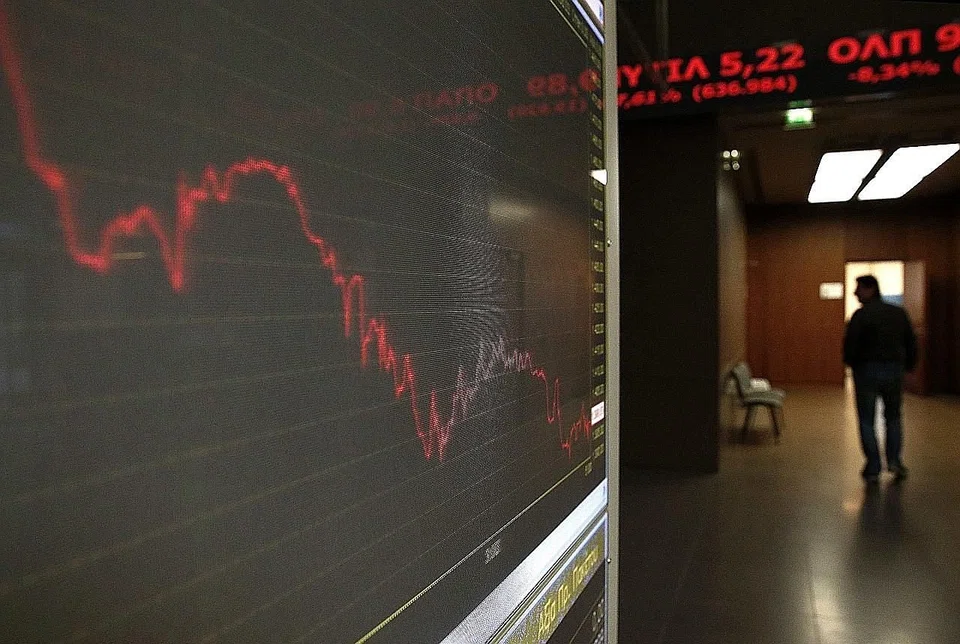
Within 48 hours of the appointment of an anti-bailout Cabinet under Prime Minister Alex Tsipras, stocks in Athens fell to lows not seen since the peak of the debt crisis, with banks, in which Greek taxpayers are the biggest shareholders, losing about US$11 billion of their value.
The sell-off followed statements by new ministers including a pledge to increase the minimum wage and to halt privatisations.
Deputy Prime Minister Yiannis Dragassakis said the initial comments were due to inexperience.
"We have new ministers who are assuming such duties for the first time, and a society where a dynamic of such expectations has been created," Mr Dragassakis said late on Wednesday. "The Greek government is interested in attracting investors."
Alpha Bank AE shares rose 18.1 per cent at 1:02pm in Athens on Thursday, after falling as much as 30 per cent on Wednesday.
National Bank of Greece, which also touched a limit down of almost 30 per cent on Wednesday, rose 12.3 per cent on Thursday morning.
Uncertainty over the country's financing prospects under the Syriza-led government spooked depositors in the run-up to Sunday's election. Greek deposit outflows accelerated last week to levels not seen even at the peak of the debt crisis, taking the total outflow for January to 11 billion euros (S$17 billion), according to a person familiar with the matter.
Plans announced by Mr Tsipras and repeated by his Cabinet to halt the sale of state assets helped Syriza win a decisive endorsement from voters. Investors then weighed in with their own verdict on the new government, selling the country's stocks and bonds after Mr Tsipras's coalition reiterated its intention to ditch the terms of Greece's bailout deal with the so-called troika of international creditors.
Standard & Poor's said it may cut Greece's credit rating, already five levels below investment grade, should the new government fail to agree with official creditors on further financial support for the country.
The government's initial statements "are reinforcing fears that the negotiations with the troika to find a new agreement will be very difficult and tough", Maria Paola Toschi, a Global Market Strategist at JP Morgan Asset Management, said.
"What surprised markets was the rapid formation of a coalition of government with a right party that has in common with Syriza the anti-austerity rhetoric."
Greek bonds continued their slump on Thursday after Germany and the Netherlands warned Mr Tsipras against abandoning prior agreements on aid and analysts said his policies might lead to Greece's exit from the euro region.
Yields on three-year bonds rose 188 basis points as of 11:58am in Athens on Thursday to 18.6 per cent, after jumping 2.7 percentage points the day before. The benchmark Athens General Index decreased 9.2 per cent to its lowest level since 2012 before recouping 2.3 per cent on Thursday.
"Talks won't be easy, they never are in Europe," Finance Minister Yanis Varoufakis, 53, a university economist, said on Wednesday. "There will be no duel, no threats, or an issue of who blinks first."
Mr Varoufakis will visit Paris and Rome next week in a bid to to rebuild bridges with euro-area counterparts.
French Economy Minister Emmanuel Macron, speaking in Paris on Thursday, suggested little leeway for negotiation, saying that there's no "waiver" for Greece's public debt. While it's normal to have talks on Greece's debt burden, the country also has "commitments" to the eurozone that need to be respected, Mr Macron told reporters.
While Mr Tsipras came to power on a platform of writing down Greek public debt, raising wages and halting spending cuts while remaining in the euro, European policy makers have told him he'll have to choose which of those goals to aim for.
German Vice Chancellor and Economy Minister Sigmar Gabriel, who heads Chancellor Angela Merkel's Social Democrat coalition partner, was the latest to voice warnings to Mr Tsipras.
"We want to keep Greece in the euro but it needs implementation of the agreed measures," Mr Gabriel said on Wednesday in Berlin. "If Greece wants to diverge from any of these measures then it must bear the economic consequences of this within its own borders."
The dialogue was set to continue on Thursday when the president of the European Parliament, Martin Schulz, visits Athens. Jeroen Dijsselbloem, chair of the euro region's group of finance ministers, is due to arrive on Friday.
Whether the government in Athens turns rhetoric into reality was to be tested first when Greece's new foreign minister, Nikos Kotzias, had the opportunity to block further sanctions on Russia at an EU meeting in Brussels on Thursday.
Greece has about 320 billion euros of outstanding debt. It has to refinance Treasury bills on Feb 6 totalling one billion euros and another 1.4 billion euros on Feb 13, according to data compiled by Bloomberg.
The government typically would do that mostly through local banks, which are now suffering from an outflow of deposits. On Jan 19-23, outflows were steeper than even in May 2012, when Greece reached the brink of exiting the euro area, according to the person with knowledge of the data, who asked not to be identified because the information isn't public. BLOOMBERG