'If you don't already have a BRI plan, you're too slow off the mark'
Singapore
SINGAPORE did not take China's proposal for the Silk Road Economic Belt seriously at first - until it became clear that Beijing was putting its money where its mouth was.
The amount is not measly. Channelled through state development institutions and commercial banks, the sum runs up to US$300 billion.
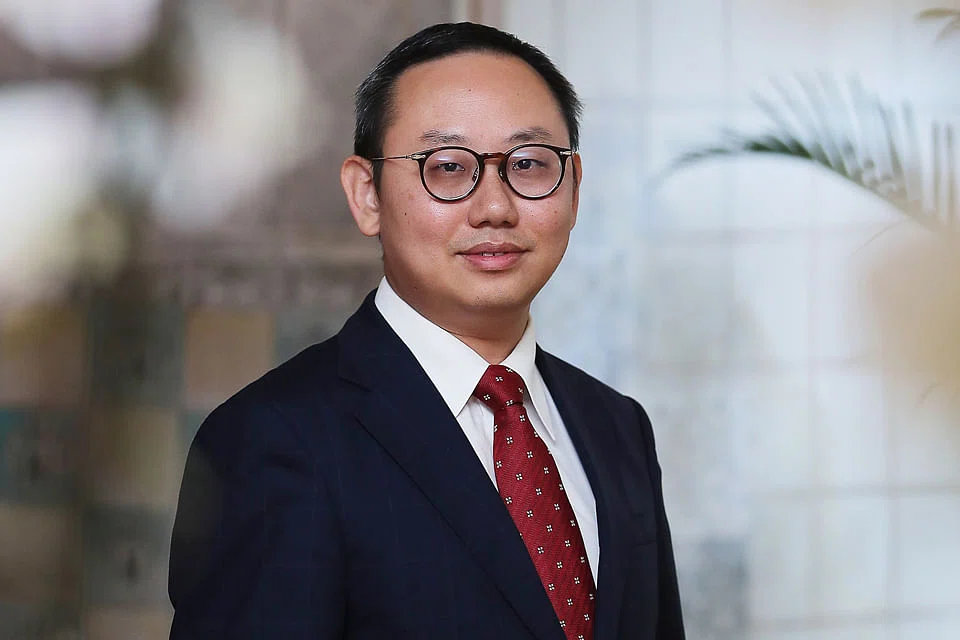
"And that's excluding all the financial resources that the central state-owned companies are also putting aside for investments," said Ho Chee Hin, group director of the China Group at International Enterprise (IE) Singapore, the trade promotion agency responsible for pushing Singapore companies to venture abroad.
He stressed that the sum supporting China's ambitious move to link countries located on China's ancient trade routes with countries beyond for trade and economic cooperation is "very significant". (For the sake of comparison, the World Bank's current capitalisation is around US$270 billion.)
Such heavy investment commitments, mostly in roads and infrastructural projects underwritten by China's massive foreign reserves of US$3 trillion, surfaced only two years after the 2013 unveiling of the Belt and Road Initiative (BRI) - as the Silk Road Economic Belt is now called; the financial muscle given to the effort has dispelled at least some of the initial doubt about how serious Beijing was about the enterprise.
Mention was made of great sums of money when President Xi Jinping unveiled the BRI, but nothing was put on the table, and many outsiders read it as a geopolitical strategy to check the US and carve a bigger role for China in global affairs.
With the US's recent retreat from the Trans-Pacific Partnership, the BRI has come to be viewed even less as a geopolitical venture; many now say it is the sole growth engine left to drive the global economy.
The perception is boosted by a surge in Chinese companies' investments overseas, which exceeded US$100 billion a year in 2015 and 2016. This trend has made Singapore think about taking "an in-depth interest" in the BRI, said Mr Ho.
The Belt and Road Forum held in Beijing in May gave a strong signal that the BRI was not going away, he said. "That was the affirmation that the BRI is here to stay and that it is a very important multilateral, global initiative that China is leading."
The forum was noted for the absence of Singapore's Prime Minister Lee Hsien Loong, who, along with the leaders of two other South-east Asian states, was not invited to the event, sparking talks about deteriorating China-Singapore ties.
In June, however, with the announcement that Chinese premier Li Ke-qiang would be visiting Singapore, observers now say that relations are on an even keel.
More importantly, Singapore and China have agreed on three areas of cooperation in the BRI:
Almost a third of BRI investments in all countries so far are in Singapore, Home Affairs and Law Minister K Shanmugam has said.
Mr Ho said it is significant that China calls the BRI an "initiative" and not a "strategy": "It's carefully thought out ... They call it 'initiative' because it's meant to be an open platform for various countries and companies to try to participate together."
Yet, going by a Singapore Business Federation-hosted regional business forum a fortnight ago, the BRI remains a vague concept, especially among businesses.
A survey report presented at the forum underscored this. It said: "The confusion is understandable, for although the Chinese authorities offer plenty of principles, ideals and features, they fail to offer a concise definition of what does or does not constitute a BRI project."
But Mr Ho is now very clear on how Singapore sees the BRI.
"Many say it is amorphous, and they don't know how to leverage it.
"But from Singapore's perspective, we look at how we can reap opportunities from it," he said.
Because Singapore is the biggest foreign investor in China and the mainland is its largest trading partner, he added, Singapore is positioned to make the best of the opportunities the BRI has to offer.
"Many Singapore companies have lots of experience with their Chinese counterparts, so when the Chinese counterparts are looking to go international, it's natural that they start to look at people they are more familiar with.
"But now it's not about what we can do together in China; it's about what we can do together outside China."
Mr Ho further said that, with Singapore being a hub for offshore Chinese renminbi, trading and infrastructure and other professional services, the Republic is thus a useful launch pad and key link for BRI projects.
"Chinese companies can seek Singapore partners and use Singapore as a base to conduct trading operations, and to procure infrastructure services they need when they do infrastructure projects in the region because we are strong in them."
For Singapore companies, it boils down to a choice between partnering with China and competing against it - and it is a no-brainer which they should go for, he said.
Singapore companies, with their connections and knowledge of the region and beyond, have much leverage in a partnership with their Chinese counterparts. Those which choose to go head to head with Chinese firms will be overwhelmed by their sheer number and size, he added.
"Thus, serious players here should have a BRI strategy to look at how we can convert some potential competitors to partners."
There are many risks involved, but Singapore companies must in one way or another have a BRI strategy, especially for those companies seeking to go global - and they need to start thinking about it now.
"If you haven't, you're already too late."
READ MORE: StanChart's global footprint a big plus for Belt and Road