

Indonesia's nightlife fizzles amid growing conservatism
Difficulty in alcohol-sourcing and slowing economy also prompt revellers to rein in spending
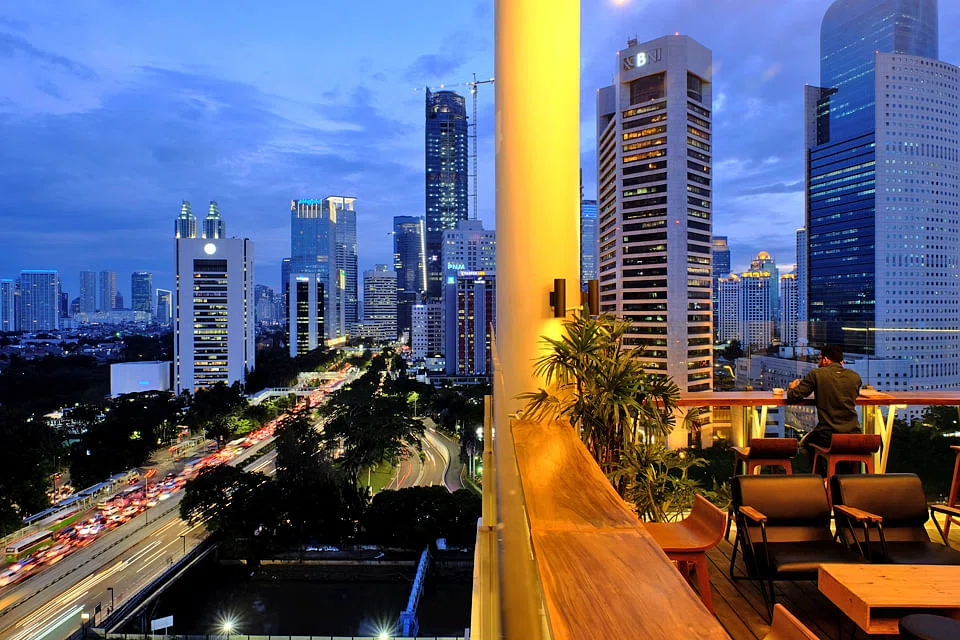
Jakarta
AS revellers filed into the Empirica nightclub on a recent Friday night in Jakarta's business district, just a stone's throw from the stock exchange, manager Joe Chen was counting on a good night.
International DJs were lined up, ready to play to a crowd of at least 800. Already some were filing into the converted warehouse to take their place on the dozen or so white leather couches where minimum drink orders started at S$500. Women inexplicably decked out with angel wings handed out free cigarettes, compliments of one of the night's sponsors.
But even a blow out night wouldn't undo a steady decline in patron numbers over recent years, said Mr Chen, chief operating officer of Enzo Group, which runs Empirica and a swag of other properties. Troubles sourcing alcohol, a slowing economy, and growing conservatism are crimping Jakarta's once rollicking entertainment scene.
"This year was supposed to be our recovery year," he added. "But it hasn't happened."
Instead, for at least some in the F&B scene, the doldrums have set in.
Consumers, especially young ones, are increasingly fretting about job opportunities, prompting some to rein in spending on a night out.
After having falling consistently over the past decade, youth unemployment has topped 19 per cent, according to the International Labour Organization's most recent data. Slowing demand for Indonesian commodities like minerals and energy have limited GDP growth to little more than 5 per cent in recent years - a far cry from the 7 per cent or more that the country's President Joko Widodo has promised.
For Mr Chen, that means fewer revellers through the door. Roughly 800 would show on any given Saturday, when his company first took over the sprawling 2,000 sq m venue in 2013. That number halved until the club closed for three months for renovations earlier this year. Now, unless there's an event as on this night, he still struggles to woo 600.
Next year, he plans to move the club to a smaller venue, in line with consumer preferences and spending.
"People just aren't spending like they used to," said Mr Chen.
Over at the Union Brasserie and Bakery, it's a slightly different story. Ensconced in leather booths amid wood panelling and white tiles suggesting a European café, patrons tuck into gourmet variants of Indonesian staples such as nasi goreng or ox tail soup. Outsized slices of red velvet cake are a dependable favourite.
On a recent Saturday afternoon, as patrons crowded the bar while waiting for a table, Wibi Hananto, head of public relations for Union Group which owns the restaurant and 13 others in Jakarta, had to speak up to make himself heard.
"Things were booming," he said, recalling the scene when he first joined in 2012. "It was a really good business. Now it's a lot less."
Restaurant owners, who didn't want to be quoted owing to worries they may tip their hand to competitors, said average spending per table has dropped by a third.
In Muslim-majority Indonesia, where restaurants come to a virtual standstill during the fasting month of Ramadan, tighter spending can have an outsized impact on a restaurant's fortunes. The year-end holiday season can make up for 40 per cent of Union's revenues.
Adding to headaches are troubles sourcing alcohol, especially spirits. Importers are often short of favourite brands, prompting some managers to dip into the black market - a risky proposition as a tax-hungry government steps up raids to crack down on bootleggers.
"You have to be creative and steer customers to less popular brands," said Mr Hananto, adding that the company steers clear of the black market.
Other venues have been forced out of business entirely following the inauguration in October of the Baswedan administration, which swept to power in April thanks to support from conservative Muslims. Last month, the city revoked the licence of notorious massage parlour Alexis Hotel in the capital's red light district in the north, on suspicion that it was a front for prostitution.
The city's lurch to the right has the police skittish. The only sizable gay nightclub, Apollo, has been closed since last month after police told investors they would no longer accept protection money. Though homosexuality is legal, a police raid or Islamic hardliners seemed likely.
"It's just too risky," said one of the venue's six investors.
To be sure, spending on conferences and tourism are helping matters in other segments. JW Marriott, which operates 43 properties in Indonesia, will open three additional properties in Bali, the island of Belitung and one in Jakarta.
Tourism has been Indonesia's fastest growth industries. While Bali's erupting Mount Agung has disrupted tourism traffic, arrivals are expected to almost double by the end of the decade. Elsewhere, spending is less buoyant, said Mr Hananto.
"Purchasing power is decreasing. People are being more cautious."
TRENDING NOW

Once staunchly pro-China, Malaysian Chinese businesses are now distancing themselves from Beijing

Stocks to watch: HPL, Aims Apac Reit, Zico, Advanced Systems Automation, ComfortDelGro

‘How many will survive?’: Bubble fears arise as China’s humanoid robotics face reality check
Smaller board lots can’t fix a market run by three banks

