Institutional investors 'need more active management'
Summit panellists say investors now need abler managers; they can't just count on market indices to generate returns
Singapore
LARGE institutional investors can no longer depend on market benchmark indices as a major source of their returns and will have to rely more on genuinely skilled active managers, a top executive at Singapore's sovereign wealth fund said on Friday.
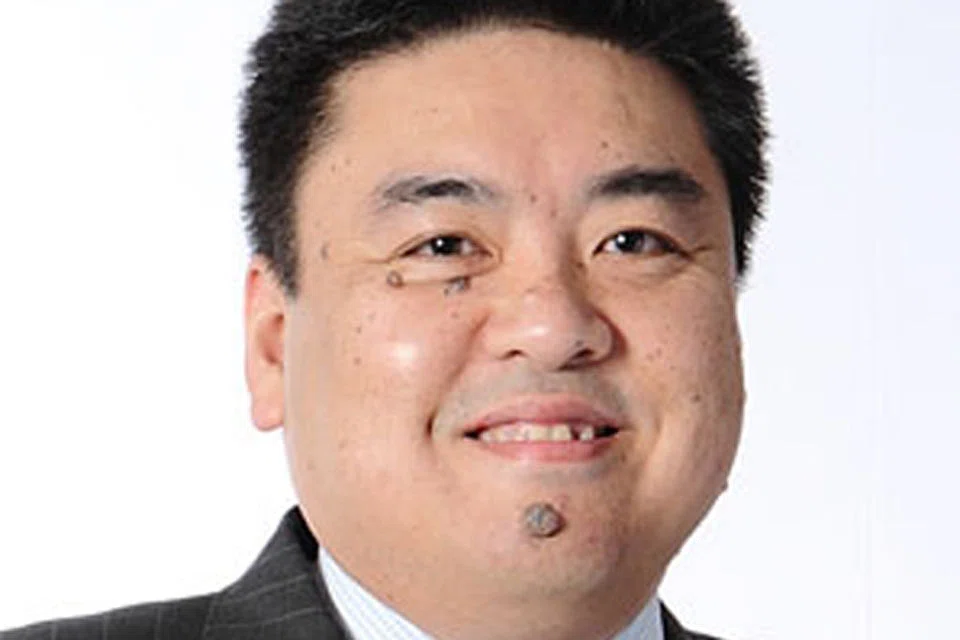
Jeffrey Jaensubhakij, GIC president of public markets and director of equities, said: "There's not a lot to like in the indices . . . You cannot invest in indices and expect that to be your source of gains."
Speaking at a panel discussion at the Asia Summit of the Milken Institute, a California-based economic think tank, he added that this applies to both emerging and developed markets.
Citing China as an example, he said that the market peaked in 2000 and has never hit that kind of high again, "so for an index investor, whether H-share or A-share, it really hasn't paid".
Yet the country has an economy of growing businesses - in the consumer sector, for instance - and this is not adequately reflected in China's benchmark equity indices, he added.
"For institutional investors especially, this creates a big problem. We're used to asset allocation and investing in - quote, unquote - 'the broad market' as a way to get most of the returns."
But if the indices become highly volatile for a prolonged period of time, institutional investors will either have to "market time, meaning that you're shifting around emerging markets or in and out of emerging markets, and hope that the price is still there, or you say, 'I need to find the right companies' - stock picks, or security research", he said.
He warned that this would be increasingly true for developed markets too, adding: "More and more, investors have to rely on skill in order to generate returns ... in terms of finding alternative managers that have access and operational capabilities, hedge funds that really are hedged."
The four panellists largely agreed that asset managers would have to work harder to generate returns over the next few years, compared with the past decade, as market indices stay persistently weak.
Gordon Fyfe, chief executive officer and chief investment officer of British Columbia Investment Management Corp, which manages US$130 billion, said that though the market has benefited from a "China dividend" and almost non-stop growth over the past 10 to 30 years, investors have now been facing low growth for quite a while.
"Just owning the index and trying to survive off the beta is not going to be anywhere near as interesting in the next five years as it has been in the past five ... We're going to have to work a lot harder in the next five years to find the returns that we did in the past."
He said his fund had only up to 2 per cent invested in real estate, infrastructure and renewable resources in Asia, but that he was looking to grow that proportion. Africa had potential, he added.
The other two panellists were Hiromichi Mizuno, executive managing director and chief investment officer at Japan's Government Pension Investment Fund, and Adrian Orr, chief executive of the New Zealand Superannuation Fund.
Mr Mizuno said his fund has tried to reduce its exposure to emerging markets and said his biggest concern was China, pointing to the Chinese government's recent stock market interventions; Mr Orr said, however, that he was still optimistic about emerging markets as a whole and recent events in China did not worry him.
The moderator was Providence Equity founder and chief executive officer Jonathan Nelson.