

Raising private investments in S-EA infrastructure key, says World Bank
Private investors put in US$15 billion into infrastructure projects in South-east Asia last year
Singapore
SOUTH-EAST ASIA has drawn increasing levels of investments into infrastructure development in recent years, but more still can be done to boost it, a World Bank official said on Thursday.
Cledan Mandri-Perrott, the head of infrastructure finance and public-private partnerships at the World Bank, noted that across South-east Asia, public spending outstrips gross domestic product, which is a good sign.
Speaking at the World Bank-Asia Competitiveness Institute (ACI) annual conference on infrastructure development for economic competitiveness, he said: "Yet when you go to some of these countries you can physically see that the infrastructure gap is still there."
One answer to this problem is getting private investments.
The good news is that private participation in the region is rising. Last year, private investors poured in US$15 billion into South-east Asian infrastructure projects.
But while the rising trend is positive, the actual volume is still rather low, Mr Mandri-Perrott said.
"Despite the fact that we talk a lot about private participation in infrastructure the number is not massive as compared to the needs. It's not good enough. It's not plugging those gaps that we have."
What countries in the region have to do is to set out proper rules of engagement for private sector investors, including having a stable regulatory and political environment.
Private investors also shy away from uncertainties such as sudden currency devaluations and capital repatriations, Mr Mandri-Perrott said.
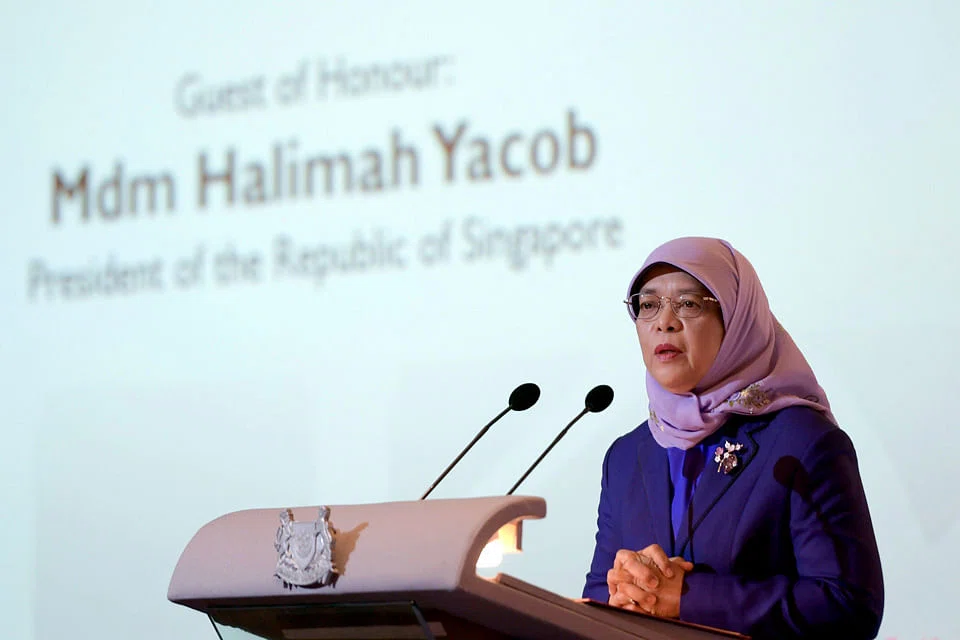
Singapore President Halimah Yacob, who was the guest of honour at the conference on Thursday, said in her speech that countries in the region should work even more closely together for their mutual benefit.
Infrastructure development is not just about constructing facilities, it is about people, she noted.
"It's not just a question of building infrastructure, but to build it in a way that would not harm the climate, and would ensure that people's futures are taken care of."
Connectivity is a key factor in stimulating economic growth and employment, she added, and to that end Singapore has been working closely with the World Bank and other multilateral development banks to build a strong regional network to support the growth of regional infrastructure.
Speaking on a panel discussion at the conference, the co-director of the ACI, Tan Khee Giap, noted that he has called on the Singapore government to be more aggressive in hosting more industry clusters.
In an editorial in The Straits Times published on Thursday, he and co-author Henry Kwek, a Member of Parliament for Nee Soon GRC, said that Singapore should aim to be a hub for infrastructure development, investment and financing.
This would entail, for example, an infrastructure-related business arbitration centre and an internationalisation drive for yuan with bond issuance and capital market deepening.






