

RBA cuts interest rates to record low in unexpected move
Governor says Aussie growth will be weaker for longer and the jobless rate will peak higher than earlier expected
Sydney
AUSTRALIA'S central bank unexpectedly cut its benchmark interest rate to a record low on Tuesday and said the local currency remains overvalued, joining a dozen global counterparts in easing this year as commodity prices tumble.
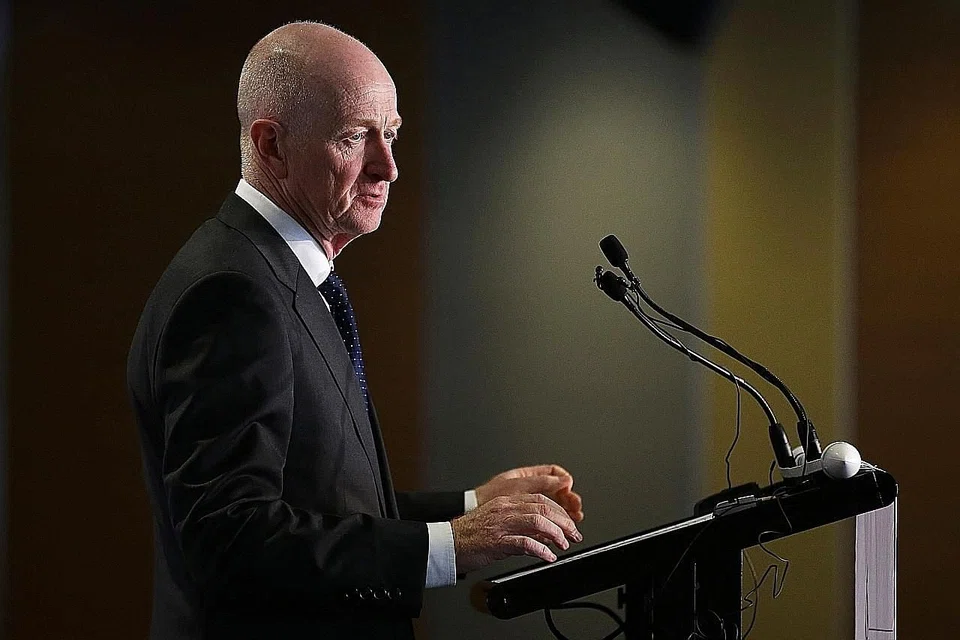
The overnight cash rate target was lowered by 25 basis points to 2.25 per cent, Reserve Bank of Australia (RBA) governor Glenn Stevens said in a statement. Growth will be weaker for longer and the jobless rate peak higher than earlier expected, he said.
Stocks surged to an almost seven-year high, the currency traded at a more than 5-1/2-year low, and bond yields dropped to records. Mr Stevens' move follows a collapse in the price of iron ore, which generates A$1 in every A$5 of export income, and a rush to ease among global policymakers that had threatened to drive Australia's currency higher.
"The global monetary policy changes over the past month have raised the degree of difficulty in getting the Aussie dollar down," said James McIntyre, head of economic research in Sydney at Macquarie Bank Ltd, who picked Tuesday's move. "The RBA has reached the conclusion that it's going to have to step up and give the currency a push to get the weakness desired. We think there's at least one more cut to come."
The benchmark S&P/ASX 200 Index extended gains after the decision, ending the day 1.5 per cent higher at 5,707.4, the highest close since May 2008. The currency fell more than 2 per cent after the decision to its lowest since 2009 and traded at 76.32 US cents at 6:52pm in Sydney.
The Australian dollar "remains above most estimates of its fundamental value, particularly given the significant declines in key commodity prices", Mr Stevens said on Tuesday. "A lower exchange rate is likely to be needed to achieve balanced growth in the economy."
"Output growth will probably remain a little below trend for somewhat longer, and the rate of unemployment peak a little higher, than earlier expected," he said.
The RBA last reduced rates 18 months ago, the time it generally takes for stimulus to make its way through the economy, suggesting there was little remaining in the pipeline.
Traders are pricing in a 70 per cent chance that the RBA will cut rates by another quarter-point at the March meeting, according to swaps data compiled by Bloomberg.
"We obviously live in a low-interest world," Australian Treasurer Joe Hockey told reporters in Canberra after the decision. "The majority of our trading partners, apart from China, have virtually zero interest rates. So the Reserve Bank does have more room to move."
National Australia Bank Ltd, Westpac Banking Corp and Commonwealth Bank of Australia said they are reviewing their mortgage rates. Australia & New Zealand Banking Group Ltd said it will decide on its interest rates by Friday.
Tuesday's Australian decision was predicted by just seven of 29 economists surveyed by Bloomberg News, with the remainder forecasting no change. Markets priced in about a 60 per cent chance of a cut.
Iron ore reached the lowest since at least 2009 last week amid signs that the bear market that began last year has further to run with China's steel mills curtailing output before a national holiday and major producers including Melbourne-based BHP Billiton Ltd adding supply.
A Chinese manufacturing gauge unexpectedly signalled contraction in January for the first time in more than two years, an official report showed three days ago.
One potential concern for policymakers is that further stimulus risks inflating a house price bubble. The Corelogic-RP Data home value index, released on Monday, showed Sydney home prices rose 13 per cent in January from a year earlier. Home loans to investors also climbed to a record 50.4 per cent of all mortgages last October.
"The bank is working with other regulators to assess and contain economic risks that may arise from the housing market," Mr Stevens said.
Employment data released on Jan 15 also showed Australia boosted hiring last November and December by the most in any two-month period in eight years. The jobless rate dropped to 6.1 per cent in December.
"In Australia, the available information suggests that growth is continuing at a below-trend pace, with domestic demand growth overall quite weak," Mr Stevens said.
Australia is a developed-world rarity in that almost 24 years of growth leave it with rate ammunition, while policymakers from Tokyo to Frankfurt undertake quantitative easing to reflate their economies. Tuesday's cut also aims to put a ceiling above a currency that has dropped almost 12 per cent in the past three months, the worst performing major currency.
"The RBA is clearly positioning to downgrade economic growth in both the nearer term and the medium term in addition to reaffirming its view that the weaker Australian dollar is providing few risks to the inflation outlook," Goldman Sachs Group Inc economists led by Tim Toohey said in a research note. The central bank will release its updated quarterly inflation and growth forecasts on Feb 6. BLOOMBERG
TRENDING NOW

MAS allocates S$1.45 billion to five asset managers in third EQDP batch: Chee Hong Tat

‘My grandfather’s legacy’: Sherman Kwek lays out three-year plan for CDL to drive returns

He built the Vingroup empire. Now South-east Asia’s richest man is handing some key roles to his sons

‘How many will survive?’: Bubble fears arise as China’s humanoid robotics face reality check

