

Record UK deal hints at strains in Malaysia's property sector
Kuala Lumpur
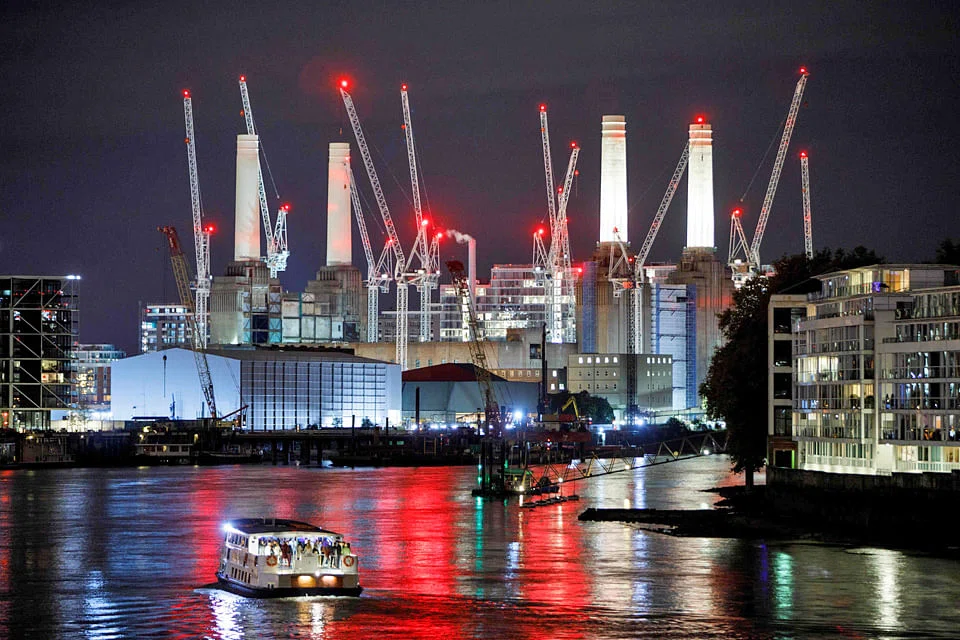
A SURPRISING proposal by two of Malaysia's largest state-owned investment funds to pay a record £1.6 billion (S$2.9 billion) to take over a development at London's famed Battersea power station is stirring talk of a financial bailout and raising questions over the health of the property sector back home.
Late last week, Permodalan Nasional Bhd (PNB) and the Employees' Provident Fund (EPF), state-owned entities with large stakes in dozens of listed entities in Malaysia, announced plans to acquire the "commercial assets" of the ongoing Battersea development from a troika led by conglomerate Sime Darby and aggressive property developer SP Setia.
The deal has raised eyebrows because of the close corporate ties that the key Malaysian players in the deal share.
PNB is the controlling shareholder in both Sime Darby and SP Setia, the two companies which equally control a combined 80 per cent interest in the Battersea development.
The remaining 20 per cent in the London development, which is plagued by cost overruns and a sluggish London property market, is held by EPF, the country's largest pension fund that also has stakes in the two listed entities.
London's Evening Standard newspaper reported that the proposed sale came after the costs of transforming the brick structure soared from an initial forecast of about £750 million. The paper said the projected profit return on the scheme had already been cut from 20 per cent to 8.2 per cent.
Both PNB and EPF stressed in a joint statement last week that the proposed Battersea deal was driven entirely by commercial considerations and was undertaken "independently without any government intervention".
But the strong related-party dimension in the transaction has stoked debate among bankers and fund managers on whether the deal smacks of a financial bailout by the state-owned investment funds, which are protecting their investments in the public listed entities.
There is speculation that large Malaysian developers are finding it increasingly difficult to finance their overseas ventures because of the sluggish conditions at home. "It can be seen as a proactive effort to keep the Battersea project in Malaysian hands and head-off any potential fallout from troubled loans," said a chief executive of a foreign bank in Kuala Lumpur.
He noted that it would be in the government's interest to ensure that the economy does not face any serious shocks ahead of a general election that is widely expected to be held in the next three months.
As it is, companies like SP Setia and Sime Darby could come under pressure as strains appear in Malaysia's property sector that has enjoyed a nearly two-decade boom.
Malaysia's property sector has begun to consolidate over the last one year, due to lending limits the country's central bank has imposed on banks for real estate purchases and an oversupply of commercial and residential units.
"Like in the previous year, the market will remain flattish in 2018. This will be a shaker because the prolonged challenging conditions will separate the wheat from the chaff," said Knight Frank Malaysia's managing director Sarkunan Subramaniam, who added that the tough environment in the coming months will begin to take its toll on developers with weaker balance sheets.
There are also fears that a prolonged slump in the real estate market could put pressure on Malaysia banks with large exposures to developers and speculators.
Proponents of the Battersea deal point out that the development has strong commercial prospects.
Tech giant Apple has already signed up to take 500,000 square feet of office space for its new UK headquarters at the Battersea power station, the iconic building that the band Pink Floyd portrayed on the cover of its 1977 album Animals.
TRENDING NOW

South-east Asia has lost Nvidia’s best salesman

Demand, tech capabilities position Apac and AI as Skyscanner’s next growth frontiers: CEO Bryan Batista

Peter Kwee’s Ridley Park bungalow on the market with S$100 million asking price

Beyond the greenback, Vietnam’s big borrowers turn to Asian-currency bonds

