Referendum inflames concerns over Turkey's deep reach in Germany
The ostracism Turks feel in Germany has helped fuel support for authoritarian Turkish president Erdogan
Cologne, Germany
THE impressive Islamic complex here, Germany's largest, boasts towering minarets and a soaring prayer hall. But what Turkish officials here seem most proud of are the hundreds of windows, which allow outsiders and Muslim worshippers to glimpse each other's worlds. The idea, they say, is transparency.
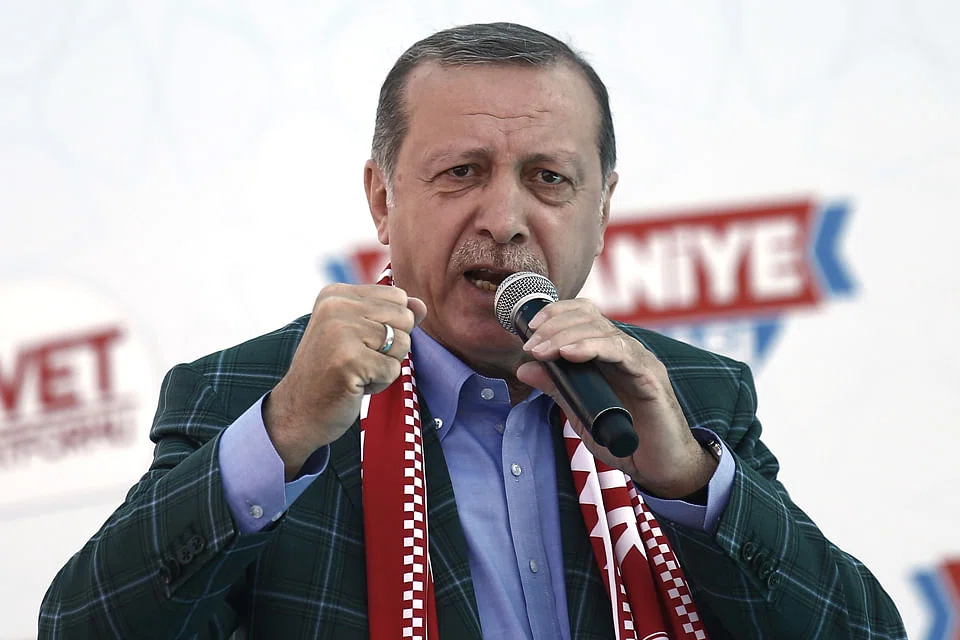
Yet it is what lies beneath the surface these days that concerns both Germans and Turks as a Turkish referendum starts on Sunday that could vastly expand the powers of its already authoritarian president, Recep Tayyip Erdogan, whose reach into Germany - both open and concealed - has become an increasing point of friction.
Since Turks arrived for work in the 1960s, Germany has maintained the largest Turkish diaspora in Europe, now some 3 million people. For many years, Germany was happy to let the Turkish state provide and pay for prayer leaders and other provisions for its emigrants. This now includes overseeing more than 900 Muslim associations and training and appointing many of Germany's imams. The large mosque complex here is a part of that network.
But Turkey's resulting grip in Germany is coming back to haunt both sides. German intelligence agencies and politicians now charge that Mr Erdogan is using the decades-old arrangement to hunt down and punish opponents as he pursues a victory that would make his authority all but unchallengeable. About half the Turks who live in Germany hold Turkish citizenship and are eligible to vote.
The Germans have accused some imams sent by Turkey of spying on Turks living in Germany and of denouncing individuals and institutions critical of the president - right down to kindergartens. Such spying, the Germans said, has allowed the Turkish government to track down, detain and harass their targets' families and associates back home in Turkey as part of a sweeping purge of Erdogan opponents.
In Germany, the spying accusations surfaced in February. Afterward, Turkey's state religious authority, Diyanet, said it had quietly withdrawn an unspecified number of imams "in order not to damage 40 years of relations." Nonetheless, the matter is roiling relations across the board. Turkish-Germans who have lived here for decades said they had trouble recalling a tenser time between Turkey and Europe.
Germany's Foreign Minister, Sigmar Gabriel, recently held urgent meetings with Turkish community leaders, worrying aloud that 20 to 30 years of "successful work at living together can get broken." Mr Erdogan and his associates hurled charges of Nazism at leaders in Germany and the Netherlands after those countries, sometimes citing sudden security concerns, banned rallies by Turkish ministers ahead of Sunday's vote.
German leaders have denounced a retreat of democracy in Turkey, citing especially the detention - so far, without charges - of the German-Turkish journalist Deniz Yucel.
As it has for years with members or supporters of the outlawed PKK movement for Kurdish independence, Turkey has handed German officials dossiers with the names of more than 300 people in Germany whom Ankara sees as working against Mr Erdogan's Turkey.
Allegedly, many of those who were named support the movement of Fethullah Gulen, a former Erdogan ally now accused of orchestrating last summer's failed coup in Turkey. Mr Gulen lives in Pennsylvania.
The dossiers included material obtained by illegal Turkish espionage on German soil, German officials said.
"It is certainly one of the most difficult phases in Turkish-German relations," said Michelle Muentefering, who heads the Turkey committee in parliament and was named in one of the dossiers.
"The Turkish government is increasingly following a course that leaves little room for discussion," Ms Muentefering said, referring to Turkey's growing litany of complaints - from last year's vote in Germany's parliament recognising the Armenian genocide to a crude satire of Mr Erdogan by the German comedian Jan Boehmermann.
The rise of a populist right wing in Germany does not help, she noted. "Integration requires moderation, not populist, illusory solutions," she said.
But it is Germany's largest Muslim association, known as the DITIB, and its close association with Diyanet that is being singled out for special concern.
"DITIB must become independent of Turkey and its religious authority," Ms Muentefering said. And its imams, who also have a social function, should learn German and train at least in part in Germany, she added.
The chairman of DITIB, Nevzat Yasar Asikoglu, is counsellor for religious and social affairs at the Turkish Embassy in Berlin. He was also directly appointed by Diyanet. Below him is a hierarchy of attaches who visit and advise Turkish-Muslim communities across Germany.
One way of avoiding the suspicion, said Zekeriya Altug, a DITIB spokesman, is to be more open and active. "We must make ourselves much more visible in this society," he said.
Others urge training of imams in Germany, "so that dispatching imams becomes superfluous", said Haci Halil Uslucan, professor at the University of Duisburg-Essen and head of its respected Turkey institute.
But few universities in Germany offer Islamic studies. To a large extent, the root of the problem is a failure to acknowledge that the Turkish "guest workers" and their families who came here in the 1960s would stay. The result was delayed integration and an obstructed path to German citizenship.
The ostracism Turks feel in Germany has helped fuel support for Mr Erdogan. In past elections, Mr Erdogan's AKP party, which has governed Turkey since 2002, has prevailed among Turks in Germany.
Fully aware of that support, Mr Erdogan's government sought to campaign vigorously here and elsewhere in Europe before the referendum. It wanted to make sure diaspora Turks voted, which they were entitled to do in the two weeks up to last Sunday.
Almost 49 per cent of the Turks living in Germany who were eligible to vote did so, an increase from about 41 per cent in parliamentary elections in 2015.
Free buses ferried voters from Turkish neighbourhoods to the Cologne Consulate, where several voters explained why they favoured Mr Erdogan.
"We have been treated well by the Germans, but now I must think of my daughter and son," said Erdem Tasdelen, 47, a textile company manager. He said he had lived here more than 20 years and only recently became a supporter of the president.
"There is discrimination against Muslim communities here," Mr Tasdelen added, "and the only person sticking up for us is Erdogan." NYTIMES