

Relationships give Singaporeans satisfaction, but tangibles fall short
Study on what matters for Singaporean finds overall quality of life dipped in 2016 compared to 2011
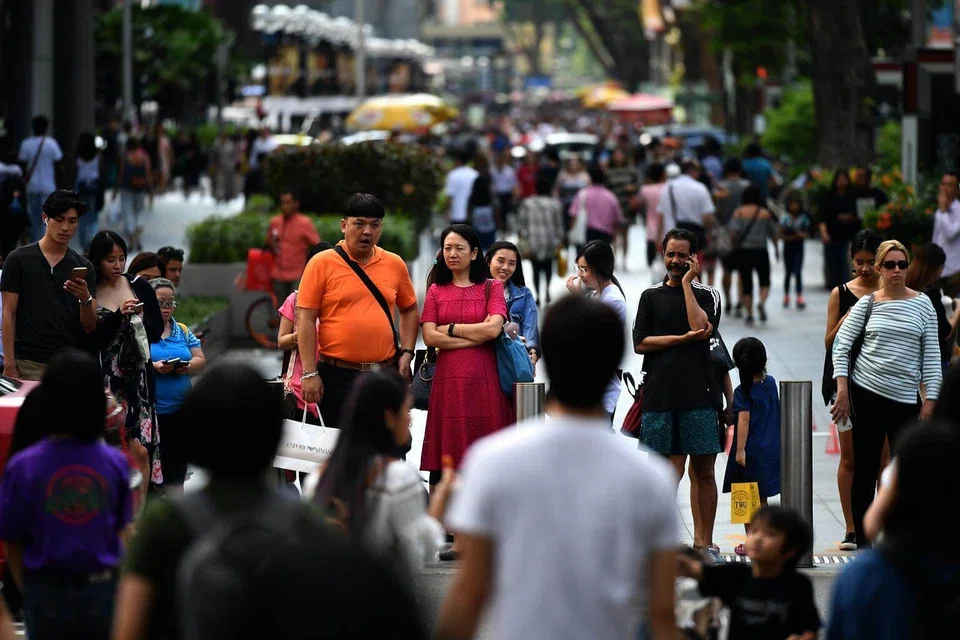
Singapore
IRONICALLY, one of the longest-running nation-wide research on quality of life in Singapore is not conducted by sociologists, but by two business school academics.
NUS Business School's associate professors Siok Kuan Tambyah and Tan Soo Jiuan recently unveiled their latest results in the book "Happiness, Well-being and Society - What Matters for Singaporeans", part of an ongoing study which dates back to 1996.
"I always tell people I'm a social scientist, not just a business school professor," said Ms Tambyah.
"It started off as a lifestyle study, which was more marketing-centric. But over the years, we discovered that if we do this every five years, you really want to be looking at the larger perspective... For us, we broadened it to quality of life, but you could also call it a happiness or well-being study."
The 2016/17 survey is the fifth report in the series which is conducted every five years. Some 1,503 Singapore citizens responded between October 2016 to February 2017.
Out of the many aspects of well-being captured, one of the most salient finding was that Singaporeans' overall quality of life dipped in 2016, and they were less happy, enjoyed life less, and felt a decreased sense of achievement compared to 2011.
Out of the 15 domains that measure life satisfaction, Singaporeans were least satisfied with household income in 2016 - the same result as 2011. This was followed by dissatisfaction in studies (for those studying), education attained, job (for those working), and standard of living.
On the flipside, Singaporeans were found to be most satisfied with relationships with their children, parents and siblings. But satisfaction with their marriage or romantic relationship fell out of the top five for the first time since the survey started, replaced with "spiritual life", a new category introduced in 2016.
Ms Tan pointed out: "If you look at the satisfaction domains, it's all relationship-focused. While the [areas that they are] most dissatisfied, they are all bread-and-butter issues."
Another snapshot of happiness that the authors looked at was "psychological flourishing", which is a scale used to measure different aspects of psychological well-being.
On an overall comparison, the authors found that that there was a decline in overall flourishing scores in Singapore from 2011 to 2016.
Ms Tambyah noted: "The story is quite consistent - we see the effect of income and education across many of the same measures. People with lower levels of flourishing are people with lower educational levels and incomes."
Throughout the study, the authors found that income and education tend to be strongly correlated.
For example, it was established that education and household income had the most impact on Singaporeans' self-assessment of their happiness, enjoyment, achievement, control and purpose.
However, the authors said that those with the highest incomes were not necessarily the happiest.
While the low-income reported low happiness outcomes, those with monthly household income levels of between S$8,000 to S$10,000 appear to be even less happy than those earning between S$3,000 and S$5,000. The same goes for level of achievement.
Ms Tan suggested that the reason for the dip in happiness scores could be due to the "sandwich class" who might not be able to get certain subsidies.
"That's the cluster of people who are considered middle-income. It's very likely that these are the young parents with kids or people with elderly parents and young kids," she said.
Ms Tambyah explained: "In a way, it's not surprising because we have seen in past surveys - and even in this survey - that income and education play a role in enhancing affective well-being outcomes."
"But we are also glad to see that it doesn't mean that you have to earn S$20,000 and above to report higher satisfaction outcomes."
While the comprehensive study covers many more aspects and indicators of well-being, the authors say that it is not a sentiment-based or emotion-based survey.
Ms Tan said: "These are measured scales and we do ask people about their attitudes, perceptions and opinions. We always think that we should have these kinds of indicators on top of just GDP indicators and household income."
Ms Tambyah suggested that such research could even be funded on a national level, with Singapore's very own study that is contextualised and can be monitored over the years.
She said: "Ideally, [conducting one] every two years. Five years is the best we can do right now in terms of funding and effort."
Regardless, the authors state that their study is just one part of a jigsaw puzzle that forms the complete picture.
Ms Tambyah added: "We are just one bit of the puzzle... hopefully the sociologists, the psychologists or the economists can say something else. We need all these different lenses to arrive at something that is more complete than if we just relied on one study."
She also pointed out that Singaporeans should not be afraid to confront the fact that the indicators for happiness, enjoyment and achievement are not as high as in previous years.
"We can't be the world's happiest people all the time... There are some bright spots in the survey and there are some dark spots. Some things are up, some things are down," she said.
"But that's life right? On the whole, [we should look at] what do we do to take this forward and what we can learn from it."
READ MORE: GDP still vital tool, but new ways needed to take Singapore's pulse
TRENDING NOW
Deal between tycoon friends sparks scrutiny of Philippine power sector

Canada is upping oil flows to Asia, but South-east Asia’s refineries aren’t ready to handle them yet

Grab CEO’s wife Chloe Tong on life with Anthony Tan and finding her purpose
China got cool for foreigners. But can they find a job there?

