

Roadmap to set up Asia-Pac free trade zone to be launched
Beijing
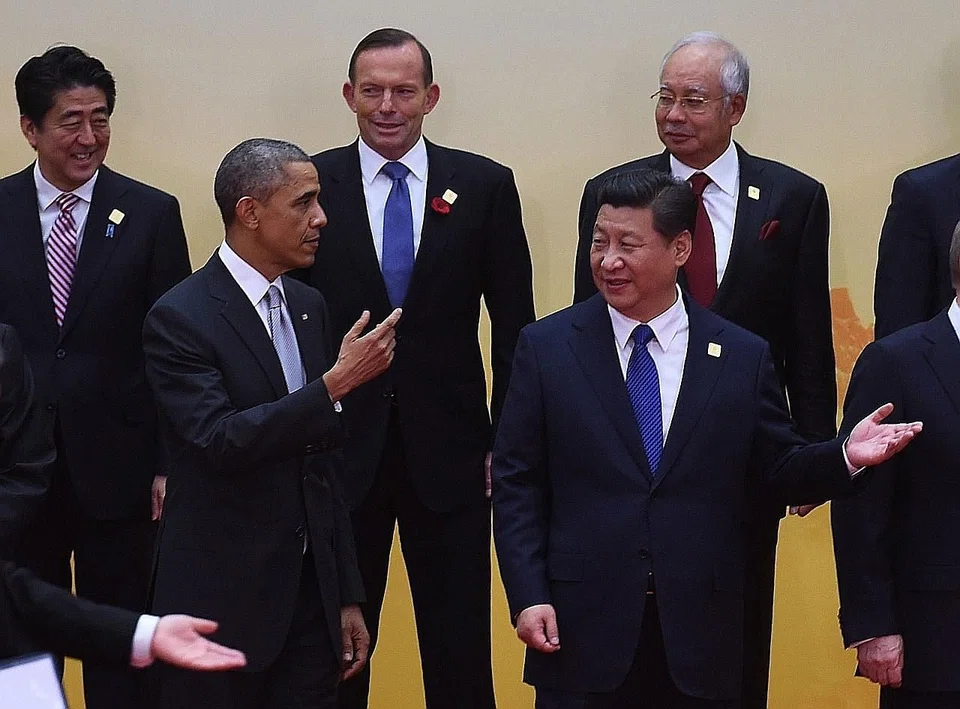
CHINESE President Xi Jinping, in closing this year's Asia-Pacific Economic Cooperation (Apec) summit as its chairman on Tuesday, announced an agreement to launch a roadmap for the setting up of a Free Trade Area of the Asia-Pacific (FTAAP).
He called the blueprint a "historic" step which reflected the "confidence and commitment of Apec members in promoting the integration of the regional economy".
The establishment of the zone, on Apec's agenda since 2006, counts as a personal success for Mr Xi, who had made it his goal to move ahead on it.
The announcement of the FTAAP comes as a blow to the US administration, which has been pushing for its own trade zone, the smaller Trans-Pacific Partnership (TPP) underpinning the Obama administration's push to maintain its influence in the region. The TPP aims for a loosening of trade restrictions and embraces 11 Pacific Rim countries such as Japan, Canada, Australia and Mexico.
The Pacific Economic Cooperation Council (PECC) has estimated that the TPP could add US$223 billion (S$288 billion) to the global economy by 2025 - compared to the US$2.4 trillion that could come from the Beijing-backed free-trade area.
China, keen to stem American influence in Asia, also signed an agreement last month to set up the Asia Infrastructure Investment Bank (AIIB) as an alternative to the US- and Europe-influenced Asian Development Bank.
Mr Xi said in his closing remarks on Tuesday: "We should vigorously promote the Asia-Pacific free trade zone, set the goals, direction and roadmap and turn the vision into reality as soon as possible."
The FTAAP also has the support of Japan, which has been stalling talks on the US-led TPP.
Japanese prime minister Shinzo Abe said in a news conference after the close of the Apec summit: "Looking beyond the TPP, we also have in sight the realisation of FTAAP, which will create an even bigger market. At this Apec summit, we were able to create a roadmap for that."
At the conference, US president Barack Obama nevertheless reiterated that the US' priority was the TPP: "The many regional initiatives will contribute to the eventual realisation. We see our engagement in the Trans-Pacific Partnership as a contribution towards that effort."
Mr Xi, in his push to portray himself as a world leader on equal footing as Mr Obama or Russia's Vladimir Putin, has used the Apec summit to cast China - now the world's second-largest economy - as the region's major powerhouse and a serious contender for the role as global leader.
The Chinese leader had welcomed his guests from the 21 member economies of Apec, showcasing his country's blue(ish) skies, clean roads, a brand new resort outside Beijing, a grand dinner in the Water Cube and ecologically-friendly fireworks.
In his opening speech to business leaders, he had laid out his vision for an "Asia-Pacific dream", with China clearly set up as the locomotive.
During the summit he appeared a reconciliatory figure, re-igniting ties with Japan and being photographed shaking Mr Abe's hand. It was a cold handshake, but the first such gesture in two years, nonetheless. This followed a 30-minute summit with the Japanese leader in the Great Hall of the People.
Mr Abe told reporters last night in Beijing: "Japan and China, we need each other. We are in a way inseparably bound with each other."
China also announced a free-trade agreement with South Korea to remove tariffs on more than 90 per cent of goods.
On the US-China front, the first two economies of the world tried to mask their differences and announced that they had "reached an understanding" on an agreement to reduce tariffs on information technology trade. Under this agreement, tariffs on a wide range of technology products worth up to US$1 trillion could be lowered.
Mr Obama announced a reciprocal deal to extend the validity of visitor visas to as much as 10 years. Keen to accommodate his host and improve ties with China, he was circumspect on issues such as human rights and the Hong Kong protests.
In a speech, he said the United States welcomed the rise of "a prosperous, peaceful and stable China", while reiterating calls for China to ease trade tensions by opening its markets and loosening controls on its currency.
He and Mr Xi were set to hold bilateral talks on Tuesday evening and again on Wednesday. The US leader will then start a two-day tour of China.
Apec, which counts the US, Russia and Japan among its members, accounts for more than half the global Gross Domestic Product, nearly half of world trade and 40 per cent of the Earth's population.






