

Singapore lays out 5 economic priorities as Asean chair
They are digital economy; trade facilitation; services integration and ease of investment; energy security; strengthening ties between Asean and external partners

Janice Heng
Singapore
THE digital economy and trade facilitation are two of five key economic areas that Singapore will focus on during its chairmanship of Asean this year.
The others are services integration and ease of investment; energy security; and strengthening ties between Asean and its external partners.
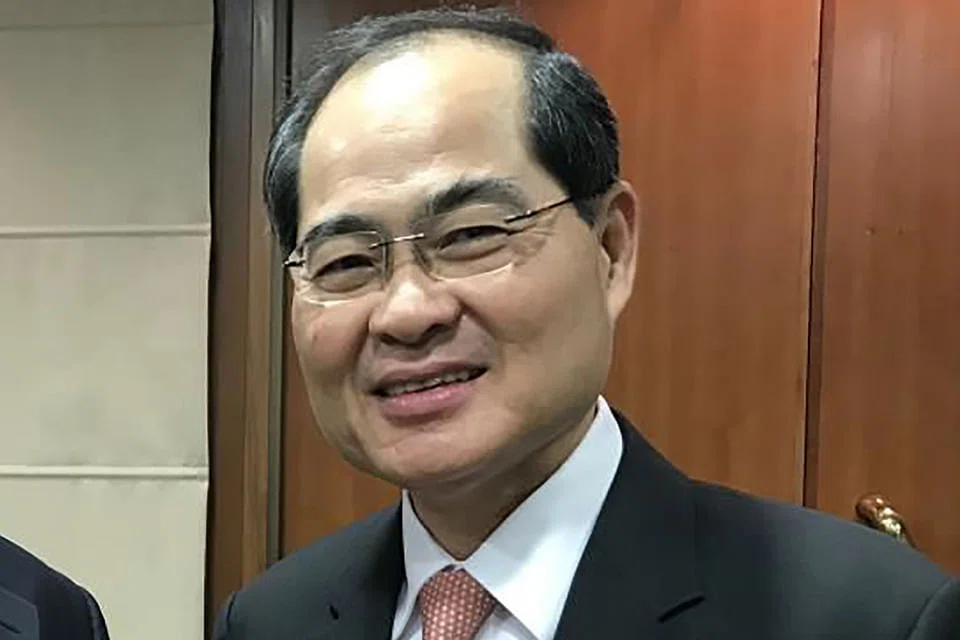
Minister for Trade and Industry Lim Hng Kiang laid out Singapore's priorities at the Singapore Business Federation's (SBF) Asean Networking Night on Wednesday night.
Even as anti-trade sentiments are on the rise in other parts of the world, Asean members must stay the course in pursuing deeper economic integration, said Mr Lim.
"It is against this backdrop that Singapore's Asean 2018 chairmanship focuses on strengthening Asean to become a resilient and innovative region," he said.
First, in the area of innovation and the digital economy, Singapore will work on developing e-commerce trade rules, lowering barriers to entry for firms, and developing digital connectivity in the region.
Second, to facilitate trade, Singapore will continue its efforts in implementing regional schemes such as the Asean Single Window for customs facilitation and clearance, and Asean-wide self-certification regime.
Third, Singapore will push forward long-standing efforts to deepen services integration and reduce obstacles to investment.
One such effort is the Asean Trade in Services Agreement, which Singapore will work towards concluding, said Senior Minister of State for Trade and Industry Koh Poh Koon at the SBF's Asean Outlook Conference 2018 earlier in the day.
At the dinner, Mr Lim also added that Singapore will work with other Asean members to promote South-east Asia as a cruising destination.
Fourth, in energy security, Singapore will work to cultivate a conducive regulatory environment and promote cooperation. Singapore will also aim to build up the region's capabilities in energy efficiency and renewable energy.
Finally, the republic will pursue deeper ties between Asean and its external partners.
Mr Lim called upon Asean and East Asia's business communities to continue sharing their recommendations.
"With your advice, we hope to realise deliverables during our chairmanship that can bring about real and tangible benefits to our businesses and people," he said.
With Singapore having become Asean chair, Wednesday's dinner marked a corresponding handover between private sector representatives, as the Asean Business Advisory Council chairmanship passed to Singapore.
New chairman Robert Yap said the council will work with Asean governments and business bodies to drive regional digital development.
Earlier, during the conference, experts and regional business leaders had shared their views on the challenges and opportunities facing the region, particularly in the area of e-commerce.
Panellist Nick Nash, group president of internet firm Sea Limited, said one factor hampering regional e-commerce is the difficulty of payment. He suggested the creation of an Asean e-wallet framework to encourage e-commerce across borders.
The conference was one of several Asean-related activities that SBF is holding this year to encourage Singapore firms to venture into the region. Upcoming events include seminars on digitisation and young entrepreneurs, and the Asean Business and Investment Summit in November.
TRENDING NOW

He built the Vingroup empire. Now South-east Asia’s richest man is handing some key roles to his sons

CPIB hauls Multi-Chem CEO, COO in for questioning; stock hits ‘circuit breaker’
SC Capital Partners sells Rivervale Mall in Sengkang for around S$276 million
From Haidilao to Oriental Kopi: How some of Asia’s favourite F&B players are faring in 2026

