Swiss firms tackle strong franc by paring prices, getting discounts
They also pay staff in euros and increase working hours in bid to protect profits
Zurich
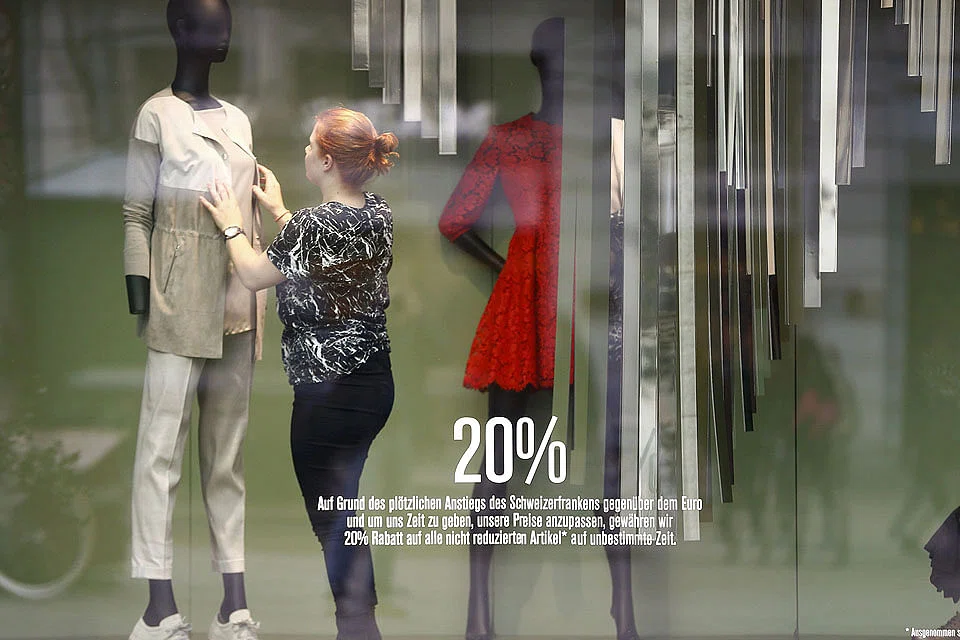
SWISS companies are cutting prices, asking suppliers for discounts, paying staff in euros and demanding new hours to protect profits from a soaring franc currency.
The central bank last month abandoned its cap on the Swiss franc, causing the currency to strengthen and prompting firms across Switzerland to warn of a plunge in profits. The 1.20 per euro cap had protected the export-reliant economy from the effects of a strong currency since 2011. "We did the maths, and would have gone into the red from normal profitable numbers this year if we hadn't done anything," said Adrian Fuchser, the head of Schneeberger AG Lineartechnik, a maker of precision machinery.
The small family-owned firm of 230 employees is typical of one whose products became far more expensive to eurozone customers overnight.
Ripples of the currency cap removal are expected to spread in the coming months, from the tourism sector that took an instant hit, to banking and engineering.
Some think tanks such as the KOF Swiss Economic Institute have warned that the move could tip the economy into recession this year, with exports sliding and the unemployment rate rising to 3.4 per cent - still low in comparison with the rest of Europe.
Analysts estimate that most global players on the Swiss bluechip index will be spared a major hit from the strong franc because their global footprint means their sales and costs are spread out over a variety of currencies. But small and medium-sized companies have fewer natural defences.
Schneeberger's Mr Fuchser said that he had no choice but to respond aggressively to the central bank's decision. Based in Roggwil, roughly 70 kilometres west of Zurich, the company draws the majority of its supply in Swiss francs, but sells roughly 40 per cent into the eurozone.
It has cut prices by 12 per cent to keep its clients and is seeking similar discounts from suppliers. Also, it is asking staff to work 42 hours a week instead of 40, effectively cutting wages, and will cut temporary jobs, Mr Fuchser said.
Other companies are getting similarly creative. Dental implant maker Straumann has asked employees who commute from Germany or France to accept payment of their salaries in euros instead of francs. Nearly 289,000 people work in Switzerland but live in neighbouring countries such as Germany, France and Italy.
Straumann is also cutting bonuses for Swiss-based staff and is asking some of its suppliers to cut prices and invoice in euros instead of francs. "We want to convince our suppliers that they should carry the currency risk. That will make us better prepared for situations like what we've seen in the past few weeks," said chief executive Marco Gadola.
Private bank Julius Baer, which analysts estimate generates about 60 per cent of its costs in francs while more than 80 per cent of its revenues are in other currencies, announced plans this week to cut about 200 jobs in response to the SNB (Swiss National Bank) decision. Reuters