

Swiss franc surge sends shock waves through global markets
Swiss National Bank gives up supporting the euro at 1.20; massive ECB monetary easing expected
London
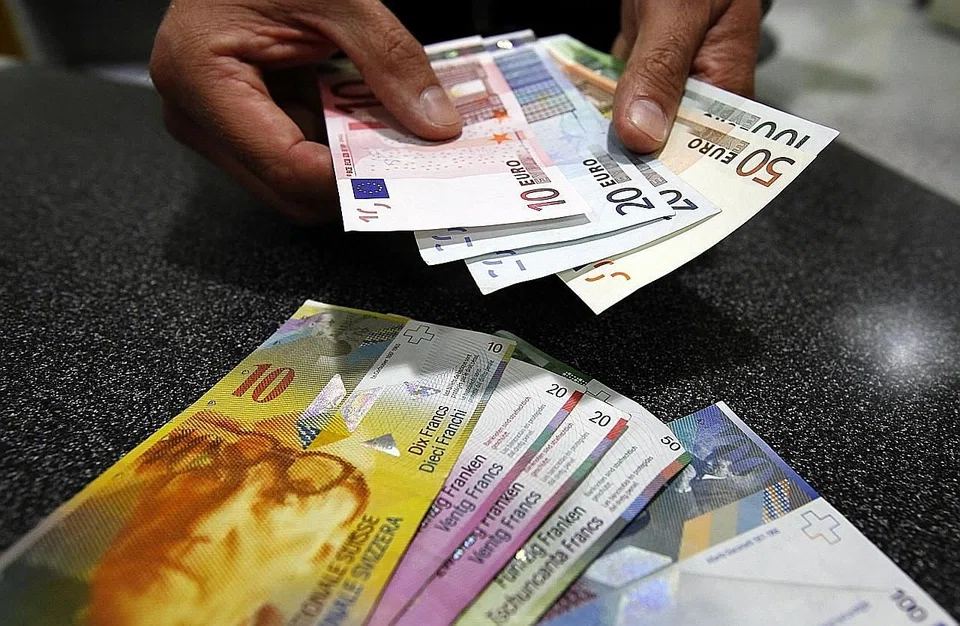
A MASSIVE, historic, surprise surge in the Swiss franc against the euro on Thursday caused extreme volatility in European and global markets within minutes. The move is regarded as an indicator that the European Central Bank (ECB) will carry out much larger quantitative easing (QE), or monetary easing, than expected next week.
The jump in Swiss franc came after the Swiss National Bank (SNB) decided that it was no longer worthwhile to support the euro at 1.20 per euro, and the immediate response was a euro plunge of around 30 per cent to 0.85 before it rallied to 1.03, which was 14 per cent below its early morning rate.
The US dollar plunged 20 per cent, but its loss was also pared to 13.6 per cent in wildly fluctuating trading. Shares plummeted in Switzerland, and European stock markets and then rallied from their lows.
The currency market was taken completely by surprise as the SNB had kept the Swiss franc capped at 1.20 for three years.
According to Brendan Brown, author of Euro Crash and London-based head of economic research at Mitsubishi UFJ Securities International, the move came after "a deep scramble" into the Swiss franc as European and other investors feared further euro devaluation ahead of the forecast euro QE.
Russian investors have also placed money into the Swiss franc because of sanctions and the collapse of the rouble. Other currency strategists now believe that the SNB move indicates that QE will be higher than previously forecast.
"The euro has depreciated considerably against the US dollar and this, in turn, has caused the Swiss franc to weaken against the US dollar," said the Swiss central bank. "In these circumstances, the SNB concluded that enforcing and maintaining the minimum exchange rate for the Swiss franc against the euro is no longer justified."
To prevent further inflows, the SNB slashed its interest rate to negative 0.75 per cent from negative 0.25 per cent in December.
Yields on 10-year Swiss government bonds fell to negative 0.06 per cent after being 0.3 per cent earlier in the week and 30-year bonds now offer an almost zero yield.
The move boosted gold which rose US$24 to US$1,253 an ounce as it tends to appreciate when there are negative interest rates; and funds flowed into sterling, the Australian and Canadian dollars because yields on those currencies are positive.
The Swiss franc jump is negative for Swiss exports and will cut imports. Nick Hayek, chief executive of Swatch, dubbed the new SNB policy as a "tsunami" for the export industry, for tourism and also for the entire country.
Such was the volatility that banks, fund managers and other traders caught on the wrong side of the market have probably incurred large losses. The big moves were to a large extent caused by short - ie, bear - positions against the Swiss franc which had been moving down in tandem with the euro against the US dollar.
Ahead of the SNB announcement, investors were running outsized negative bets on the Swiss currency, causing the Swiss franc to dive as they tried to cover their short positions as soon as possible.
The most recent data from the US Commodity Futures Trading Commission shows a US$2.6 billion net short position on the franc against the US dollar as of Jan 6. That was the biggest bet against the currency since mid-2013, according to foreign exchange strategists. Those shorts, ie, the sales of Swiss francs in the hope of repurchasing them back at a lower rate, are an indication that globally, the bear position was much larger.
Swiss equities tumbled and then rallied from their low points and European markets were also weak before they rose from their lows.
Hans Redeker, head of global currency strategy at Morgan Stanley, said that the SNB had decided to keep the Swiss franc's trade-weighted average against major currencies stable. He expected the SNB to purchase US dollars to keep that rate on an even keel and said that in general, the move was another sign that the US dollar remained in a bull market. A strong dollar would be negative for developed and emerging market companies that had borrowed in US dollars, he said.
TRENDING NOW
Stocks to watch: Keppel, Seatrium, OUE Reit, Wilmar and more

Hidden value: Why SGX consumer stocks deserve a closer look

Keppel’s RigCo, Seatrium to complete four offshore rigs in deal worth over S$500 million

Decision fatigue, complexity stop people from investing despite growing retirement needs: BlackRock

