Talks to continue after Greece, eurozone fail to clinch debt deal
Markets hopeful Athens will secure bridging finance while economists debate prospects of Greek exit from euro
London
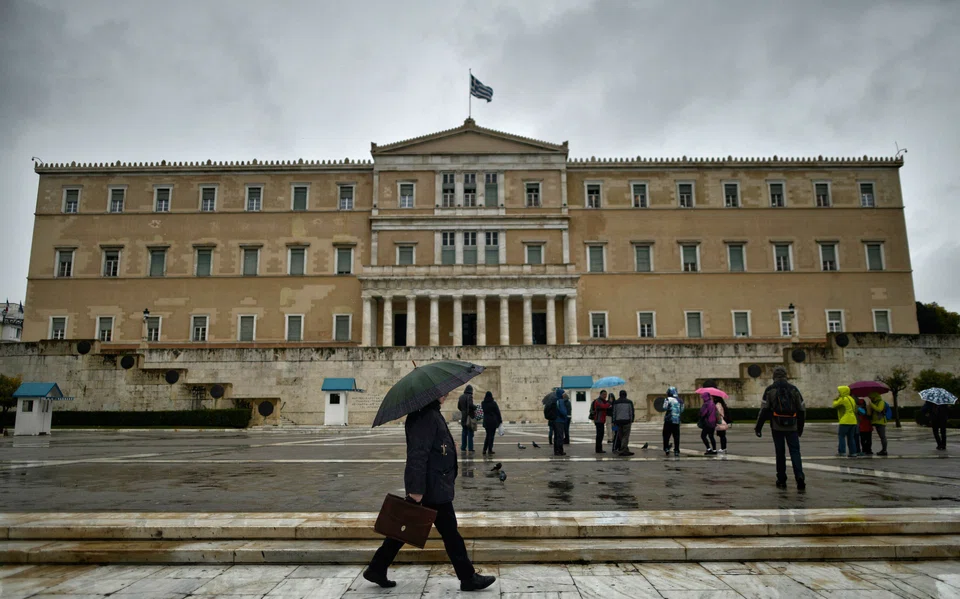
AS expected, Greece's new leftist government and its international creditors have failed to come to an agreement to solve the nation's huge international debt repayment problem.
After seven hours of talks in Brussels, eurozone finance ministers and Greek Finance Minister Yanis Varoufakis could only agree that talks would resume on Monday.
An accord is crucial as Greece's total sovereign borrowings amount to 322 billion euros (S$496 billion), of which 247 billion euros is owed to the "troika" comprising the European Central Bank (ECB), the European Union (EU) and the International Monetary Fund (IMF).
According to the terms of a troika accord with the former Greek government, the first step in the process is that 7.2 billion euros will be forwarded to the cash-strapped nation if "economic reforms", notably austerity measures, continue. From March, however, repayments must begin and they are estimated at 22.5 billion euros throughout this year.
European stock markets, which were boosted by a peace deal in Ukraine, were sanguine as most economists believe that the Greek government will negotiate bridging finance for the country.
The problem for the creditors, however, is that Greek Prime Minister Alexis Tsipras, and his Syriza Party's coalition with the Independent Greeks party, have in effect promised the electorate that they will seek debt forgiveness to end austerity programmes of limited government spending and punitive taxation.
Greece's gross domestic product (GDP) has slumped in 1930s depression style by 25 per cent in the past seven years. The economy has stabilised with fourth quarter growth of 0.7 per cent but unemployment in the small nation of 11 million - with its total GDP below its foreign debt - is still 26 per cent, while youth unemployment is as high as 51 per cent. Deflation is running at -2.6 per cent, pensions have been cut and poverty is widespread.
Mr Tsipras, elected on hopes that he would do better than previous governments, is thus wary of yet another debt deal. The coalition government, however, is in a tight spot as money has been fleeing the nation on concerns that the eventual outcome of the crisis will be capital controls, leading to a Greek exit from the euro and a massive devaluation of a reinstated Greek currency, the drachma.
Crossborder Capital, a London research company that tracks financial flows, estimates that 389 million euros left Greece in December and January. Such was the movement out of banks that the ECB had to loan the institutions money, bankers say.
Roger Bootle, executive chairman of Capital Economics, cannot see how German Chancellor Angela Merkel can concede what Syriza is demanding. A further debt write-off may just about be possible but an end to austerity surely cannot be conceded, he says. If it were, how would the governments in Spain, Italy, Portugal and, increasingly, France, be kept on the economic reform of lower government and high taxation, he asks.
Though most economists say there is only a 25 per cent chance of a Greek exit, Mr Bootle believes that if it comes to a showdown and Syriza does not back down, the German government would force Greece out of the euro. He also believes that Greece, after the initial financial disruption, devaluation and surge in imported inflation, could begin to right itself.
Mr Bootle calculates that excluding interest payments on debt the Greek government is now running a surplus. Thus if it defaulted and suspended or delayed interest payments it would have money to spare. This would enable the government to cut direct taxation to reduce the inflationary burden.
Other economists contend that there could be a tax amnesty for Greek shippers and other super rich - ie a flat, reasonable tax rate without huge penalties if they once again invested their money in the country.
The devaluation would cause Greece to become so cheap that tourism would boom. It would also encourage foreign investors to place capital in cheap factories, plant and equipment that would boost employment.
Pessimists believe that default would be disastrous as no one would lend to the Greek government ever again. History of other nation defaults, however, indicates that such pessimism is misplaced and lending would continue again. To encourage investment, however, Syriza would have to soften its left wing stance.
What eurozone officials fear, however, is that a Greek exit would open the door to Portugal, Spain and possibly Italy.