Tsipras charts path for Greece with funding at risk
EU rejects Greece's requests for debt writedown and short-term financing agreement
Athens
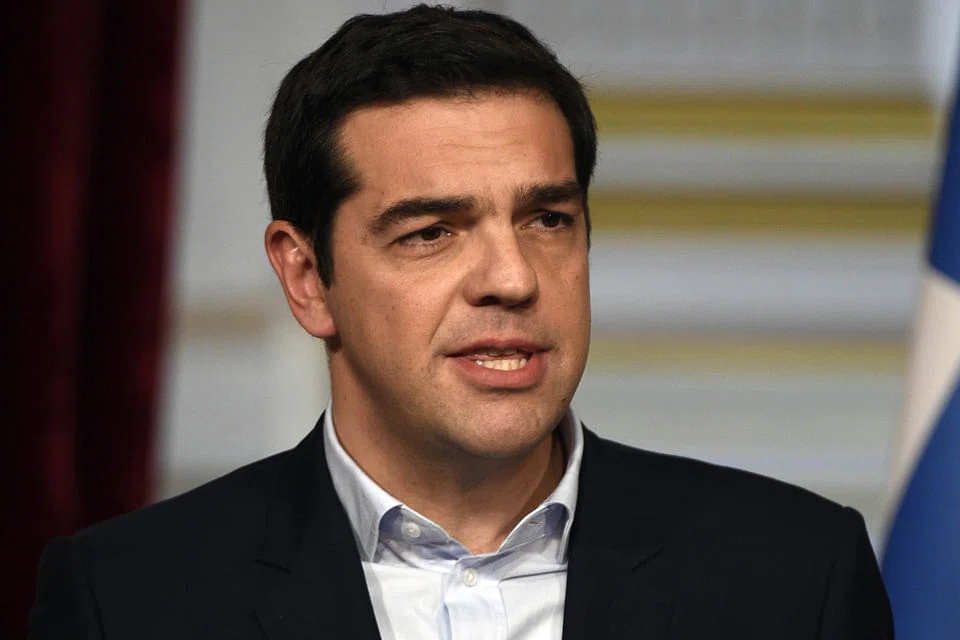
NEW Prime Minister Alexis Tsipras will try and chart a path forward for Greece this week, after the head of the euro-area finance ministers' group shot down his proposal to avoid being shut off from funding at the end of the month.
The new government's request for a debt writedown has already been rejected, and Eurogroup chief Jeroen Dijsselbloem on Friday rejected a request for a short-term financing agreement to keep the country afloat while it renegotiates the terms of its bailout program.
"We don't do bridge loans," Mr Dijsselbloem told reporters in The Hague, when asked about Greece's request. "A simple extension is possible as long as they fully take over the programme."
The EU's latest rebuff raises the stakes for Greece's government. The next showdown is scheduled for Feb 11 in Brussels, when Greek Finance Minister Yanis Varoufakis faces his 18 euro-area counterparts in an emergency meeting after Mr Tsipras delivers his major policy address to lawmakers.
Greece's cabinet met on Saturday to discuss what will go into his policy plan, followed by meetings led by Mr Varoufakis at the finance ministry to attach costs to measures, according to state-run Nerit TV.
Standard & Poor's lowered Greece's long-term credit rating one level to B- and kept the ratings on CreditWatch negative. "Liquidity constraints have narrowed the timeframe during which Greece's new government can reach an agreement with its official creditors on a financing programme, in our view," S&P said on Friday.
The rating downgrade pushes Greece's debt six levels into non-investment grade, or junk status. S&P said that it plans to "update or resolve" the CreditWatch status by next month. "We could lower our ratings on Greece if we perceive that the likelihood of a distressed exchange of Greece's commercial debt has increased further because official funding has been curtailed, government borrowing requirements have deteriorated beyond our expectations, or Greece's external financing has come under greater stress," S&P said.
Greek stocks and bonds rebounded at the start of the past week after the government dropped its debt writedown demand. The trend reversed on Feb 5, and the yield on 10-year bonds jumped 42 basis points to 10.11 per cent on Friday, with the Athens Stock Exchange index falling 2 per cent, after Mr Dijsselbloem rejected the bridge financing.
The US has urged Greece to exercise fiscal prudence and continue structural reforms in meetings between US Treasury Department Assistant Secretary Daleep Singh, Mr Varoufakis and other Greek officials in Athens on Friday, the US Embassy said in a statement on its website.
"The United States believes that it is very important for the Greek government to work cooperatively with its European colleagues, as well as with the IMF," US Ambassador to Greece David Pearce said in the statement.
Greece's goal remains to achieve a bridge programme that would give it time to negotiate with its creditors and devise a three to four-year fiscal plan, a Greek government official said, asking not to be named in line with policy. This programme wouldn't include more loans from its bailout creditors, he added. Instead, the government wants to be able to increase its stock of Treasury bills beyond its current limit of 15 billion euros (S$22.96 billion) to cover any extraordinary financing needs that arise, the official said.
Mr Varoufakis has said that his government won't accept any more cash under the terms of Greece's existing bailout, leaving seven billion euros of potential aid on the table, rather than complying with demands for more austerity attached to the country's international bailout agreement.
"Practically speaking, our proposal is that there should be a bridging programme between now and the end of May, which would give us space - all of us - to carry out these deliberations and in a short space of time come to an agreement," Mr Varoufakis said after meeting German Finance Minister Wolfgang Schaeuble in Berlin on Feb 5.
The standoff risks leaving Europe's most-indebted state without any funding as of the end of this month, following the Jan 25 election victory of Mr Tsipras's Syriza party.
"It will be a first step in how we want to proceed together in the next weeks, months," Mr Dijsselbloem said, as he cautioned that a discussion over the terms of the bailout program would mean "we no longer talk about a simple extension".
Mr Tsipras is preparing to set out the most detailed account yet of his plans to revive the Greek economy that aims to honour his commitments to voters without further riling his European creditors. BLOOMBERG