Changing the mindset
Prominent figures from across the built environment sector share their thoughts about the need to boost productivity among industry players



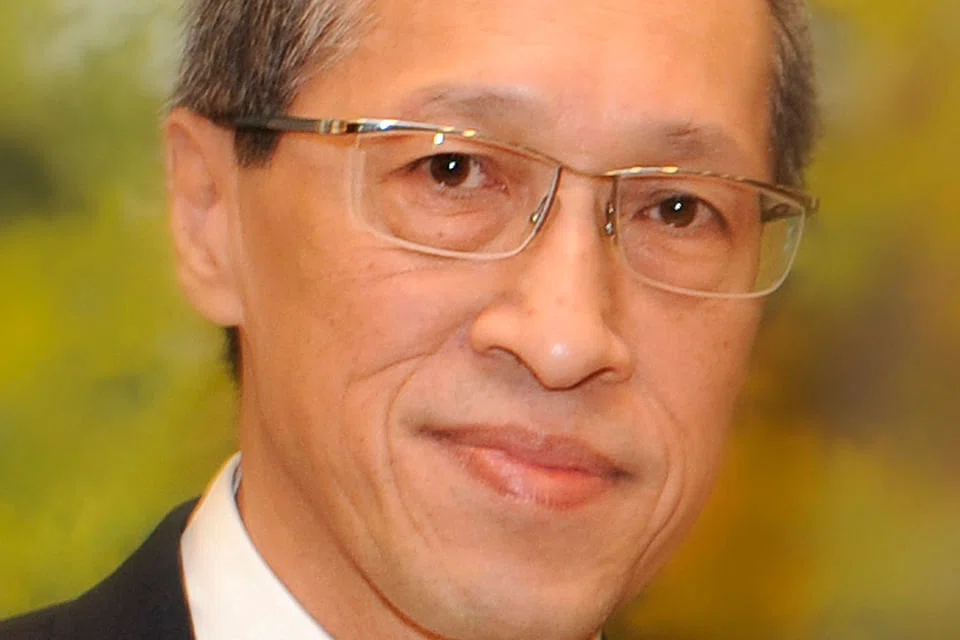
Roundtable participants:
Moderator: Francis Kan
The Business Times: What are the key challenges hindering construction firms from improving productivity and what are some ways to overcome them?
John Keung: Productivity in Singapore's construction sector is showing signs of progress. The industry is responding and making efforts to improve productivity. However, one of the key challenges hindering construction firms from making improvements lies in the lack of a strong mindset for productivity and the motivation to transform their work practices.
Hence, to make a quantum leap in productivity in the sector, we will need to nudge built environment sector firms and industry practitioners to effect a mindset change to embrace productivity as the way forward, quicken the pace of moving as much construction work off site as possible through productive technologies, facilitate integration across the construction value chain, raise the level of industry-wide standardisation and build up a skilled and experienced workforce.
BCA will also continue to reach out to companies, especially SMEs, to increase the awareness of the funding support and schemes available, as well as share successful case studies of progressive companies to get more firms on board to raise productivity.
Amy Marks: One of the biggest challenges hindering construction firms today from improving productivity is understanding how to change their processes from reactive to proactive, using lean processes, off-site and integrated project delivery methods.
This change in thinking focuses on value, improves productivity and removes waste but companies must understand that it's not only about means and methods, which will only produce incremental gains versus truly focusing on transformation gains as the entire process changes.
Pek Lian Guan: One of the key challenges for smaller firms is that of resources. Without sufficient or appropriate resources, they are unable to dedicate time to think of and plan for such changes as they would be preoccupied with daily operations, which is the bread and butter of the firms. Thus they are subsequently unable to invest to make these changes.
Firms also need to be able to find and obtain the financial resources to allow them to invest in such changes, on top of those required for their daily operations. By showcasing firms which have successfully adopted productivity measures, and the benefits which have been brought about through the adoption of these measures, it might convince these firms to take them up. Also, initiatives and grants to further encourage the use of such technologies can help in the effort.
Kwek Leng Joo: The issues concerning construction productivity are multi-faceted and need to be tackled holistically - at the employee, firm and industry levels. Incentive schemes such as the BCA Construction Productivity and Capability Fund (CPCF) addresses this with incentive schemes to help in various aspects of construction productivity. But above all, firms must embrace a productivity mindset and dare to challenge conventional construction methods.
BT: What can Singapore learn from advanced countries in improving construction productivity?
Keung: To achieve sustainable growth, stay globally competitive and attract more locals and skilled talent into the built environment sector, we need to transform the way we work, in a smarter and more productive way.
Like advanced countries such as Australia, the United States, United Kingdom and Japan, we need to create a culture of productivity in Singapore by investing in technology and building a strong core of experienced and skilled workers to anchor the sector's transformation. In particular, we can learn from advanced countries in adopting game-changing technologies like Prefabricated Prefinished Volumetric Construction (PPVC) and Cross Laminated Timber (CLT), which takes designing buildings even further to maximise off-site production and assembly, leaving minimum assembly and installation work on site.
BT: Game-changing construction technologies are starting to gain traction here. What are the key factors driving businesses to embrace these new methods of construction?
Marks: Partnering with firms that have experience in these areas would be of great benefit to the Singapore companies looking to integrate these technologies into their processes. There is a Continuum of Off-Site including intelligent materials, components, non-volumetric and volumetric subassemblies and volumetric modules. It's important that prefabrication across the entire continuum and across all systems be promoted in order for prefabrication to be effective.
Pek: Companies which are driven by the wish to continually improve and get an edge over their competitors are likely to adopt new methods of construction. Government policies have also helped to spur this movement towards such construction technologies locally.
However, the readiness for these technologies to be readily accepted is dependent on not just those in the industry - from the authorities, to the consultants to the builders - but also largely on the end consumer. Thus perhaps a push to raise more awareness on the reliability and quality of such technologies would be beneficial.
Keung: Some of the key factors driving businesses to adopt game-changing construction technologies include faster construction, reduced reliance on foreign labour and also enhanced business competitiveness.
For instance, it is estimated that the adoption of PPVC for the NTU student hostel requires 40 per cent fewer workers than conventional construction and enables the project to be completed faster, in 19 months.
Interested developers and builders may tap the Productivity Improvement Project (PIP) Scheme under the BCA's Construction Productivity and Capability Fund (CPCF) when adopting such technologies to receive funding support of up to S$5 million.
Kwek: For the building sector, quality has commonly been the yardstick by which excellence is judged. Achieving high construction quality, despite the industry's tight labour market conditions, has also been a driver for new construction methodology.
CDL has been a firm proponent of technologies that enhance productivity, construction excellence and environmental sustainability. For new developments, we invest between 2 and 5 per cent of the construction cost on eco-friendly features and sustainable construction through buildable designs and extensive use of prefabrication such as precast concrete, drywalls and Prefabricated Bathroom Units (PBUs).
Over the years, we have also been actively driving productivity performance improvements at our development sites through establishing buildability targets for our developments for our builders.
BT: What more can be done to raise construction productivity in Singapore?
Pek: Moving ahead, we should continue to review our current industry practices, workflow and regulatory framework. We should look at how to better integrate our processes into these. A lot has been done to adopt technology thus far, and what is needed now is to bring together all the respective stakeholders, from the authorities, to the consultants, to the builders and the sub-contractors, to identify and analyse the existing gaps in these initiatives, and work to provide for positive value-add productivity growth.
Kwek: The government has embarked on a multi-pronged strategy to drive productivity improvements. While effective, incentives and legislation will only bring us that far. Before we even invest in game-changing technologies, I believe that to truly achieve a quantum leap in productivity, the fundamental mindset among all built environment stakeholders must change. By initiating and implementing more cost effective and efficient design and construction innovations, we can enhance our capabilities, optimise resources and bring about transformative change for our built environment.
BT: With the shortage of labour, does it present an opportunity for firms to look at ways to do things differently from business as usual?
Marks: Any time there is a labour shortage, off-site prefabrication may be a viable option as an alternative to conventional construction methods alone. This creates an opportunity for companies to create a competitive advantage for their firm by adopting prefabrication into their processes. However, it's only one factor, and there are others at play that create or detract from the forces for success.
Pek: To move forward, and stay relevant, firms have to move away from the previous model where the norm was labour intensive work, and start to shift towards a model where there is a lower reliance on labour.
Kwek: With the shortage of labour, we are challenged to deliver the same quality product in a similar time frame - while maintaining our bottom line. To achieve this, the way forward is to develop new capabilities and invest in technology that will allow for less labour intensive building methods.
While the investment cost in such technologies may be higher currently, with increased adoption, the industry as a whole will also enjoy improved economies of scale.