Good connections at Rotterdam but Wilmar faces green constraints at Europe’s busiest port
Chemicals transport company Eagletainer similarly faces supply chain disruptions and strict regulations

[ROTTERDAM] Being near Europe’s busiest port gives a logistical edge – but the continent’s stricter green rules may hamper growth, as Singapore-listed agribusiness Wilmar International is discovering.
Rotterdam, in the Netherlands, is home to Europe’s largest seaport and is a major transport hub. The Netherlands is Singapore’s top European destination for exported goods, with consignments reaching S$11.2 billion in 2023, said Enterprise Singapore (EnterpriseSG) director for Europe, Alan Yeo.
Chemicals are a particularly important industry. One of the world’s top five chemical clusters, the Antwerp-Rotterdam-Rhine-Ruhr area, spans the Netherlands, Belgium and Germany – and accounts for 30 to 40 per cent of the industry’s turnover in Europe, noted Yeo.
Rotterdam was thus a natural entry point into Europe for the Kuok Group’s oil palm, edible oils and grains business in 2003, which then merged with Wilmar in 2007.
With 14 manufacturing plants in five locations in Europe, Wilmar reported US$2.36 billion in European revenue for the 2023 financial year.
This was across three companies: Wilmar Europe Holdings, a processor and merchandiser of tropical oils and speciality fats; Wilmar Europe Trading, which trades vegetable oils, fat products and derivatives; and Wilmar Oleochemicals, in the Port of Rotterdam, which turns palm oil into ingredients used in products such as detergent and shampoo.

“The Port of Rotterdam (is) a strategic logistics hub by virtue of its excellent location and infrastructure,” said Bernd Noldt, general manager of Wilmar Europe Trading.
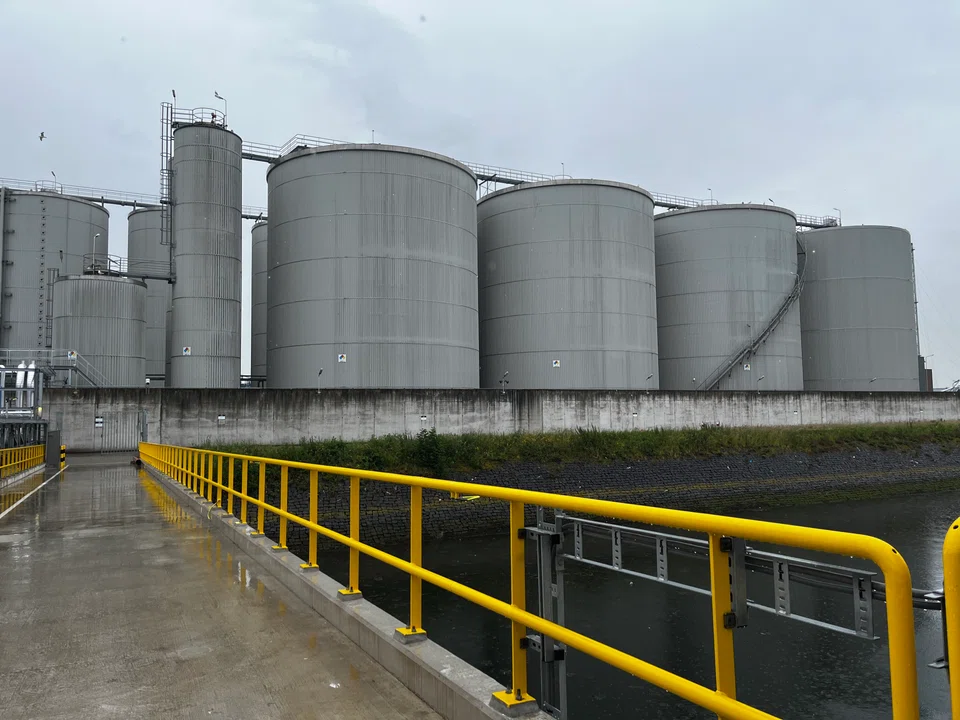
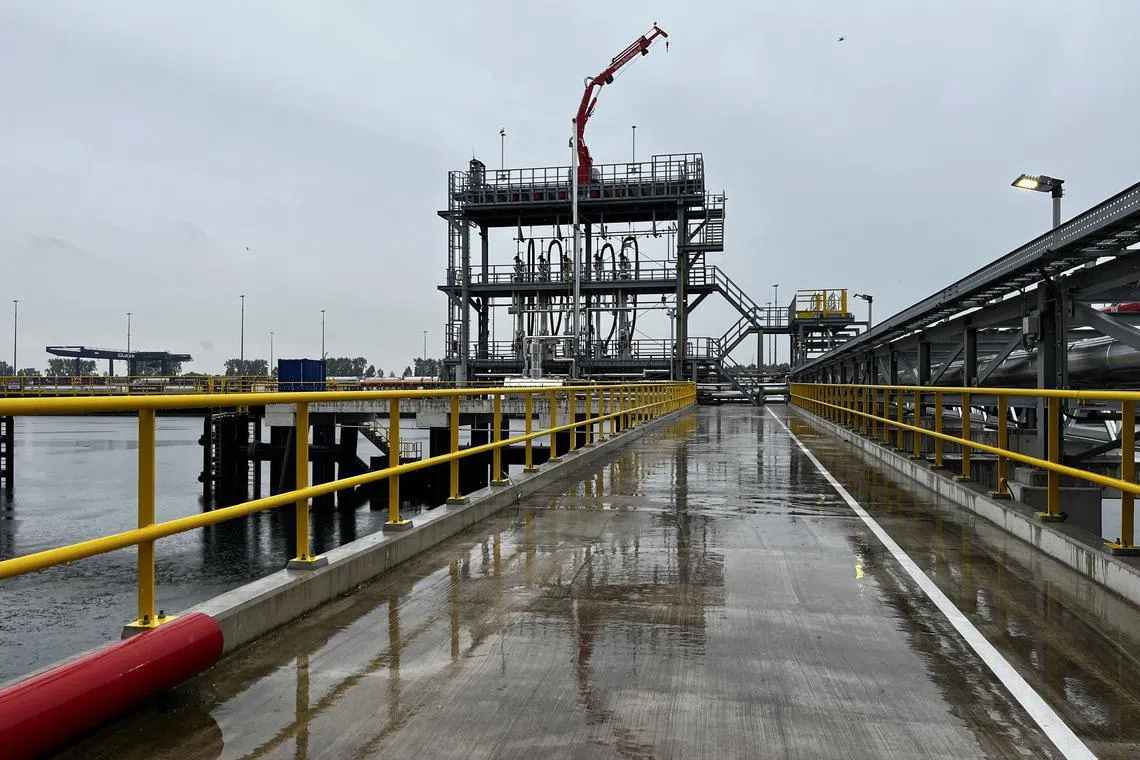
Early this year, the company opened a new sea jetty in Rotterdam, allowing vessels to dock next to the plant. This lowers costs, as Wilmar no longer needs to rely on third-party barges to transport materials from ships to shore.
Challenges are brewing
But several concerns cloud Wilmar’s future in Europe. These include the Russia-Ukraine conflict and rebel activity in the Suez Canal, which have disrupted supply chains and access to raw materials, said Noldt.

Then there is the EU Regulation on Deforestation Free Products (EUDR), which takes effect from Dec 30, 2024. It requires companies working with certain products – including palm oil, Wilmar’s major product and feedstock – to carry out due diligence and collect evidence to prove that their production does not entail deforestation.
Since 2013, Wilmar has had a policy of not burning forests, developing on peat land, or exploiting labour; nor working with third parties that do so.
But EUDR requirements – such as the specific documentation needed – are unclear, which increases Wilmar’s administrative burden in placing requirements on its own suppliers, said Noldt.
Other traders and distributors may be dissuaded from participating in the European market altogether, he added.
European authorities seem to assume that South-east Asian palm-oil producers rely on European demand and thus have an incentive to comply – but they have no shortage of consumers elsewhere, he added. China and India, for instance, are huge export markets.
The European market does offer stability, said Noldt. “It’s a relatively wealthy environment where a lot of spending takes place, where the markets are set.”
Ingredients derived from Wilmar’s oleochemicals feature in major brands’ products across the region. Being close to the action allows Wilmar to react quickly to changes in demand, he said.
Wilmar also sees potential European growth for its palm oil-based oleochemicals in replacing animal-derived tallow. Europe’s tallow supply was limited by Covid-era curbs on slaughtering, and is now being diverted from chemicals to biofuels.
Yet, despite Europe’s continued appeal, palm oil producers are also looking elsewhere. “A lot of the assets that are being created in South-east Asia are developed with an eye on China.”
“So, I think we live in a phase where we need to see how things are working out,” said Noldt. “There’s so much uncertainty today.”
Coping with change
Singapore-owned Eagletainer Logistics Europe also faces strict environmental regulations, but is more optimistic about its prospects in Europe.
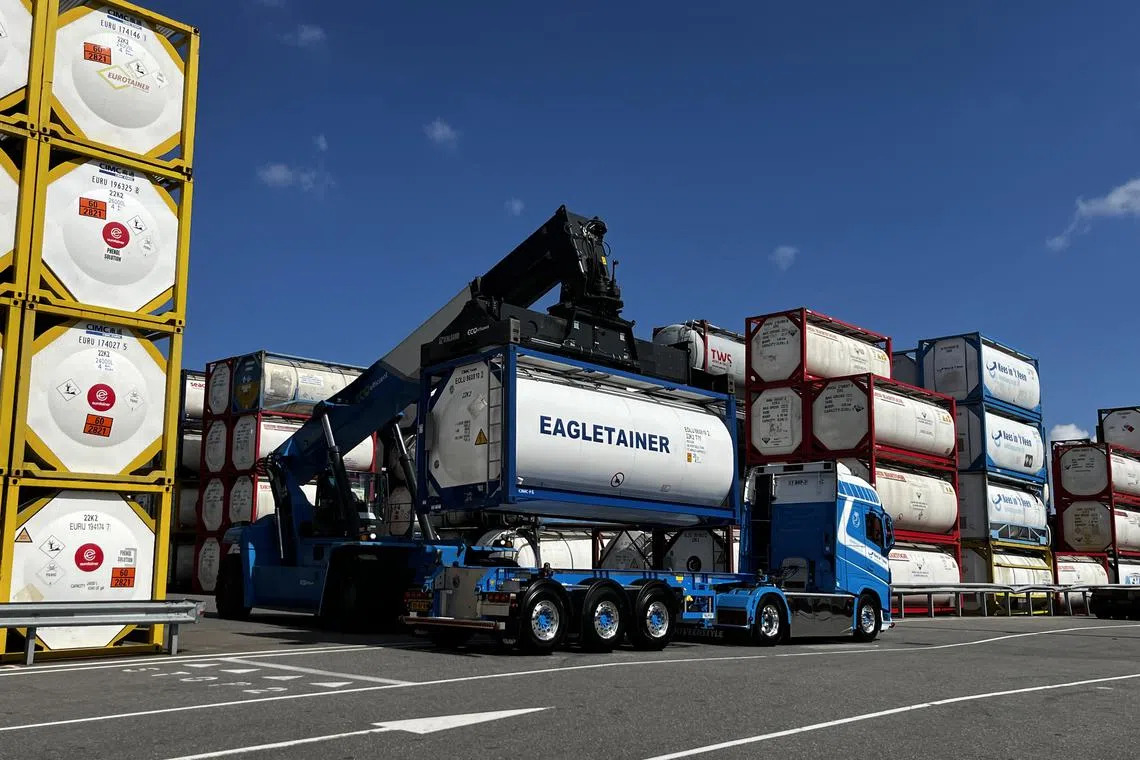
The company transports petrochemicals, fuel and oleochemicals in the region, in ISO tank containers made to hold industrial liquids.
General manager Sylvia van der Brugge noted that Rotterdam is a gateway to most European ports, via land and sea. Goods cleared there can be transported throughout Europe without additional customs documentation.
The company had a fleet of 13,200 tank containers as at June this year, more than double the 5,000 it began with when it entered Europe in 2015.
The fleet is young, with an average age of six years and tanks of “the most updated design” in terms of efficiency and safety features. Though such tanks can be used for 20 to 30 years, having a young fleet caters to clientele with equipment age requirements, said van der Brugge.
“Eagletainer only builds for demand,” she added – and demand is growing. The company builds some 10 new containers each month.
The company is not without its worries. Reroutes caused by the Suez Canal crisis can cause month-long cargo shipment delays, van der Brugge said.
While Eagletainer is unable to shorten these, its tracking management system enables it to follow cargo progress in real time and manage customer expectations.
Another challenge is the European Union’s Green Deal – policy initiatives aiming to achieve climate neutrality by 2050. Under this strategy, the EU’s Emissions Trading System has been extended to cover carbon dioxide emissions from all large ships entering EU ports from Jan 1.
This has prompted Eagletainer to switch to greener fuels, raising costs by “30, 40, 50 euros per sailing”.
To keep up with regulations, Eagletainer chooses transport partners carefully. Some EU port terminals now require use of environmentally friendly trucks. The company also measures and then works to reduce the carbon emissions from trucks and ships it uses.
Eagletainer has joined associations to stay up to date on sustainability regulations, and has attained certifications that evaluate its environmental performance.
But the push for climate action has also brought opportunities.
Once Eagletainer’s ISO tanks are verified to be compatible with new renewable fuels, they can transport such cargo, van der Brugge said, adding: “We participate in carrying feedstocks for renewable fuels which supports the refineries in the Netherlands.”
Decoding Asia newsletter: your guide to navigating Asia in a new global order. Sign up here to get Decoding Asia newsletter. Delivered to your inbox. Free.
Copyright SPH Media. All rights reserved.