Strong investment performance lifts global wealth

Genevieve Cua
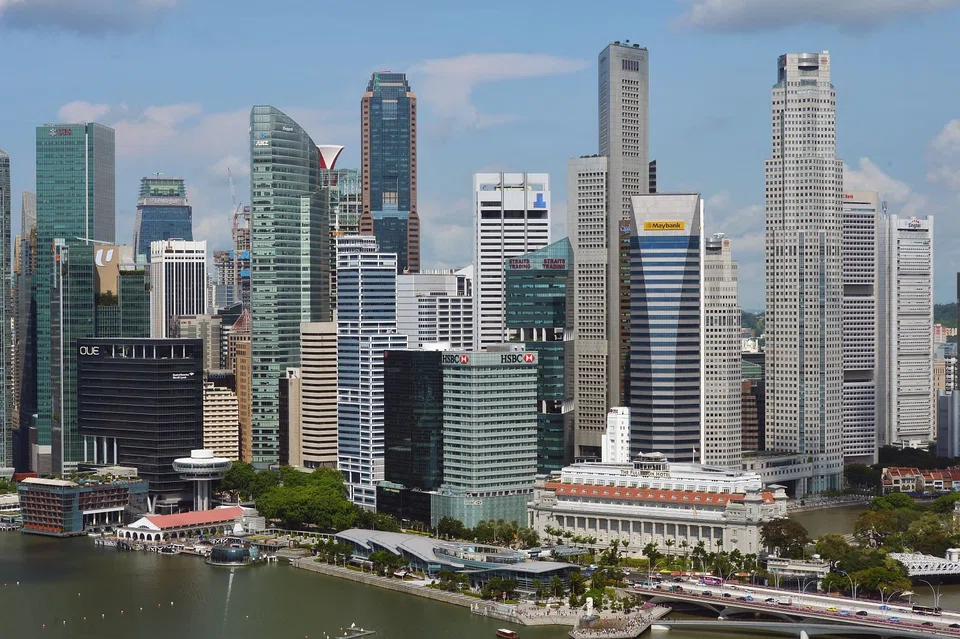
Singapore
STRONG investment performance buoyed the wealth of high net worth individuals (HNWIs) globally, driving a global wealth expansion of 8.2 per cent in 2016 compared to 4 per cent previously, despite a slight deceleration in the Asia-Pacific. The portion of wealth managed by wealth managers - estimated at about a third of total wealth - appreciated by a robust 24.3 per cent on average globally, Capgemini's 2017 World Wealth Report has found. In the Asia-Pacific, the appreciation is even more impressive at 33 per cent, the highest globally.
Singapore's HNWIs, however, reported a relatively more muted investment performance at about 18.2 per cent. This may explain Singapore's negative net promoter score (NPS) of minus 11, compared to 31.4 in the Asia-Pacific, and 45.2 in North America. Japan's net promoter score is the lowest at minus 51.3, which dragged the global score down to 11.6.
The number of HNWIs globally is 16.5 million and they hold wealth of an estimated US$63.5 trillion. In the Asia-Pacific, there around 5.5 million HNWIs, with wealth totalling roughly US$18.8 trillion.
The Asia-Pacific remains the world's largest HNWI market, even though its wealth growth was a tad slower at 8.2 per cent compared to 9 per cent in 2015.
The region's market growth was dimmed by a sharp equity market decline in China and modest growth in Japan. The latter two markets were major drivers of HNWI growth in the past. China's market capitalisation fell 10 per cent last year.
David Wilson, Capgemini Global Financial Services head of Asia wealth management, said: "Asia-Pacific still turned in a solid performance. This is less about Asia slowing, and more about North America and Europe having caught up in 2016."
The report also raised the question of the possible entry of "BigTech" firms such as Google, Facebook and Apple into wealth management. More than half of HNWIs (56 per cent) said they would be open to becoming a wealth management client of a BigTech firm. Younger clients were even more open (81.7 per cent), and those in the Asia-Pacific ex-Japan (72 per cent).
Clients also value hybrid service models that combine digital tools with some level of human interaction.
Capgemini's market sizing data is drawn broadly from national account statistics, among others. It also conducts surveys of HNWIs on asset allocation, fee models and investment preferences. For the latest study, more than 2,500 HNWIs were polled across 19 wealth markets.
The study found that trust and confidence in individual wealth managers climbed nearly 20 percentage points to 78.8 per cent globally, nearly on par with the trust and confidence in wealth firms. But satisfaction with wealth managers and their firms is less than 60 per cent.
Fees may be a factor in the undercurrent of low-level satisfaction, said the study. Younger HNWIs (53.5 per cent) were more accepting of fees, compared to 39.6 per cent of those over 60. Globally, HNWIs pay an average of US$65,795 in annual fees, amounting to a fairly high 8.4 per cent of assets.
North American HNWIs pay much less than their counterparts in the rest of the world on fees, which may explain their greater comfort with them, said the study. The North American rate was 6 per cent, compared to a whopping 11.8 per cent in Latin America, 10.5 per cent in Europe and about 9 per cent in Asia ex-Japan.
Mr Wilson said: "From an investment perspective, 2016 was a good year. I think firms proved their value. But HNWIs want more than investment management; they want a broad range of advice, whether it's deep financial planning, wealth transfer or estate planning. . . While firms have these capabilities, only a select few are able to access them so that breeds a level of frustration and feeling that there isn't real value beyond investment management. Let's face it - investment returns from one year to the next might disappear; it's harder for firms to control that."