

Why Trump could be good for Asian Equities
There are three possible scenarios why the changing landscape in 2017 in the Trump era may turn out to be actually good for these stocks.
'AMERICA First' is the message front and centre of the inauguration speech of the newly-appointed President Trump. Within the first day of taking office, Mr Trump promptly issued an executive order to withdraw US from the multi-year negotiated Trans-Pacific Partnership. This setback appears to have rendered futile years of time and effort in forging trade ties for various nations (including Singapore) and the world has had a first taste of a policy initiative under the new US administration. Together with Brexit and the general rise of populism in 2016, this is yet another indication that the world order and geopolitical situation are in a state of change; and new rules of engagement between governments and citizens, and between governments to governments will evolve. Some long-standing practices will discontinue and new ones may spawn.
While this backdrop of uncertainty and unpredictability may give rise to general apprehension and fear of the unknown, it also makes investment management in this time of change challenging and exciting. No more so than in Asia where the changing landscape in 2017 in the Trump era may turn out to be actually good for Asian equities. Here are three possible scenarios.
Increased investment in US
Since the election, numerous companies such as SoftBank, Alibaba, etc have made pledges of huge investments in US, while Foxconn is considering building a US$7 billion display factory there. Separately, US companies such as air-con maker Carrier and carmakers GM and Hyundai have announced increased investments stateside. It is becoming increasingly clear to businesses that to access the US market, they will need to have a domestic full value chain going forward, otherwise they run the risk of losing access to US market, which would be strategically untenable.
Mr Trump can thus be pleased with himself for delivering on electoral promises, to bring investments and jobs back to the US, in an immediate and visible way. It is conceivable that there may be two-tier markets for goods and merchandise developing over time, with the US-made goods being in the higher price bracket.
We will have to wait and see if the American consumer is content to pay a higher price for TVs, sneakers, etc that bear the "Made in USA" labels. Asian producers, on the other hand, will likely remain more cost and price competitive. Knowing how agile and responsive market dynamics can be, consumers in US may eventually find their way back to Asian producers in time to come.
Thus while Asian companies will suffer in the near term from the unfriendly import attitude of the US under Mr Trump; in the long term, the trend may likely reverse and if that is the case, it would be wise to move in on Asian equities today while they are undervalued. In short, the Trump era may create good price opportunities in Asian equities for the long term investor.
Even in the short to medium term, there may be upside for certain Asian equities. Since Mr Trump's election victory, financials in US have rallied on heightened expectation of increased economic activity. Similar price rises have been observed for local bank stocks such as DBS, UOB and OCBC.
Lifting of sanctions against Russia
Should sanctions against Russia be lifted, it will rejoin the world trade in the supply of their resources as well as the purchase of goods and services from the rest of the world. This will to some degree, correct the imbalance in the markets, caused by the imposition of sanctions against Russia, to the benefit of Asia.
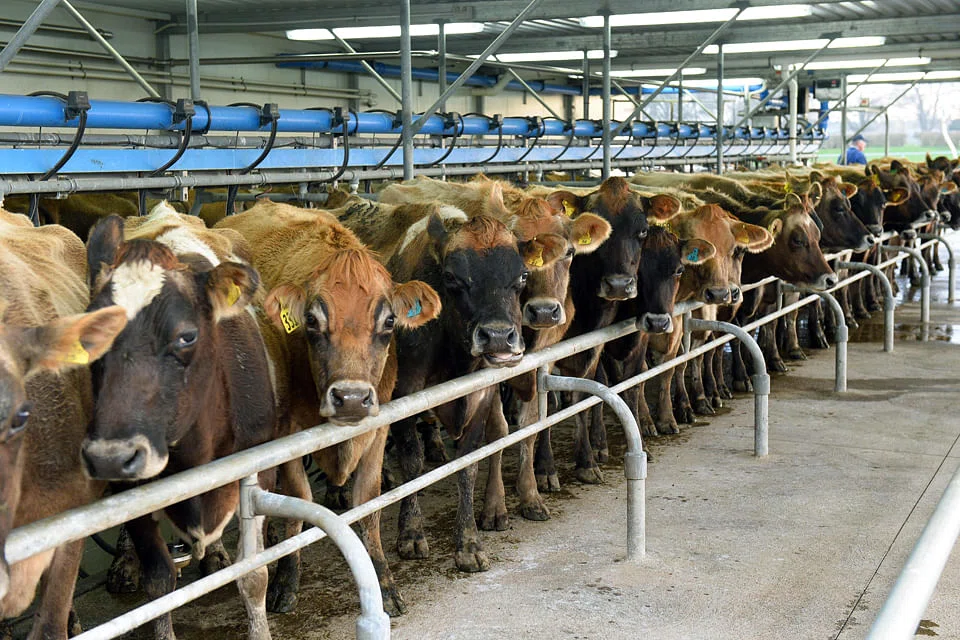
A case in point is the world dairy industry which has suffered from excess supply since the Russian sanctions were imposed. This is because Russia, which has traditionally been a major dairy consumer, was banned from purchasing dairy products from the West. As a result, dairy products from West were exported (some say "dumped") into Asia. Thus Asian dairy producers have experienced a difficult few years as they grappled with the excess supply flooding the market, causing dairy prices to plunge in the region.
With Russia resuming demand for such products, the consequent rebalancing of demand and supply in the dairy space may see a reduction in excess supply in Asia and thus, improve the fortunes of Asian dairy players from the increased demand for and rising prices of their products as a result.
Viewed from that perspective, Asian equities in the dairy space whose prices have been falling in the past few years may actually rise, when the dairy market rebalances with the return of Russia to world trade as an anticipated result of the Trump policy.
Possible trade war with China
This possibility has given rise to much concern due to Mr Trump singling out China as having benefitted unfairly in its dealings with the US. Spearheaded by an incoming commerce secretary who is a restructuring expert on ailing industries, it will not be surprising if the US seeks to reset trade terms on selected industries. However, an across-the-board trade retaliation against China is commonly viewed to be a low probability event.
China, on the other hand, remains a huge financial creditor of US and is actively promoting its own economic agenda ("One Belt, One Road" being an obvious one) that will elevate its standing, scale and influence on world stage. And given China's heft, it will probably be more than able to counteract any threat of a trade war with the US.
Indeed, the domestic demand of China's own population is so huge (and growing exponentially) that businesses which are domestic-focused rather than export-oriented have still been doing well; and their share prices continue to rise regardless of, or perhaps even because of, the impending export challenges that will be posed by any unfriendly trade policies of the US. Thus companies in sectors such as building materials, Anhui Conch Cement (a cement producer), or consumer goods, Sun Art Retail (a supermarket chain), have seen prices rise since Mr Trump's election victory.
The S&P 500 has risen 72 per cent in the last five years and is currently trading at close to historical highs, while the MSCI AC Asia Pacific Index has hardly moved in the same period even though the underlying companies have continued to grow during this period.
With much change and uncertainty afoot under the new US administration, and with US valuations at historic highs, and with no real conviction that US can succeed in ousting China in any form of trade war or skirmish, it is perhaps not surprising that investors have been withdrawing capital from US equity funds. Some of this money may eventually find its way to Asian equities which are increasingly undervalued.
After all, the long term structural advantages of Asia, such as its hinterland of more than three billion population, its exploding growth of middle class consumers and strong government fiscal positions, all put Asia in a strong position as the driver of world growth in the long run. Any investor who wishes to participate in this growth would do well to take a serious look at investing in Asian equities at this stage due to opportunities that may arise thanks to the "Trump" effect.
TRENDING NOW
SoftBank’s Son plans US$50 billion Malaysia tech outlay: Anwar Ibrahim
Singapore expects all parties to honour commitments, says PM Wong after Indonesia cuts gas exports

Gas Supply may pursue remedies if contract breached following Indonesia’s export cuts: Tan See Leng

Why the biggest business decision about AI isn’t which model to choose

