Banyan Group heir Ho Ren Yung: ‘Better to be useful than happy’
The luxury hotelier on balancing inheritance, purpose and expansion
 Add BT as a preferred source

AT MANDAI RAINFOREST RESORT BY Banyan Tree, what strikes you first is how little it tries to resemble a conventional five-star hotel.
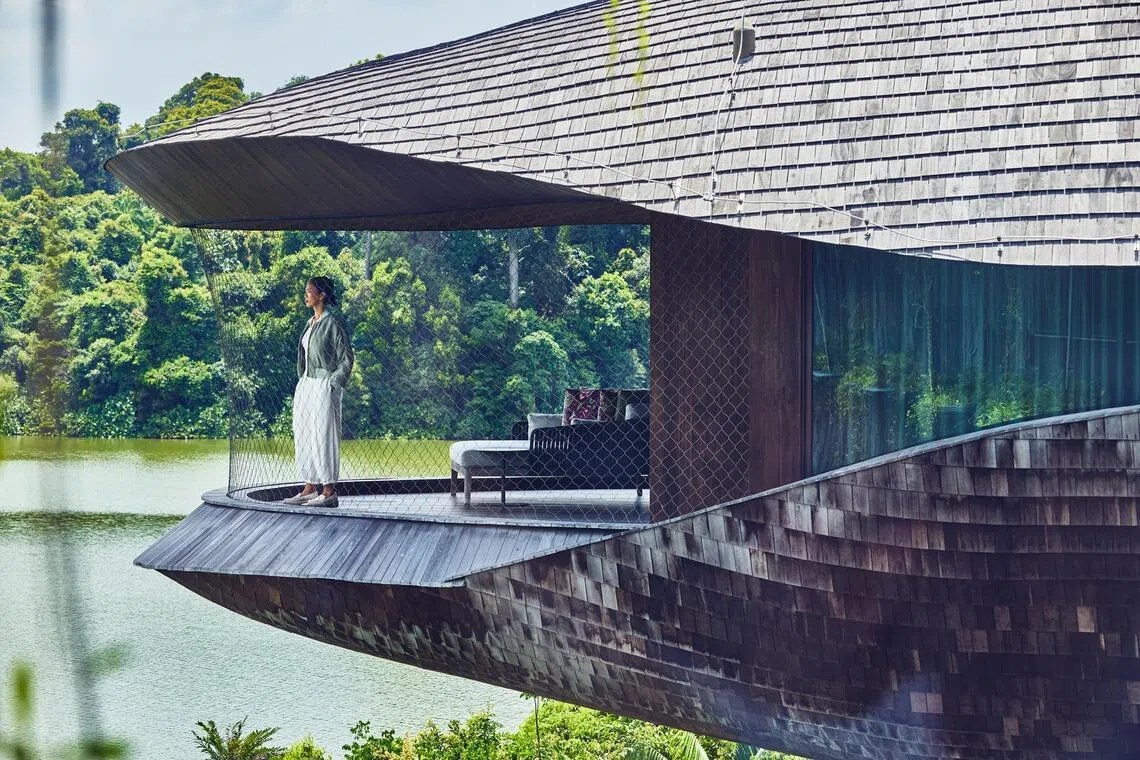
The lobby is open-sided, edged by dense planting and cooled by passing breezes. Vines hang overhead and trees press in. The architecture holds back, allowing nature to take centrestage.
Opened in April 2025 within the Mandai Wildlife Reserve, the 4.6-hectare resort comprises 338 rooms, including 24 pod-like treehouses overlooking Upper Seletar Reservoir, and is Singapore’s first hotel to achieve the BCA Green Mark Platinum Super Low Energy certification.
It is, in short, just the place to meet the woman tasked with shaping what Banyan – one of Singapore’s most recognisable hospitality brands – should mean now.
At 41, Ho Ren Yung, deputy chief executive of Banyan Group, oversees more than 100 properties worldwide across 13 lifestyle brands, including Angsana, Cassia and Dhawa.
She is elegant without fuss, and has the focus of someone used to thinking on several planes at once. When asked a question, she does not answer so much as turn it in the light and examine its assumptions.
Navigate Asia in
a new global order
Get the insights delivered to your inbox.
Ask her about sustainability and she asks you to define sustainability. Ask her about luxury and she replies: “I’m going to resist giving you a definition.” Instead, she offers the questions Banyan asks of itself: “What is rare? What is meaningful? What is not repeatable?
“For us, what is not repeatable is the nature around us, the living rhythm of the day – how the sun rises, the monsoon that comes, that bird in the bush you saw on your way in with its two eggs waiting to hatch.”
It’s not quite the answer one expects from a second-generation leader of an extraordinarily successful business family – but the family in question happens to be Ho Kwon Ping and Claire Chiang’s.


The elder Ho, Banyan’s founder, began as a journalist and political thinker before turning hotelier. Chiang, its co-founder, trained as a sociologist and became a prominent activist and longtime advocate for education and gender equality.
“My parents were not business people,” says the younger Ho. They did not see Banyan’s business as an end in itself, but as a means to advance social and economic development alongside commercial success.
“That’s the reason I’m in the business,” she adds. “Sustainability is not a side aspect of what we do – it is the business.”
Difficult places, harder questions
For many businesses, sustainability and regeneration are challenges that grow more urgent and complex every year. For a luxury hospitality group operating across diverse and often remote locations – from the lagoons of the Maldives to inland China’s secondary cities – that complexity is multiplied.
Environmental conditions vary, as do regulatory frameworks, ownership structures, labour dynamics and supply chains. There is no universal template. Each property demands a ground-up rethink of the system – from sourcing and design to construction, operations and partnerships. Even timelines, and the way success is measured, must be recalibrated.
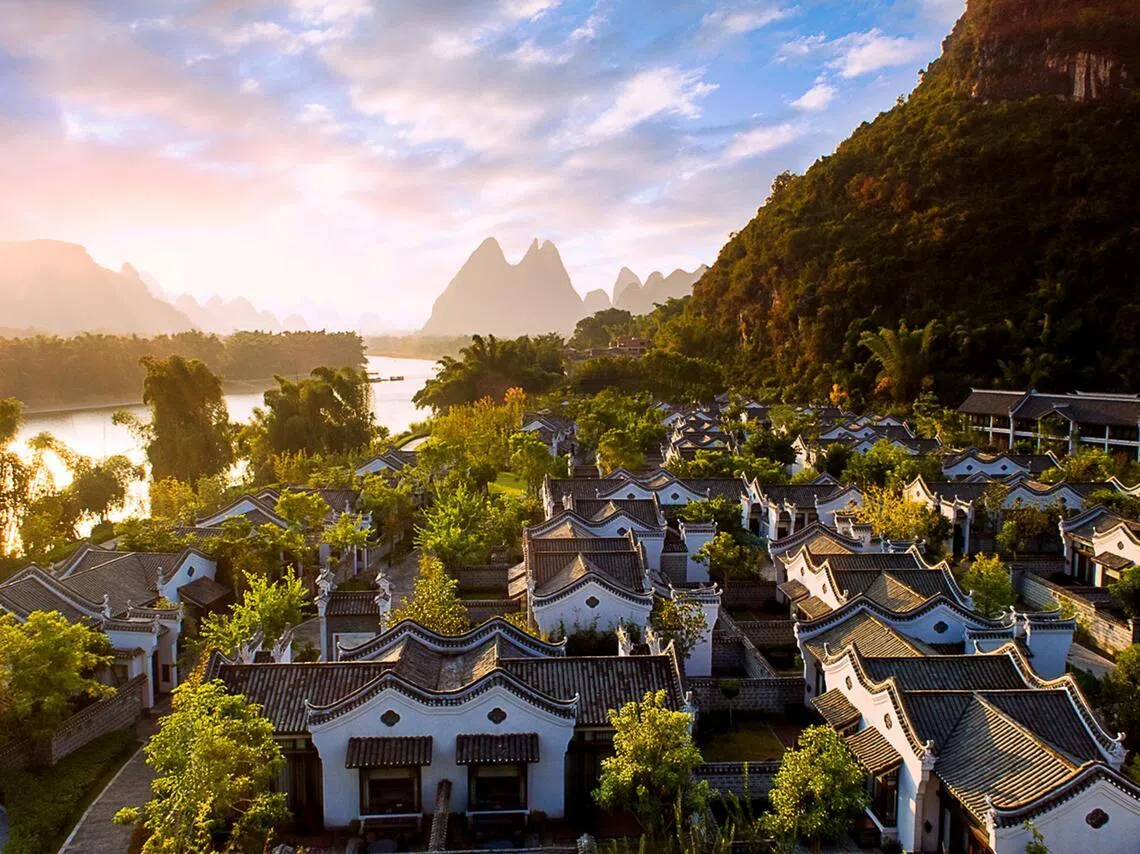
“Every site is so different,” Ho says. “So there is no actual one playbook for all.”
On one level, the pathway is clear: reduce carbon emissions, water use and waste. Banyan has aligned itself with the Science-Based Targets initiative, which includes halving emissions by 2030 and reaching net zero by 2050. But progress is uneven.
“We have tried very hard… but like every other company in the world, we’re not on track – and I would be lying if I told you that we were,” she says.
What distinguishes Banyan is how seriously it embeds these goals. Sustainability metrics are tied directly to compensation, forcing the organisation to internalise them operationally rather than treat them as peripheral.
But reduction, for Ho, is only one half of the equation: “On the flip side, there is the possibility of creating so much positive impact in our business.”
She frames this in three parts. The first is understanding biodiversity not as passive scenery, but as something that can be measured, restored and actively managed. The second is community resilience: extending Banyan’s own operating systems to help surrounding communities “adapt to the climate change that is coming”.
The third is inclusive prosperity, distilled into a simple question: “If you spend $1,000 at a Banyan Tree, how much of that can actually go back to the local community?”
Since 2024, Banyan Group has pledged US$1 per direct website booking to support long-term rewilding efforts. Sustainability, as Ho frames it, is not just about compliance. It is about expanding what counts as value, and building systems that can account for it.
But systems do not run themselves. They are shaped by the people who inherit them, and the beliefs they bring with them.
The weight of a family legacy
For Ho, stepping into Banyan was never a matter of succession.
She graduated in 2008 from the London School of Economics, where she wrote her thesis on social entrepreneurship. Then, she did what many second-generation heirs do – she joined the family business. She began as a management trainee at one of Banyan’s properties in Mexico, and rose through operational roles.
Three years in, she left Banyan and co-founded several ventures, including Matter, a socially conscious fashion label built around artisan communities and the economics of craft and labour.
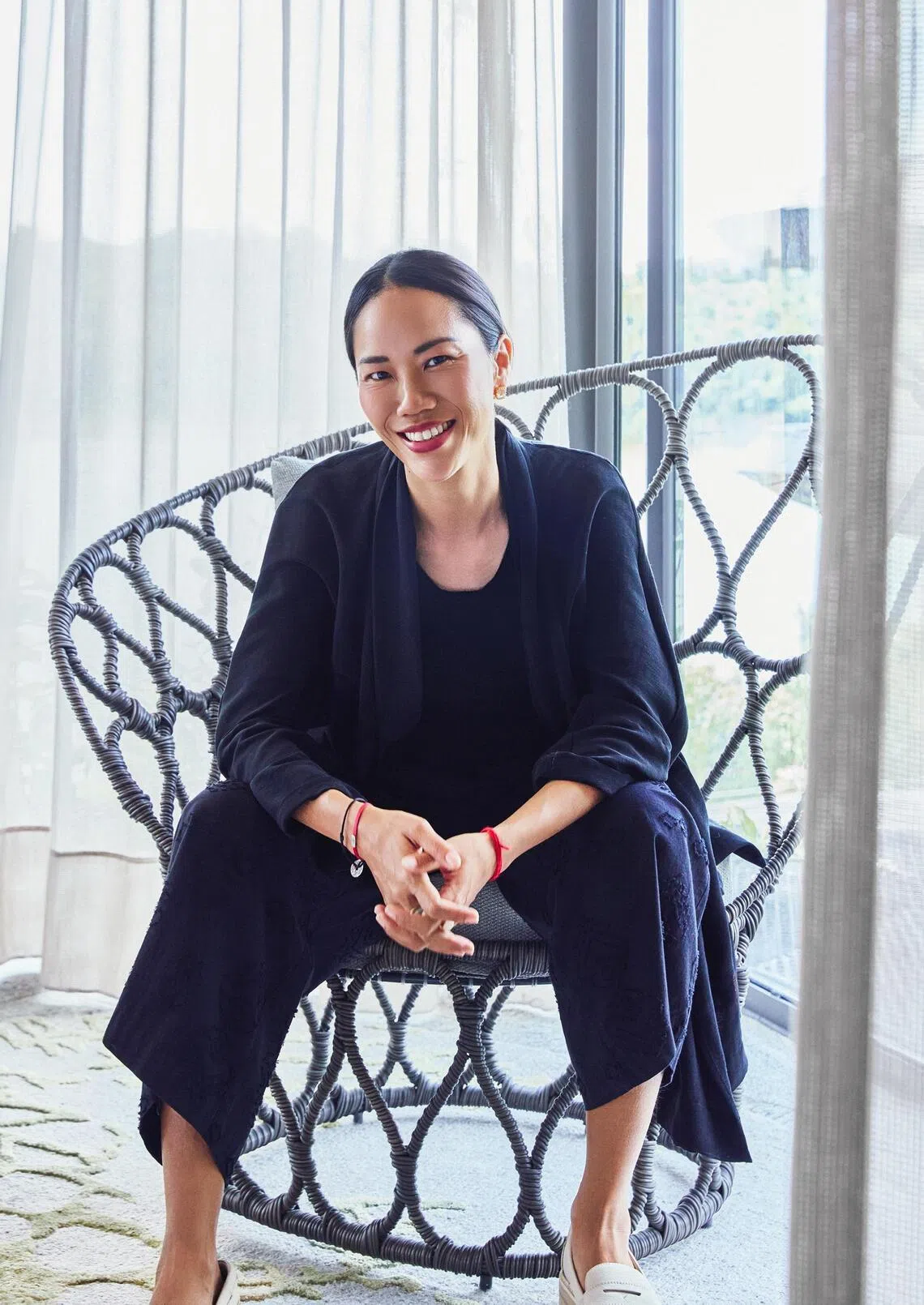
“My parents raised us to be useful,” she says of herself and her brothers, Ren Hua and Ren Chun. “They believe that to be useful is more important than to be happy.”
“It is not that happiness is unimportant,” she clarifies, “but it is not in itself a sufficient goal… When you chase happiness, it gets confusing. Understanding what makes you tick and how to be useful is actually very fulfilling.”
Her parents tapped that sense of purpose when they persuaded her to return to Banyan in 2016. “They gave me a feeling of partnership… a sense that there was space within what they had created for me to shape that together with them.”
A few years later, Covid struck, making Ho realise the fragility of a business built on global travel. But the crisis also clarified things: Banyan was able to double in size, rebuild its internal systems, and emerge in 2024 as Banyan Group – a more integrated platform, less a collection of properties than a connected ecosystem.
“Before Covid, we were probably getting a little complacent,” she says. “But because of Covid, there was hunger again, the ambition to do things differently.”
The reset is borne out in numbers. In 2024, Banyan Group reported revenue of around S$380 million, up roughly 16 per cent year on year, with net profit rising 33 per cent to S$42.1 million.
Growth has been driven not just by hotel operations, but also by an increasingly important residences business – which recorded a banner year in sales – alongside a steady expansion of the group’s global footprint, with new openings across Asia and beyond.
By 2025, revenue had climbed further to about S$477 million, reflecting both post-pandemic recovery and a more diversified model that blends hospitality, branded residences and fee-based management.
In her heart of hearts
Ho describes herself as “a systems thinker, a systems architect” – someone motivated by “the connectivity between things.”
“Actually, I would love to go and study systems change and systems thinking. I found a course at the Massachusetts Institute of Technology, and I think there is going to be a whole discipline that comes up around this.”
But as a working mother to three boys aged between two and seven, whom she shares with entrepreneur Adrien Desbaillets, that ambition now sits at the margins of an already full life.
Late in the conversation, she is asked what she would want to do outside her demanding roles. She pauses. “Outside all of my roles, I don’t feel a need to achieve anything else,” she says at first.
Then, after a moment: “In my heart of hearts, I do want to use my life, my resources, my sphere of influence, to move things by just one degree – not just in business, but across realms.
“There is so much that feels incoherent today, feeding into the problems we see. So I try to live in alignment with my values – to think, act and decide with integrity – and to believe that even that one degree of change matters.”
Photography: Darren Gabriel Leow Fashion direction: CK Hair & make-up: Sophia Soh/The Suburbs Studio, using Dior Beauty
Decoding Asia newsletter: your guide to navigating Asia in a new global order. Sign up here to get Decoding Asia newsletter. Delivered to your inbox. Free.
Copyright SPH Media. All rights reserved.