Omega’s Constellation Observatory could be its most important timepiece in years
The first two-hand watch to be certified a Master Chronometer proves you don’t have to shout to make a point
 Add BT as a preferred source
TAKE A GLANCE AT OMEGA’S new collection of Constellation watches – there are nine models in all – and you might do a double take. No signature “claws” on the case sides? Wait, what? And vintage-inspired pie-pan dials all round… but they’re not… Globemasters? What’s going on here?
Fair question. Could this be a glitch in the Omega matrix? The brand’s codes are familiar: same, same, but somehow different. This might well be a vintage revival, except it’s not. It’s a recalibration, a reset, and dare we say it, probably the most important one Omega has made in years.
A star that lost its centre of gravity
Historically, the Constellation was Omega’s flagship. The line was everything the brand stood for – namely, precision. When it launched in 1952, it represented Omega’s precision achievements in observatory trials since 1933. The iconic medallion of eight stars stamped on the caseback alluded to these feats.
But in recent years, the Constellation has been eclipsed by the sheer gravitas of the Speedmaster and Seamaster collections. The former is virtually untouchable: the moon landing, Nasa credentials, the mythology.

As for the latter? Well, it practically owns pop culture – or at least, where the cult aura of James Bond is concerned.
That left the Constellation… drifting a little. Its original intellectual proposition was a harder sell. It was a thinking man’s watch, and it had its own following, for sure. But stacked against other more approachable (and wildly popular) models, it wasn’t quite grabbing the headlines it deserved.
Navigate Asia in
a new global order
Get the insights delivered to your inbox.
The Constellation needed a reset button.
Enter 2026’s Constellation Observatory, which broaches watch nerd territory once again. It leans in completely and unapologetically to its original guise as a precision instrument.
The Constellation Observatory is a two-hand watch (hours and minutes), and the first of its kind to achieve Master Chronometer certification. In all other cases, it’s the three-hand models that typically scoop up chronometric wins.
SEE ALSO








Typically, you see the seconds hand, admire its sweep across the dial, and take comfort in knowing that your watch is alive and ticking away with mechanical precision. Here, Omega is asking you to trust the process, as if to say: “You can’t see the seconds ticking, but know that your watch is as precise as it gets.”
A hardcore technical flex – but make it invisible
How did Omega achieve this level of confidence? Through an acoustic testing method developed by the Laboratoire de Precision, which completely flips the script on traditional testing methods.

The lab, which operates in two sites in Switzerland – Bienne and Villeret – was launched in 2024 and is operated by Omega. However, it remains an official independent certification body with its own management team and structure.
As proof of its impartiality, the lab is certified by Metas – the Swiss Federal Institute of Metrology – to conduct Master Chronometer testing.
A Master Chronometer must be accurate to between zero and +5 seconds per day, twice the precision of a standard Controle Officiel Suisse des Chronometres-certified chronometer. It must also operate perfectly in highly magnetic environments of up to 15,000 gauss. In other words, it must still be fully functional even if you wear it inside an MRI machine (which you shouldn’t, anyway).
The lab’s set-up – which it calls Dual Metric Technology – consists of a wireless, self-contained testing unit that carries out all tests simultaneously.

With optical testing – the traditional method on which chronometric testing relies – technicians photograph the position of the seconds hand at specific intervals, compare deviations and arrive at a daily rate.
Then there’s the new acoustic testing, where the watch movement’s ticks and tacks are captured continuously over a 25-day testing period. Every oscillation, every microscopic variation in frequency is recorded in real time.
By listening, technicians can also detect things such as the effect of temperature and pressure shifts on precision.
There’s poetry in the process, too: The watch is no longer observed like a specimen under a microscope; it’s monitored like a heartbeat. After all, watch collectors and enthusiasts often refer to their watch mechanisms as the heart of their watches.
Let’s party like it’s 1962
When it came to the design, Omega went full heritage mode, bringing back elements of early Constellation watches that are sought after by vintage hunters. Think mid-20th century icons like the faceted pie-pan dial, dog-leg lugs, dauphine hands and applied indices. On the case-back, the Observatory medallion makes a welcome comeback, too.
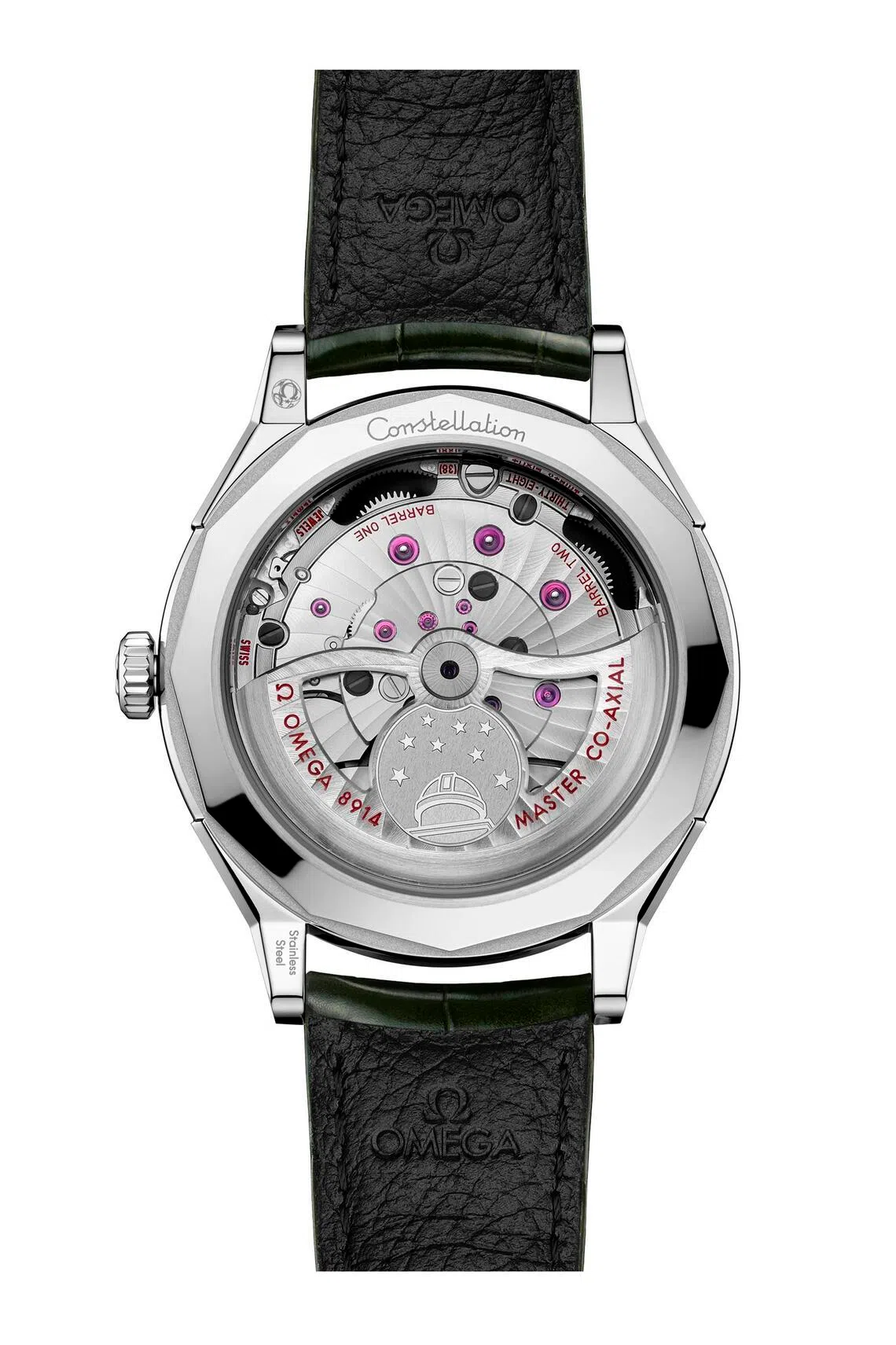
Beneath the dial is where things get seriously indulgent. Here, Omega introduces two new Master Chronometer calibres, split across three tiers: Grand Luxe, Luxe and Standard.
Calibre 8915 Grand Luxe is fitted in the platinum-gold watch. Unashamedly decadent, it features an 18K Sedna Gold rotor and an aventurine-enamelled Observatory medallion.
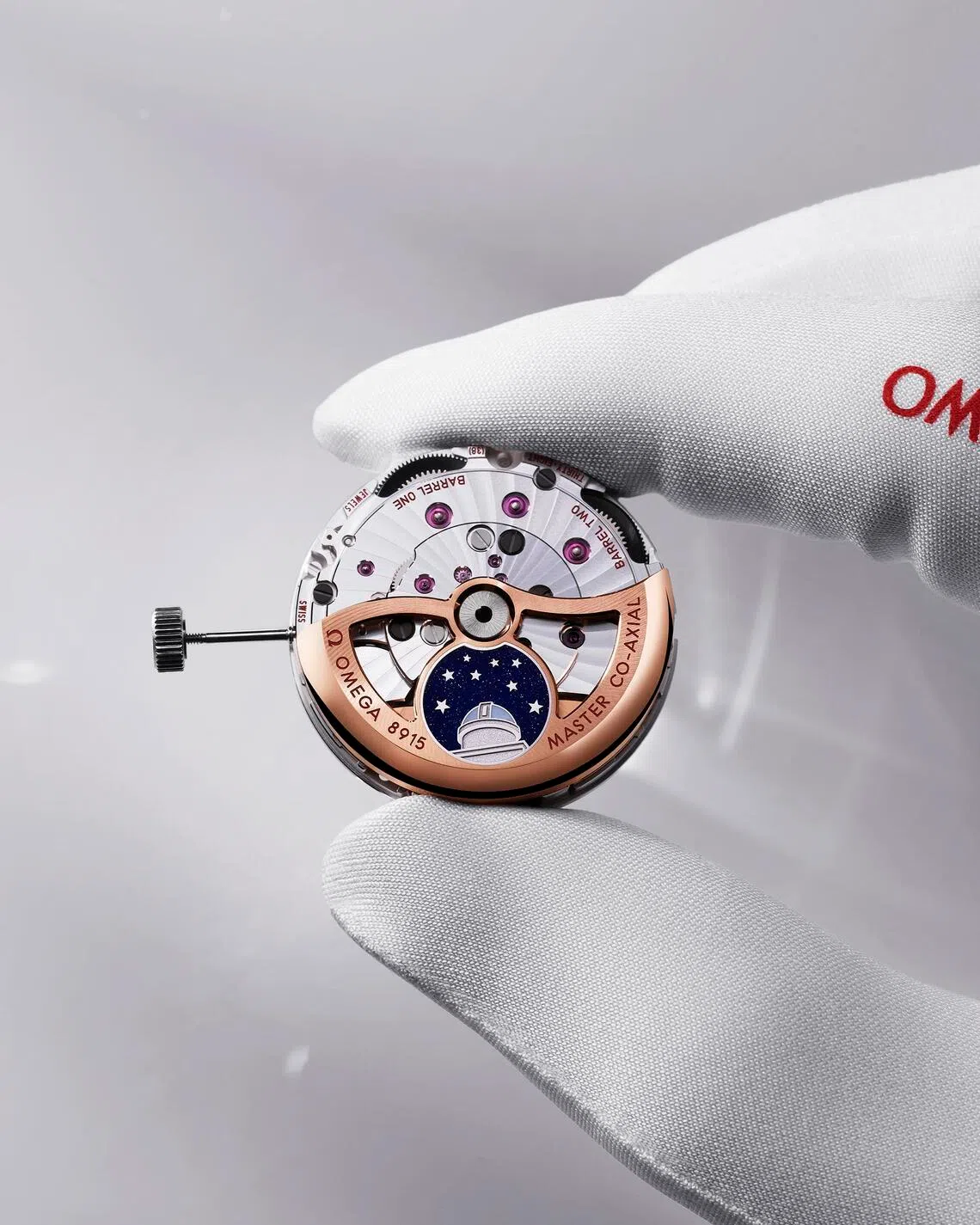
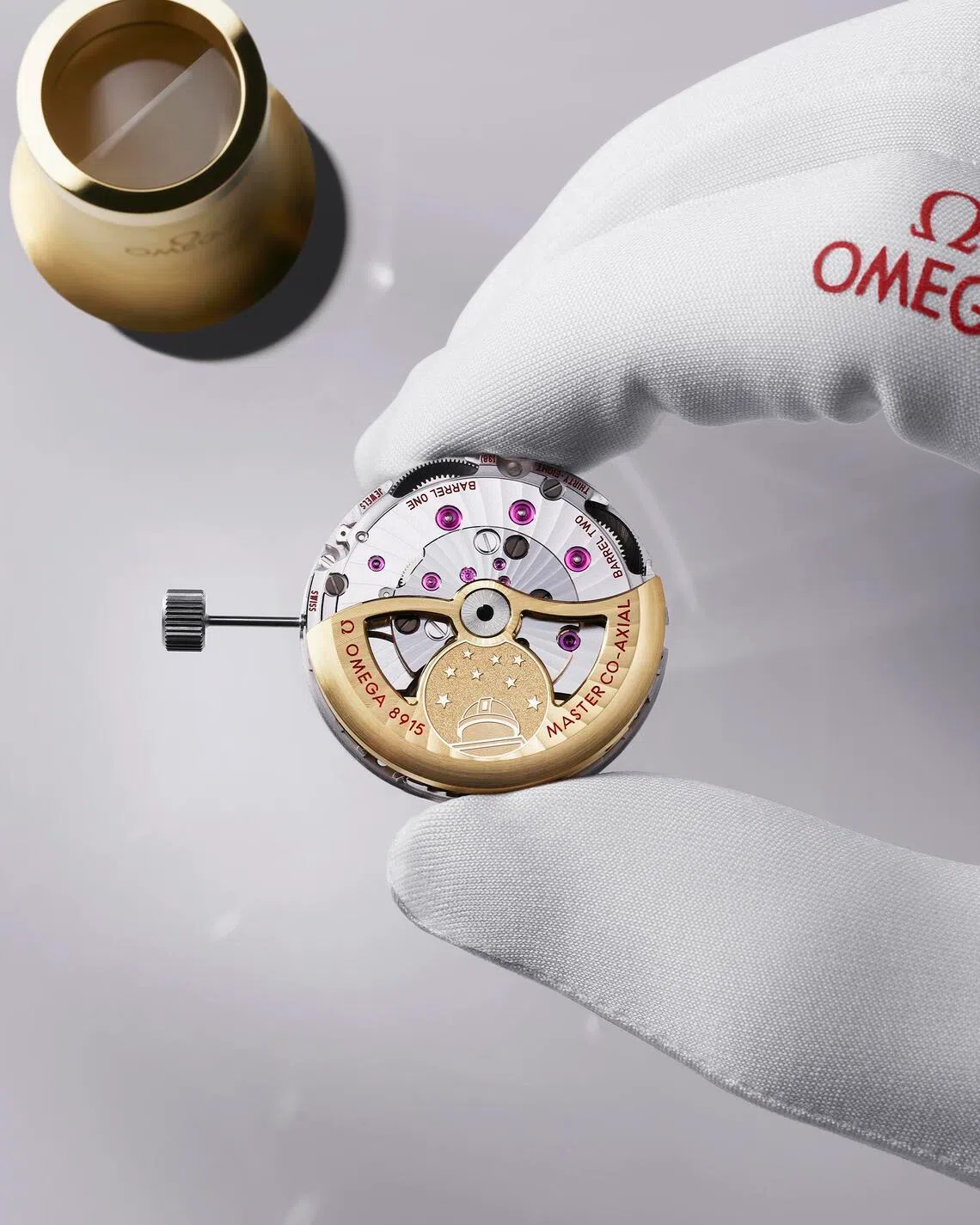
In the next tier, we find Calibre 8915 Luxe, which powers the 18K gold models. This engine sports an 18K Moonshine Gold rotor and balance bridge.
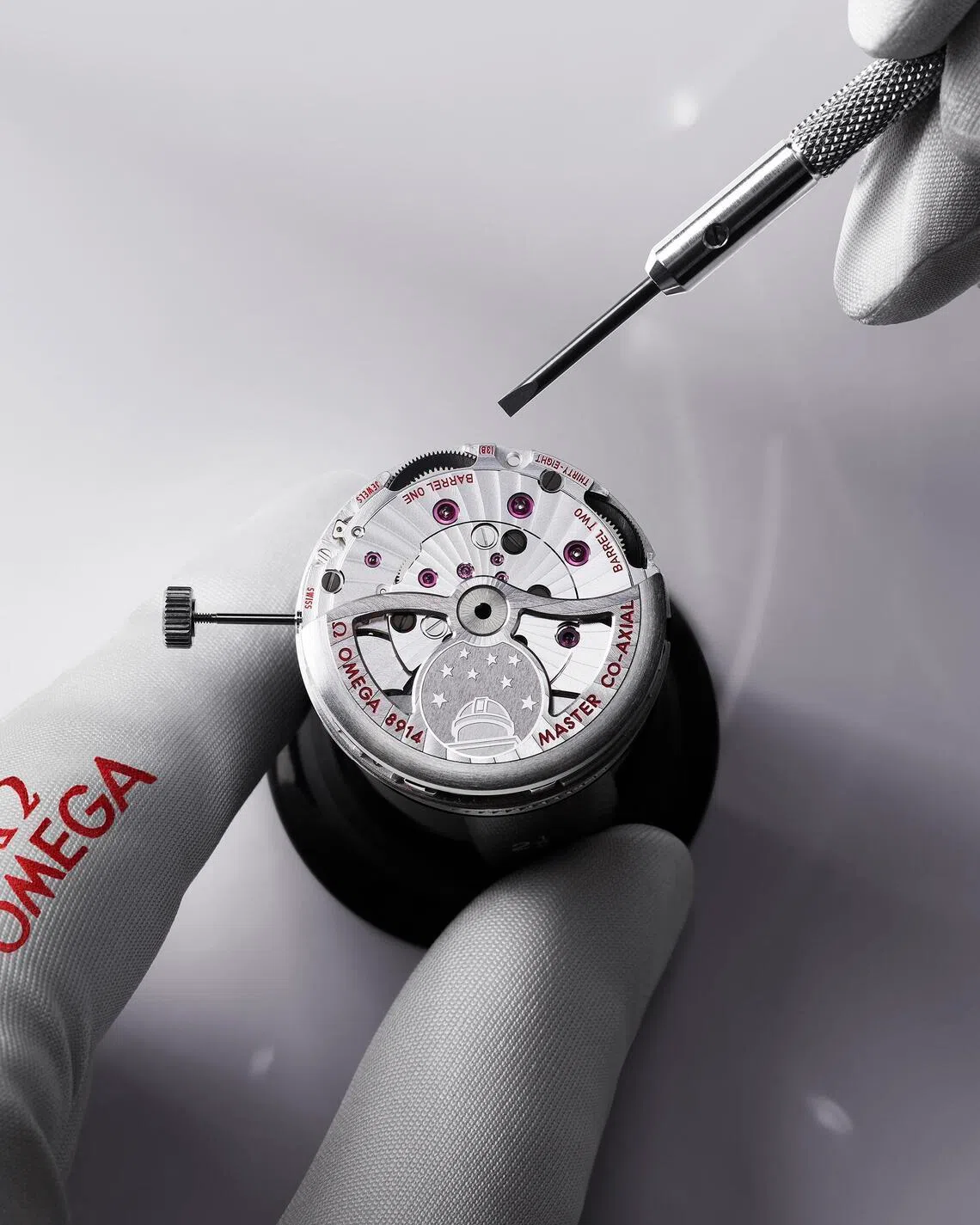
And finally, Calibre 8914 Standard – housed in the O-megasteel models – is a twin of the Luxe calibre, except its rotor and balance bridge are rhodium-plated.
Will the watch succeed?
The short answer is yes… but Omega’s win isn’t likely to be immediate.
Yes, the design is pitch-perfect. It’s vintage on-point, very respectful of its roots, faithfully reproducing what collectors love about early Constellations. Size-wise, Omega chose a modern 39.4 mm case that will sit perfectly on almost any wrist, not too big and not too small. And of course, the technical background is genuinely groundbreaking.
But – and this is a big but – it isn’t a hype watch (are those days over? Possibly). There’s no obvious flex; it’s more of an “if you know, you know”, stealth-luxury situation. Wearers of the Constellation Observatory don’t need the watch to announce itself; they appreciate history, nuance and quiet technical mastery.
Omega also isn’t slapping a limited-edition, boutique-edition or country-specific edition label on it. Production is non-limited. Scarcity isn’t the name of the game here; the watch is meant to sit nicely amid the brand’s other offerings.
Maybe that’s the whole point. Omega isn’t chasing a moment; it’s playing the long game.
Within this slow-burn, big-picture strategy are several micro-strategies: remind Omega collectors of the line’s impressive legacy; appeal to watch nerds and tech-heads; appeal to general collectors of vintage watches; and reach out to enthusiasts who admire vintage watches, but who have sizing or other issues.
If all these work, the Constellation Observatory might just reclaim its place – not as the loudest watch in the room, but as the one that the right people notice.
Decoding Asia newsletter: your guide to navigating Asia in a new global order. Sign up here to get Decoding Asia newsletter. Delivered to your inbox. Free.
Copyright SPH Media. All rights reserved.